
 Reviving faith, rekindling charity, and forming apostles are not simply the mission of the Catholic Apostolate Center, they are central to the spirituality of St. Vincent Pallotti. Too often our faith is rote, our charity is routine, and we may not see ourselves as apostles. Pallottine spirituality offers a way to revive and rekindle our faith and charity so as to go forth as apostles of Christ. The Catholic Apostolate Center since its founding almost fifteen years ago roots itself in this spirituality of apostolic action. The baptized are called to go forth for Christ, assisting people in not only coming to faith, but also helping those whose faith and charity have dimmed to revive and rekindle them! St. Vincent Pallotti saw faith and charity as intrinsically connected with one another. To him, you cannot have one without the other. His insight is a very Catholic one. We Catholics believe that faith and works matter for our salvation. They are connected with one another. What we believe and what we do matter. As the Catechism of the Catholic Church says: “Living faith works through charity” (1814). As we go forth as apostles of Christ, let us be witnesses of faith and charity drawing others to him in and through his Church. May the charity of Christ urge us on! In God, the Infinite Love, Fr. Frank Author Fr. Frank S. Donio, S.A.C., D.Min. is Founding Director of the Catholic Apostolate Center and a member of the Society of the Catholic Apostolate (Pallottine Fathers and Brothers). He is also concurrently Provincial Rector of the Pallottines of the Immaculate Conception Province and Executive Director of the Conference of Major Superiors of Men of the United States (CMSM).
0 Comments
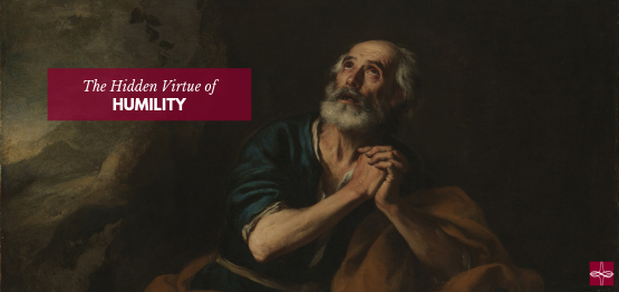 Contemporary Western culture seems to promote nothing but pride these days; it insists that only those who are proud, selfish, and disobedient can effect change or succeed in life. But salvation history and the lives of the saints tell us a different story—namely, that pride is the downfall of mankind, and that humility is what ultimately exalts us. Humility is a difficult virtue to embrace because it is such a quiet one and is often mistaken for what it is not. In his Summa Contra Gentiles, St. Thomas Aquinas describes humility thus: “Truly, the virtue of humility consists in this, that one keep himself within his own limits; he does not stretch himself to what is above him, but he subjects himself to his superior.” Being humble does not mean debasing yourself and refusing to acknowledge that you have any gifts or talents whatsoever—and some would argue that in fact, such an attitude is actually hidden pride! The truly humble man understands that he is not the greatest at anything, and that while he is better at something than others might be, his gift ultimately comes from God and is to be used for the glory of God, not for personal accolades. The prime example of this is the Blessed Virgin Mary. She was a young woman without wealth or powerful connections, and yet her submission to the will of God altered the course of human history and opened the door for the divine Messiah to enter the world He would one day redeem. She did not attempt to argue that she was utterly unworthy of the grace bestowed on her, but rather submitted with her humble fiat, “May it be done unto me according to your word.” The truly humble man knows his own limitations—he submits to the authority not only of God and of the Church, but also to the legitimate authority of the government and the workplace. A humble man does not go looking for opportunities to gain power and prestige. He dies to himself for the sake of others—he harbors no resentment when others’ work is extolled while his goes unnoticed, and he uses those moments of humiliation to draw closer to Christ. The humble man continues to use his gifts even if no one but God is going to see or acknowledge them. And when his gifts and accomplishments are acknowledged by the world, the humble man turns that praise back to God instead of focusing it on himself. The humble man does not need to project an Instagram-perfect image of his life to the rest of the world: he accepts that he is a work in progress, can admit when he is wrong, and can accept criticism with grace. Sometimes true humility seems impossible to achieve. Because we are fallen creatures wrapped up in ourselves, we have to constantly work toward selflessness. One method of doing this is by praying The Litany of Humility. This prayer asks Jesus to deliver us from desires and fears fueled by pride—from the desire of praise, to the fear of being wronged. But the beauty of this litany is that it not only asks that we be freed from our pride, but it also asks for the grace to desire that others may be better than we are, loved more than we are, holier than we are. True humility is not downplaying our own roles, but is setting aside our own desires so that others can rise higher and do more for Christ than we ever could. It’s being the Andrew to someone else’s Peter and the Barnabas to someone else’s Paul—calling forth someone to the good or encouraging their potential, even if means that person becomes greater than ourselves. Matt Maher has his own take on the Litany of Humility in his song “Every Little Prison.” What I like about Maher’s version is that he adapts the prayer to be more recognizable for the modern Christian. Pride takes many forms in this era of Instagram followers, Facebook “likes,” and the 24-hour news cycle—we spend time “wondering if I am relevant and liked” and “wanting to be seen.” Ultimately, humility requires us to turn to God instead of other things and to trust in him, in his mercy and his wisdom, rather than becoming slaves to our fears of being judged, or of not being loved, or of having to let go. By praying for freedom from the prisons created by pride, may we live more confidently in the love of God and in doing his will. *This blog is reposted and was originally published July 16, 2019.* Author
 As the United States marks 250 years since the signing of the Declaration of Independence, the Catholic bishops of our country – through the United States Conference of Catholic Bishops (USCCB) – are inviting Catholics into a profound spiritual moment: the consecration of the United States to the Sacred Heart of Jesus. This act of consecration is more than a symbolic gesture or patriotic observance. It is a reminder that every nation ultimately stands under God and needs His mercy, guidance, and love. The practice of consecrating nations to the Sacred Heart has a long history in the life of the Church. In 1899, Pope Leo XIII consecrated the entire world to the Sacred Heart of Jesus, calling it “the great act” of his pontificate. Over the years, many countries, dioceses, and communities have followed this example during moments of challenge, transition, or renewal. These acts of consecration are not political statements. Rather, they are spiritual acts of trust, placing people and nations under the care of Christ and asking for His protection and guidance. At a time marked by division, anxiety, violence, and distrust, the Church is once again calling us back to the Heart of Christ. The Sacred Heart of Jesus represents the deep and personal love that Christ has for humanity, a love poured out completely on the Cross. To consecrate something means to dedicate it entirely to God. By consecrating our nation to the Sacred Heart, the bishops are entrusting the United States to the care and mercy of Jesus Christ. This does not mean that our nation is perfect or favored. Rather, it is a humble acknowledgment that we need God now more than ever. This anniversary also gives us an opportunity to reflect on freedom itself. Our nation was founded on ideals of liberty and human dignity, but as Christians, we know that true freedom is not found simply in independence or self-determination. Jesus reminds us, “You will know the truth, and the truth will make you free” (John 8:32). Authentic freedom is found in living as sons and daughters of God. The bishops are encouraging not only a national consecration, but also personal and family consecrations to the Sacred Heart. Renewal in our country begins first with renewal in our homes and hearts. So how can we participate? We can begin with prayer and time spent with the Lord in the Eucharist. We can place an image of the Sacred Heart in our homes as a reminder that Christ is at the center of family life. We can practice works of mercy and charity, especially toward those who are poor, suffering, or forgotten. We can pray for our nation with hope instead of despair. Devotion to the Sacred Heart is ultimately about trusting in the love of Jesus and allowing that love to transform us. As St. John writes, “Let us love, not in word or speech, but in truth and action” (1 John 3:18). As our country enters its next 250 years, this consecration offers an invitation to renewal. Not merely political renewal or cultural renewal, but spiritual renewal rooted in Christ. May the Sacred Heart of Jesus bless our nation, strengthen our families, and draw all people closer to Him. AuthorWith the Center since 2011, Chris Pierno is the Catholic Apostolate Center's Manager of Marketing & Consulting. In this role, he oversees the Center's marketing program and coordination of consulting services. He also supports the staff in areas of graphic design, advancement, public relations, administration, and strategic planning for the Center. Chris also is a co-host for the Center's premier podcast, OnMission.
 The roar of the ginormous trash truck chugging down our street and the repetitive screech as it stops in front of each house pierces the air of our house and makes my toddler and I lock eyes with joyful anticipation. We run out the front door hoping to catch a glimpse of this mechanical dinosaur and gleefully celebrate the clenching of trash cans and tossing of waste into the back of the truck before it eventually departs down the next block. A weekly occurrence at my house, this trash truck ritual had me thinking about its similarities to the sacrament of Confession, or more properly called, Reconciliation. For years, my understanding of this sacrament was much like my experience of trash day - a celebration of the spiritual waste removal. My sins are gone, the trash can empty, my soul is clean, and I’m inspired to start over again with a fresh conscience. While my trash day metaphor is not entirely inaccurate, our Catechism takes my understanding a step further explaining “the whole power of the sacrament of Penance consists in restoring us to God’s grace and joining us with him in an intimate friendship. Reconciliation with God is thus the purpose and effect of this sacrament” (CCC 1468). More than just confessing our sins or taking out the spiritual trash, the sacrament restores what we have broken by sinning - our relationship with our Beloved God. This is why Reconciliation is, in my opinion, the most appropriate name for the sacrament; we are going to God to reconcile ourselves with him. And while our relationship with God is mended and healed in the sacrament of Reconciliation, there is still work to be done on our parts. While our sins are forgiven, absolution “does not remedy all the disorders sin has caused” (CCC 1459); there may still be apologies to be made to the people we’ve hurt or penance to do. Even though we’ve been forgiven, our “unhealthy attachment[s] to” sin and things in this world that would lead us away from our right relationship with God remain (CCC 1472). Looking back to my trash day metaphor, even though this week’s trash is gone, there are still things in my house that will become trash over the next week.; Certain habits are in place in my house that will continue to create trash week after week - whether it’s packaging, food waste, paper products, or my baby’s diapers. We are called to continue, even after exiting the Confessional, “by works of mercy and charity, as well as by prayer and the various practices of penance, to put off completely the ‘old man’ and to put on the ‘new man’ (CCC 1473). Imagine if I went back into my house after the trash truck took away my garbage and thought seriously about how to make less trash in the next week. Okay, enough of the trash truck metaphor. Even after receiving the sacrament of Reconciliation, we’re called to spiritually strive for improvement, exchanging sinful habits for holy ones and striving to avoid or conquer temptations when they come. Thankfully, Reconciliation gives us “an increase of spiritual strength for the Christian battle” moving forward, and we need it (CCC 1496). Undertaking the tasks of uprooting whatever leads us to sin is no small mission. We can’t do it alone; thankfully, both our Church community and Christ himself walk by our side, encouraging us and cheering us on as we forge ahead towards Heaven. Author
 Recently, I attended a marriage preparation weekend with my fiancé. We learned a lot about each other and grew in love and appreciation for one another, but something we discovered over the weekend was the difference in how we pray. We are both faith-filled people who serve the Church in a variety of ways, but we had never really thought about the ways we pray. We had especially never considered praying together as a couple…or so I thought. Over the weekend, the couples who shared their stories kept talking about prayer together, and it made me want to have that in our relationship, too. I thought about how my prayer life is full of journaling, talking with other faith-filled gal pals, reflection, song, and giving thanks. I learned that my fiancé’s prayer life was found primarily in the Mass and when he truly needed something. Then I thought about how we go to Mass together each week and make it the high point of the day. Turns out, we have been praying together this whole time—in the Mass! For us, going to Mass is not just something “to do” on Sundays, it’s the beginning of a new week with Christ in the Eucharist, living out His love for others through prayer and witness. All this thinking about prayer got me asking: how many other ways are there to pray? Prayer is a funny thing. It’s not like math with a specific algorithm to follow in order to get the answer. Prayer is done by adults and children, men and women, healthy and sick, in good times and in bad, all across the world. Prayer is so diverse and can actually be simple to do. Our Catholic faith has provided us with prayers to say to God, songs to sing and listen to, quiet to listen for God’s voice, and a chance to meet him in the Eucharist at Mass. Jesus himself taught his disciples to pray when they asked him, and he left us the Our Father as a result (Matthew 6: 9-13). He wanted us to teach others these words because they cover everything you might need to say. Jesus said, “This is how you are to pray: Our Father in heaven, hallowed be your name, your kingdom come, your will be done, on earth as in heaven. Give us today our daily bread; and forgive us our debts, as we forgive our debtors; and do not subject us to the final test, but deliver us from the evil one.” Through these few words, we can become closer to God and more dedicated to living the Gospel each day. Jesus also left us with the Mass. Mass is the place where my fiancé and I first began our relationship, the place we will continue to go on a regular basis together, and where our future children will experience the presence of Christ in the Eucharist. For those who may not be familiar with the structure of the Mass, it is separated into two major parts: the Liturgy of the Word and the Liturgy of the Eucharist. Within these two parts, there are various prayers and belief statements like the Responsorial Psalm and the Nicene Creed. The “source and summit of Christian life” is the Eucharist, and it comes after we have heard the Word, or the scripture readings (Lumen Gentium, 11). Together, these two parts help us become witnesses of the faith and of God’s love for others. For some, Mass is not where they experience deep prayer and closeness to Christ like my fiancé does. Some feel close to Christ in nature and through wonder and awe. Some find God in the quiet reflection of their day. Others pray each day with a Rosary, Liturgy of the Hours, or other conventional prayers. Personally, I like to switch up my prayer routine and experience different forms of prayer. Prayer is amazing because we have so many ways we could pray and yet, no matter which way we choose in that special moment, we are still opening our hearts to God. In prayer, we are creating a connection with God. This is such a complex concept, talking with our Creator, but so simple to do! Let us close in a simple but powerful prayer: Glory be to the Father, and to the Son, and to the Holy Spirit, as it was in the Beginning, is now, and ever shall be, world without end. Amen. Question for Reflection: What are a few ways to incorporate communal prayer into your spiritual routine? If you are in a relationship with a significant other, reflect upon what ways you pray together. Click here for more resources on Prayer and Catechesis. *This blog is reposted and was originally published March 28, 2017.*
|
Archives
September 2026
Categories
All
|



 RSS Feed
About |
Media |
© COPYRIGHT 2026 | ALL RIGHTS RESERVED