
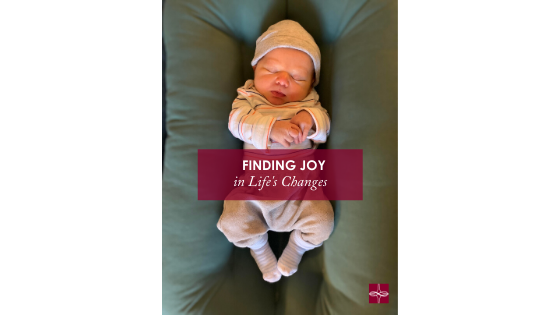
 Recently, my life has changed a lot. I had my first child, Vincent Scott Pierno, on January 31st, and he is the greatest joy I’ve ever known. I never knew that becoming a mother could fulfill my life in the ways it has, and I thank God each day for the happiness, tears, and everything in between that he has brought into my life. As a family, we’ve also started house-hunting and looking for a place to settle within this busy and chaotic Washington, DC area. My in-laws will be moving in with us, and although they’ve already been an amazing help with the newborn, it’s another change to our lifestyle. Finding joy in these changes has been challenging at times, but not impossible through the grace of God. I invite you to join me in reflecting on change in our lives and ways to find joy during times of trial and tribulation. One way to work through life’s changes is through Scripture. There are so many examples we can look to that give us strength and remind us of the goodness in change. One is Philippians 4:6-7, which says, “Have no anxiety at all, but in everything, by prayer and petition, with thanksgiving, make your requests known to God. Then the peace of God that surpasses all understanding will guard your hearts and minds in Christ Jesus.” This passage gives me hope. It can be anxiety-provoking to go through so many changes all at once, but Christ gives us strength and we can do all things with his help. Another verse from Joshua 1:9 that speaks of courage during a hectic time is: “I command you: be strong and steadfast! Do not fear nor be dismayed, for the LORD, your God, is with you wherever you go.” In Scripture, we look at examples of people who have also found change difficult and needed support from God. This reliance is the definition of faith: trust and dependence on God through all things, even when the end is not in sight. Another way to work through life’s changes is through prayer. In prayer we can develop a closer relationship with God, and in this dialogue find joy in knowing Christ more deeply. Prayer can be done in many ways: silently, out loud, in reflection, through journaling, and even through participating in the Mass regularly. Since prayer is “both personal and communal,” we can encounter Christ however we feel most comfortable. I’ve found that the most important part of this prayer is not to always ask God for things, but to offer thanksgiving and to listen. The “listening” is the hardest to do. The chaos of a busy and a constantly changing life makes it even more difficult during challenging periods to take time and listen to God. However, it is in those hard times that we can deepen our relationship with Him. The final way I’d really like to impart is by keeping track of and celebrating joy. In this age of social media and 24/7 news updates, it’s easy to see so much negativity all around us. People gossip about others, worry about things that have nothing to do with them, troll people online for their own enjoyment, and trash talk things that people don’t need to even have an opinion about. This negativity can seep into our daily lives and we can get lost in it. I invite you instead to be a whirl of positivity. As Catholics, we are called to action by being missionaries in the world. St. Vincent Pallotti suggests this in his teachings, and brilliantly states this saying, “Remember that the Christian life is one of action; not of speech and daydreams. Let there be few words and many deeds, and let them be done well.” I find his words timeless. The deeds that Pallotti refers to can be simple ones, such as celebrating anything good that comes into our lives by posting it on social media or encouraging joy in the lives of others. We could truly create small havens of joy for people to encounter by simply finding the joy that already exists. Share this joy and gratitude with at least one person, whether in-person or online. Some examples from my life include sharing in my son’s new life and looking for the good in being home with him rather than the stress. Even something as easy as a smile could change someone’s day. I invite you to use these hashtags when you post about your joys as we get through this life together in Christian spirit! #joyinChristianaction #findingjoyineverything #discoverjoyfulmoments
0 Comments
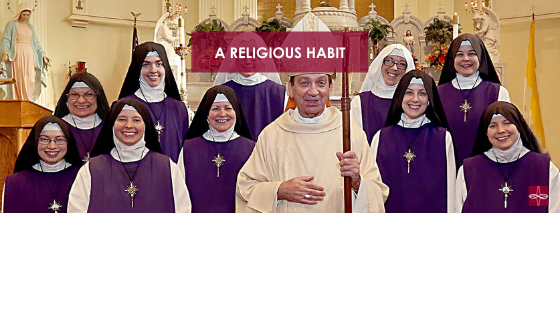 I’m blessed to be a part of a family which includes three different vocations: marriage, religious life, and the discernment of the priesthood. The annual March for Life, which occurred this year on January 24th, provided my wife and me an opportunity to host not only her sister who joined a religious order, but also several members of the religious community. As they are part of a semi-contemplative order, the sisters made the most of their time in DC touring the city, visiting historic and spiritual sites, and learning in museums—all while sharing a public witness to their vocation. As their hosts, my wife and I had a unique vantage point which allowed us to see the reactions of passersby, both the bewildered and the curious, who are not accustomed to seeing women religious in public. The sisters are used to it, and more importantly, realize they have an opportunity to evangelize and share with others who they are and what their vocation is. Often a chat or introductions will be made, prayer cards will be given, and some pictures are taken (whether stealthily or outright). I noticed the sisters made the most of these moments, probably because they realize they can bring anyone they meet into an encounter with the Lord. The sisters and their joy witness to God’s fidelity in ways often unknown. At the Vigil Mass for Life at the Basilica of the National Shrine of the Immaculate Conception, the sisters were just a few of the many women religious present. Though each order’s habits are different, I noticed many pilgrims came up to the sisters after the Mass to inquire about their order and their distinct purple habits. The same happened at the March for Life the next day: many people simply took photos of or with the sisters, others exchanged pleasantries, memories, and prayer cards, and others ran up to the sisters and thanked them for their vocations or wanted to learn more about the order. Returning home with them across town that afternoon, however, we left the massive crowds who shared our values and encountered the daily commuters of DC. I was amused to watch them look up in surprise from their smartphone screens. The sisters would happily engage with their fellow passengers, chat about religious life, and in one case, ask a practicing Hindu about their bindi, or a vermilion mark. Similar scenes occurred over the weekend. but it wasn’t all like a celebrity sighting: on more than one occasion, the sisters would go up to a homeless or mentally-ill person and, after chatting a bit about Jesus and Mary, share a miraculous medal and holy card to remind them about faith and invite them to trust in God. These were people used to being passed by on the sidewalk each day as they begged for food or for someone to listen to and be with them. Imagine the shock they experienced when “strangely dressed” women were suddenly engaging with them and treating them with respect and compassion! There is no way of knowing just how God may have used the sisters as a means of planting the seeds of faith in various encounters. Certainly the unusualness of the situation might shake someone out of their complacency and eventually cause them to recall a positive memory of faith from youth or simply remember consecrated persons live and act in the world as a beautiful witness to… something. That something may lead to a renewed quest for truth or personal peace. In God’s good time, this yearning may be a motivation to reconnect with God and embrace a life of faith and holiness. But all of us, especially laypeople, are similarly called to holiness by virtue of our baptism in Christ Jesus. We need not depend on wearing a religious habit to draw others into an encounter with the Lord, but can invite others in our schools, workplaces, social gatherings, and homes to participate in religious practices such as grace before meals, going on a pilgrimage to a holy site, reading books by the saints, or simply starting a meaningful conversation. The options for spiritual accompaniment are endless. Given time, prayer, and trust in the Lord’s will, each of us can instill the smallest seed of faith which can grow into a towering wonder. For more resources on Vocational Discernment, please click here. To learn more about spiritual accompaniment, please click here.
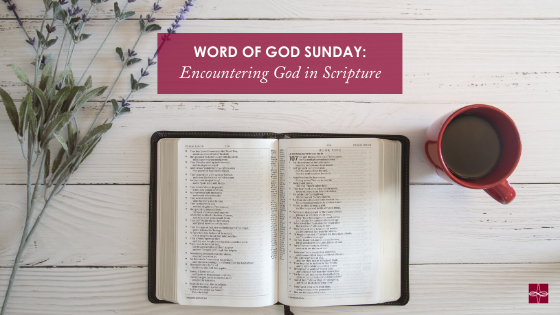 One of the great gifts of the Second Vatican Council and the liturgical renewal of the twentieth century was the emphasis given to the proclamation of the Word of God at all sacraments, primarily at the celebration of Mass. Popes, bishops, and theologians have all sought to highlight the relationship of the life of the Church in every dimension to the Sacred Scriptures. Scripture is the foundation of all that we do as Catholics, ultimately because Scripture is the Word of God. These divinely revealed truths tell us who God is, what He has done throughout history, and what he continues to do, working in our lives each day. Pope Francis, in continuing this call for a renewed sense of awe and appreciation of the Word of God, has proclaimed the third Sunday of Ordinary Time as “Word of God Sunday.” This past Sunday, January 26, was the first observance of Word of God Sunday, and so this week is a great time to reflect on the role that Scripture has in our lives as we seek to model our lives on Jesus Christ, the Word of God. In reflection, we can ask how do we allow the scriptures to permeate our lives so that God’s word is alive in us? Maybe we have a favorite passage, one that we return to again and again to meditate on at different stages in our lives. Or maybe we haven’t really spent much time with Scripture, aside from hearing it at Mass or other occasions in Church. This week, this Word of God Sunday, serves as a reminder to take the gift of Scripture and to allow the Word of God to seep into the rhythm of our lives so that we more fully and deeply come to know our Lord and ourselves. One of my favorite passages of Scripture is from the 24th chapter of the Gospel of Luke following the Resurrection of Jesus. We hear of the encounter that two disciples had with our Lord while walking on the road to Emmaus. These two disciples were stunned at what had taken place and were unsure of what to make of the crucifixion and death of the man they believed to be the Messiah. They were sad that their friend and leader, Jesus, had been so cruelly murdered, and were overcome with grief. When they encounter this man, a man they “were kept from recognizing” (Luke 24:16), he asked them to recount these events. Their almost sarcastic response – “Are you the only stranger in Jerusalem who does not know the things that have taken place there in these days?” (Luke 24:18) – shows us how human an experience this was for the disciples. They explained everything to this man and were shocked that he had no idea what had happened. Little did they know, they were speaking with Jesus himself! So often we focus on one problem or another, are so concerned with our own difficulties, or so caught up in our joys that we forget to consider how the Lord is working in our lives. We don’t always welcome him in and we neglect to see that, in reality, he has been there all along, walking with us on the way. Sometimes, like these two disciples, it is not until later that we see God’s work in our lives, only in reflection. It was not Jesus’ explanation about the work that God has done since Moses and the prophets that opened their eyes to the reality before them. St. Luke tells us, instead, that “was made known to them in the breaking of the bread.” (Luke 24:35) Isn’t this our experience today? We come to know about God through study or reading. But it is in and through the sacraments – especially in the Mass – that we come to know God most fully. When we pray with the Word of God in Sacred Scripture, we open our hearts to an encounter with the living God. We may not recognize him right away—it may take time or a change in our life to make it clear—but those moments when we have a real encounter with God can show us how much he has done in our lives, how close he has been all along, teaching us, guiding us, and preparing us for the great things he has in store. May this Word of God Sunday be a new invitation to welcome the Lord into our lives through his Word. May our hearing and reading of Sacred Scripture always be an encounter with God.
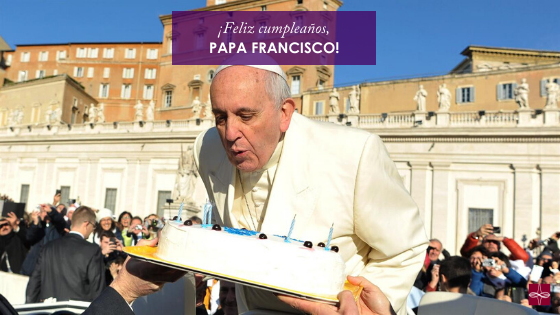 Today we celebrate the 83rd birthday of our Holy Father, Pope Francis. We thank God for the gift of his life and pray for his continued health and leadership in our Church. Having a birthday near the holidays must be pretty hard to bear as a child, and maybe even sometimes as an adult. Birthdays are meant to be celebrated, and sometimes they can be overshadowed by other holiday celebrations! My sister has a birthday on Christmas Day and she never seemed to be able to celebrate the same ways I could (my birthday is over the summer). I always felt bad and try to still make it special for her - even now that we are adults. Although we know Pope Francis for his humility and selflessness, I’m sure even he has found it hard to celebrate his special day from time to time. We celebrate birthdays as a way to mark our growing one year older, but I’m sure with a birthday so close to Christmas, his focus has often been on Christ. I would imagine, in his ministry, our pope has reflected on the significance of their birthdays being so close and how he can look to the purpose of the season over his own celebrating. Let’s also reflect on this now. How can we make Jesus’ birthday especially meaningful this year? In what ways can we strive to “celebrate” with Christ? What implications does Christmas have on my upcoming year as I continue to grow in my faith? “The reason for the season” is a common phrase we hear at this time of the year— a helpful little rhyme to keep us thinking about Jesus’ birth. The purpose of the Son of God coming to Earth was to save us all from our own sins, yet we so often confuse this time with shopping deals and stressful holiday travel plans. Our Lord doesn’t need any of that. He doesn’t need physical gifts—he needs our hearts. He doesn’t need perfection—he yearns for our humble, raw, and disheveled selves. He doesn’t need displays of lights and blow-up snowmen—he needs us to shine his light in the darkness. In order to celebrate his birth, we must first put aside the distractions and concerns that keep us away from prayer and peace at Christmas. The meaningful celebrating that we should be doing for Christ isn’t wrapped up with bows and shiny paper, but includes finding time to appreciate and pray about our Lord’s coming. The celebration for an ordinary person may be tied to cake, candles, and presents, but as Pope Francis would likely agree, celebrating Christ comes from the heart. One way I’ve found to celebrate Christ’s birthday amidst the hustle and bustle of the season is by listening to joyful, instrumental Advent and Christmas music. Something about it makes me feel so peaceful and filled with the joy of Christ that I almost prefer it to lyrical Christmas music on the radio or Spotify! Another practice I’ve found to be helpful is focusing on the giving aspect of Christmas. I feel better giving rather than getting things. My favorite way to celebrate the birth of Jesus is to share the gift of the Christmas story with my young Pre-Kindergarten students. Having been blessed to work in a Catholic school, I’m able to share the incredible birth story of Jesus Christ and to teach those beautiful little minds about God’s promise of love to the world. When I sit back and realize the gravity of my role as a catechist to these children, I feel humbled by it. My heart soars, it prepares my soul for Christmas, and I’m reminded of this holy birthday from so long ago in Bethlehem. As we look toward a new year, both for Pope Francis and for us Catholics, we are reminded that Christmas is only the beginning of Christ’s work on Earth. His ministry will begin at a wedding as an adult farther down the line, and his death and Resurrection happen even later than that. We know Christ’s birthday was celebrated by angels sharing the Good News. We know there were shepherds who also heard about Jesus’ birth, and finally three wise men who followed the star to where Jesus was born. This new year has so much faith-filled potential to allow us a chance to listen closely to how the Gospel message tells us to love and to share our love with those we meet. We can show God’s love to all by living out each day as apostles who share the Good News. So today, on this 83rd birthday of our pope, keep him in your prayers. Pray for continued faithful leadership in our Church at this tumultuous time in our world. Pray for his health, that he may find strength in Christ and remain well. Feliz cumpleaños, Papa Francisco! For more resources to accompany you this Advent and Christmas, please click here.
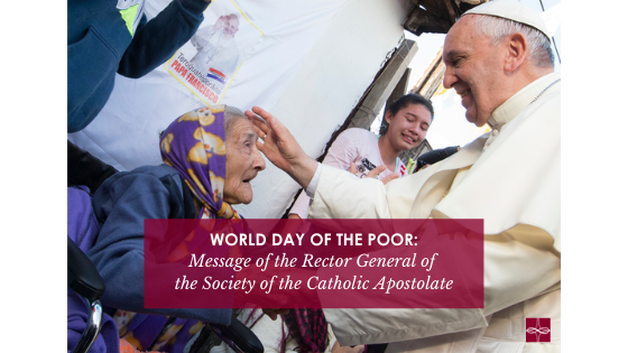 As we celebrate the third World Day of the Poor, prophetically established by Pope Francis, I have just returned from a very unique visitation to Columbia and Venezuela. Let me limit myself here to Venezuela, because of some very touching experiences in this country. Venezuela, as we all know, is one of the resourcefully rich countries of the world, blessed with Petroleum, gold, and many other precious minerals. In the 1960's, this was one of South America’s wealthiest countries, enjoying the highest standard of living; yet today, how different the situation. 1 US dollar is equal to about 30,000 Venezuelan Bolivar. The monthly earnings of a worker is around $5; a medical doctor told me he gets $20 per month, if he even comes to be paid. Just imagine, then, the situation of ordinary people. Millions are migrating to all parts of the world. If possible, the able bodied men and women escape the country, leaving behind their parents and grandparents. People die not because they cannot be healed, but for lack of ordinary medicines; medicines which are either unavailable, or people are too poor to purchase them. One woman I met was suffering from skin cancer and heart problems; she can do nothing. This is a true story. Just imagine her plight. For lack of money or limited transports, children and teachers are unable to go to school. While there are many more examples to narrate, my intention is not to show this wonderful country in a bad way. Paradoxically, despite all of these hardships, I found the people very affectionate and joyful. I met with so many pastoral groups working in the parishes, and hardly anyone spoke about their hardships, or asked for any sort of help. The people were so nice, and I was really touched by them. Through Caritas Poland and local aid, our parishes are organizing soup kitchens and many other charitable activities together with the parishioners. As a small contribution from We Are A Mission, I myself went around distributing food items in one of our parishes. It was a very touching experience. Pope Francis speaks much about the poor, migrants, and the culture of indifference. At times, people get annoyed; why does the Pope keep harping over the poor? The question is precisely what he posed to us in his homily: “do I have at least one poor person as a friend in my life?” Have we come face to face with this poverty in our lives as Christians, or are we merely experts on speaking about it; limiting ourselves to words, and not truly encountering this existentially dark reality? Again as the Holy Father has written, “let us set statistics aside: the poor are not statistics to cite. The poor are persons to be encountered; they are lonely, young and old, to be invited to our homes to share a meal; men, women, and children who look for a friendly word.” Those who lived through the Second World War in Europe will know what it means to survive during and after, yet their grandchildren may not even like to read about those days anymore. It is one thing to speak about poverty, but it is something altogether greater if one has had a real taste of it. When Venezuela- a country greatly blessed by God with all the necessary riches for a decent living- is reduced to such a level of inhumanity by fellow human beings, can we remain indifferent as though it is only their problem? It’s as good as saying that the Amazonian issue is something of only a few countries of that area. But devoid of Amazon, the rest of us would be gasping for oxygen! When a family with a couple of small children wake up in the morning with neither food nor money to purchase it, how will the parents control the weeping kids? When some worry over their health due to overeating, having to count calories after all of the food they consume and walk for hours after they have eaten, it looks so absurd and paradoxical that millions elsewhere starve to death. This is the naked truth that makes us feel uncomfortable. Many will wash their hands and say that it’s all because of corruption or political anarchy in these countries. That is all true. The sanctions that many countries impose to correct these unjust structures and systems will end up hitting the poorest of the poor, and not those at the top, is another truth. I am not writing these lines with the hope of solving all the world’s problems. Instead, it’s to show that the poor are the blessed. The poor find their ultimate trust in Yahweh when all other sources of security are vanish. These are the people blessed with a genuine sense of humanity and compassion, as true evangelical joy is found in poverty and simplicity of life. The Lord of the Universe, Master of our History and Destiny, will make the necessary corrections and justice at the end. Until then- like Sunday’s Gospel- patience and perseverance in our trust in HIM, and the goodness in each person, must prevail. The best comes out of us when we are cornered to such a level. The more efforts there are efforts to destroy our humanity and dignity as persons, the greater will be in the interior force to manifest the beauty of freedom and preciousness imprinted upon us as an image and likeness of God. As we celebrate World Day of the Poor, let us unite ourselves with our Holy Father; kindling a candle of hope for the suffering parts of the world, be it through a smile, prayer, or even a dollar. Who knows, tomorrow we might need them, as this is so much part of our human condition. It is no wonder, then, that the Son of God Himself chose to be born poor to make us rich in divine blessings. “The poor save us, because they enable us to encounter the face of Jesus Christ.”
 There’s a lot of preparation that goes into the holiday season. It seems in our secular society as soon as the calendar changes to November that the world begins buzzing with cooking, baking, buying, wrapping, and planning. Our calendars overflow with gatherings and obligations and before we know it, it’s a new year. As Catholics, we know that this time of year tells a different story. However, the loud hubbub of secular holiday cheer swirling around us can make it difficult to proclaim it, even to ourselves. What would it look like in our daily lives over these next few weeks if we as Catholics challenged ourselves, in this season of frenzied preparation, to prepare ourselves to wait? What might that look like? Here are a few steps that we can take. OBSERVE We cannot decipher what steps to take if we do not spend the time observing where our current steps are leading. Take some time over these next few weeks to observe your spiritual and physical life. Make note of the areas of your life that you feel you are consistently inviting the Holy Spirit to be a part of and those areas in which He has not received an invitation. Notice the time of day or week that anger, frustration, hurt, or anxiety creep into your heart and mind. Where are your moments of joy, praise, and thanksgiving? How are you caring for your physical body and its environment? Observe how you are fueling your body and your mind. Is the source and substance of that nourishment strengthening your body and mind to be the best version of yourself? Are you spending moments in joyful movement, whatever that may look like for your body, in praise and thanksgiving of the vessel that is fearfully and wonderfully made? Simply take time to observe and collect information on your current state. Try not to put a label or judgment on your observation, but rather work to build your awareness. REFLECT Once you have collected your observations, spend some time reflecting on this newfound information and present it at the foot of the Cross. Implore the Holy Trinity to open your eyes and your heart to reveal to you the areas in your life that could be improved or strengthened. Ask for divine intervention to reveal to you the strengths that you possess and the gifts and talents that have been given to you. How might you utilize these strengths, gifts, and talents to bring life and light to those areas of your life that may be lacking? Be patient in your reflection. Do not be afraid of silence! It is often within the quiet of silence that He will make His presence known to you. Allow this prayerful, reflective time to turn your observational information into knowledge. ACT It’s time to turn that knowledge into a plan. Through your observation and reflection, you will have gathered the necessary tools to be able to move forward in your journey. Carry the strengths that have been revealed to you and humbly face the shortcomings that you have observed. What does action look like for your journey? What steps are required to strengthen areas of your spiritual and physical life that may be lacking? Put your plan into practice and remain vigilant and prayerful of the different ways that you can tweak your plan. WAIT We have spent the remaining weeks of the liturgical year in observation, reflection, and action… and now we wait. As you enter into the Church’s new year and the season of Advent, commit to the action plan you have created and joyfully await the celebration of the birth of YOUR Savior. If you’ve put the work into the first three steps, you will find that your action plan is in fact leading you to prepare for the tiny babe wrapped in swaddling clothes. “For a child is born to us, a son is given us; upon his shoulder dominion rests. They name him Wonder-Counselor, God-Hero, Father-Forever, Prince of Peace.” (Isaiah 9:5) Prepare to wait. Prepare the way. Prepare the place and invite Him to take residence in you – body, mind, and soul. For more resources to accompany you during this Advent season, please click here.
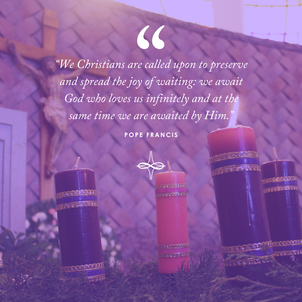 “We Christians are called upon to preserve and spread the joy of waiting: we await God Who loves us infinitely and at the same time we are awaited by Him.” – Pope Francis Over many years, I have been honored to accompany others in their vocation discernment and growth in faith through spiritual direction. Often, as is the case now, it is with young adults – undergraduate and graduate students, seminarians, and those beginning their work careers. In almost every instance, they try to prepare themselves well for the Lenten season, but rarely think about preparing for the Advent season. For many, the end of an academic semester as well as the gatherings, travel, and shopping for Thanksgiving and Christmas tend to leave little time to focus on Advent preparation and living. May I invite you, as I do them, to enter well into the waiting of Advent? It is meant to be a quiet time of deeper reflection on the coming of the Messiah, not just the first coming (the Incarnation) that we celebrate at Christmas, but the second coming of Christ at the end of time. The candles of the Advent wreath will be lit one after the other and the time will go by quickly. May we not let it not slip by, but use it well as a time of prayer, reflection, discernment, and deepening our encounter with Christ, through ongoing conversion of heart! May the Charity of Christ urge us on! For more resources to accompany you during the Advent season, please click here.
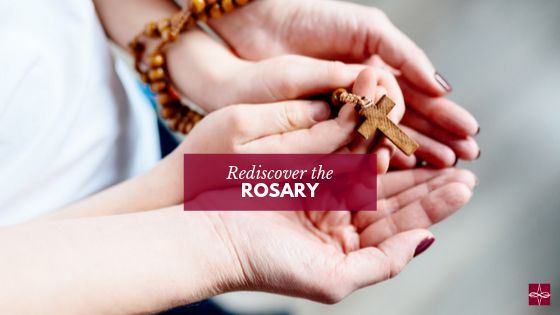 Today we celebrate the feast of St. John Paul II, a saint of our times! He is remembered for many things, including his passion for the arts, outdoors, youth, and families. St. John Paul II also had a deep devotion to Mary, and in what I know of St. John Paul II’s life and loves, we can bring no greater joy in celebrating his sainthood than by honoring our blessed Mother. St. John Paul II’s favorite prayer was the Rosary, and I too, have developed a fondness for praying it. I stumbled upon a recording a couple of years ago in my desire to pray it intentionally. As I would listen and pray along in my car every morning before work, I discovered a love for each mystery and the fruit they bear, as like Mary, I “pondered them in [my] heart” (Luke 2:19, 51). The mysteries of the Rosary invite us to contemplate the life of Christ through the memories of Mary. St. John Paul II says remembering these mysteries “were to be the ‘rosary’ which she recited uninterruptedly throughout her earthly life” (Rosarium Virginis Mariae, §11). In this remembering, the account of the Gospel from the eyes of Mary are timeless, “not only belong[ing] to ‘yesterday’; they are also a part of the ‘today’ of salvation” (John Paul II, Rosarium Virginis Mariae, §13). In this, St. John Paul II reminds us that the Rosary is an invitation to participate in Christ’s divine life, and it is relevant across time to the faithful of all ages. Recently my routine for praying the Rosary has changed as I am now on maternity leave and spend the day taking care of my newborn daughter. Instead of rushing to get my two-year-old son into the car and dropped off at daycare before work and enjoying my prayer time alone in the car, we have the opportunity to hop in the stroller and walk to daycare, spending time together saying hi to neighbors and marveling at the changing of seasons before he starts his school day. Despite the enjoyment both my son and I get from these walks, in the transition of summer at home with mommy to school, and the transition from being an only child to living the realities of being a big brother at only two years old, for quite a few weeks my son was not happy about leaving home for the day. Although my son loves school, he was hating drop off, and his anxiety (and let’s be honest, mine, too) crept in the closer we got to school each day. One morning as I was trying to get him excited for the day, I asked him if he wanted to pray the Rosary with me, telling him it always brings me calm and comfort, and he said yes. I told him I would let my recording play, and I would tell him the stories of each mystery. Thus began a new routine for us each morning. As the Joyful Mysteries play, I tell him about how much Mary loved God that she said yes to being Jesus’ Mommy, and how we pray that we can love God like her and say yes to Him when he needs us to. When the Luminous Mysteries play, I tell him about Jesus’ first miracle, turning water into wine at the Wedding at Cana, and that through Mary, she will lead us to Jesus and help us see the miracles he’s performing in our own lives. In praying the Sorrowful Mysteries, I am very closely brought to tears as I think about explaining death to a toddler, and moved by Jesus’ sacrifice for us, telling my son that no sin stops Christ’s love for us. We pray to be good people and follow the will of God. And when we pray the Glorious Mysteries, I get to teach my son about the glories of the Holy Spirit and Heaven, praying for our ultimate happiness with Jesus, Mary, and all the saints. In praying these, I am in awe of how parenting is transforming my heart, teaching me to be like a little child, loving Jesus without abandon like my son does. By the time we’ve prayed our Rosary for the day, we’ve arrived at daycare. Filled with his spunky confidence and newfound graces, my son hops out of his stroller and says “let me give you a kiss for the road,” and sends me off on my way. Each day, he runs off to the playground to play with his friends, and I am amazed by the graces we’ve both received by praying the Rosary together. In his great love for both the Rosary and the family, St. John Paul II called families to pray this prayer together, acknowledging how its graces unite the family: Individual family members, in turning their eyes towards Jesus, also regain the ability to look one another in the eye, to communicate, to show solidarity, to forgive one another and to see their covenant of love renewed in the Spirit of God. Many of the problems facing contemporary families, especially in economically developed societies, result from their increasing difficulty in communicating. Families seldom manage to come together, and the rare occasions when they do are often taken up with watching television. To return to the recitation of the family Rosary means filling daily life with very different images, images of the mystery of salvation: the image of the Redeemer, the image of his most Blessed Mother. The family that recites the Rosary together reproduces something of the atmosphere of the household of Nazareth: its members place Jesus at the centre, they share his joys and sorrows, they place their needs and their plans in his hands, they draw from him the hope and the strength to go on. (Rosarium Virginis Mariae, §41) From daycare drop-offs to contemplating our family’s deepest sorrows and joys, we too as a family have found this hope and strength of the Rosary to be true and timeless. On this Feast of St. John Paull II, I invite you to honor him and our Blessed Mother by taking the time to pray the Rosary, finding twenty minutes of your time to devote to contemplating the face of Jesus. St. John Paul said, “a prayer so easy and yet so rich truly deserves to be rediscovered by the Christian community… I look to all of you, brothers and sisters of every state of life, to you, Christian families, to you, the sick and elderly, and to you, young people: confidently take up the Rosary once again. Rediscover the Rosary in the light of Scripture, in harmony with the Liturgy, and in the context of your daily lives” (Rosarium Virginis Mariae, §43). Know of my unending prayers for you as you begin this rediscovery of the Rosary for yourself, as with Mary, you too ponder these mysteries in your heart and recognize their fruits in your life. St. John Paul II, pray for us! Our Lady of the Rosary, pray for us!
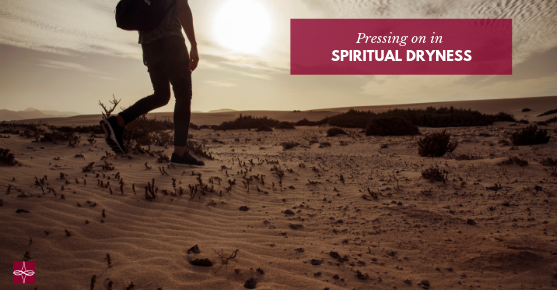 O God, Thou art my God, I seek Thee, my soul thirsts for Thee; my flesh faints for Thee, as in a dry and weary land where no water is. -Psalm 63:1 There are seasons in the spiritual life in which you feel parched, as if you’re wandering the desert without refreshment. Silent reflection is filled with distraction. Prayer seems awkward, difficult, or boring. Your heart feels lifeless. Lately, despite my attempts to find escape, this sums up my prayer experience. It doesn’t matter that I infuse my days with the Mass readings, a Rosary, Catholic podcasts, or spiritual books. Right now, it seems so much easier to turn on a show or scroll through social media than to pray. Any time I resolve to do the latter, all the things I need to do bombard my mind, or the texts and notifications come in streaming. At Mass, I hear the beautiful words of Scripture and the homily but feel hollow in the pew. Am I a bad Catholic? Is something wrong? During times like these, many people of faith get disheartened. They think they have done something wrong in the spiritual life, that God has abandoned them, or that their faith must not be relevant anymore. But all people of faith will experience this to some degree at one point or another! It is often hard to trudge through when warm feelings are absent and prayer requires intentionality and effort, but these times in the spiritual life can be the most fruitful of all. Our hearts can grow cold and tepid for two reasons: either we’ve slackened in the spiritual life and slowly let the cares of the world take over – like the weeds that choke out the good seed in the parable – or God is calling us to deeper faith and growth. If it’s the latter, this is often a time of spiritual maturation that deepens our faith and love. We choose to cry out to God in prayer not because it makes us feel good or holy or satisfied, but because we trust in God and love him despite how we might feel. We’ve often heard that love is a choice, not a feeling. Therefore, when feelings are absent, God is inviting us to choose him with a love that is selfless and trusting. The feelings that are lukewarm, indifferent, or distracted are part of the spiritual dryness St. Ignatius of Loyola called “desolation.” According to St. Ignatius, there are moments in the spiritual life of both consolation and desolation. In times of consolation, we feel especially close to God, find prayer easy, fulfilling, and natural, and have peace and joy. I remember one time talking to a priest in spiritual direction who asked how things were going spiritually. I told him I almost felt guilty because all was going smoothly. He chuckled and told me to enjoy this time of consolation because it wouldn’t last forever—advising me to write down my feelings and spiritual observations as something to look back on in times of dryness or sorrow. A quote attributed to St. Philip Neri sums up this ebb and flow: “As a rule, people who aim at a spiritual life begin with the sweet and afterward pass on to the bitter. So now, away with all tepidity, off with that mask of yours, carry your cross, don’t leave it to carry you.” How can you carry your cross during this time? Below are some tips to reinvigorate your faith and get you through this time of spiritual dryness.
It is important if you feel indifferent to your faith right now not to give up. I encourage you to re-double your efforts in prayer, seek help from your community and the saints, and persevere. Know that this is a completely normal phase of the spiritual life, that even the saints felt arid at times, and that you are not alone.
 Recently at Mass, our priest explained the love of God as Father in a way that I had never heard before. As a parent and teacher, I resonated with his words deeply. In the Gospel, Jesus sent out 72 disciples in pairs to share the good news (Luke 10:1-12, 17-20). They came back rejoicing in all that they could do - like cast out demons - because of the name of Jesus. But our priest reminded us that this is because of God’s glory, not ours. In fact, Jesus didn’t even need the 72 if he didn’t want them. As God, he could share the Gospel on his own to the whole world, in an instant. But instead, he finds it more beautiful and meaningful to have them and us share in ministry. Yes, it is also messy, but love shared is so much more fruitful. Our priest gave many examples of how a parent lets their child help with chores. I experienced the same “I want to help!” one day as I was cutting strawberries. I could have done it in five minutes by myself, or I could let my two-year-old son help—knowing that this would take much longer, that there would be more to clean up, and that I would have to take a lot more precautions. But I sat him on the counter, and he started taking off stems as I washed the strawberries. He took a turn washing some, too. He let me cut the strawberries, but he said he would put them in the container for me. And what a delight it was to remind him how helpful he was, to have him remind me that “we have to be safe” while using a knife, to see him eat a few strawberries along the way and remark on how yummy they were, and to see the joy on his face when he put the lid on our bowl of cut up strawberries and help put them in the fridge. In the same way, God lets us help him prepare strawberries, too. He delights in our imperfect attempts to help and love, to share in his ministry, wherever it is that he has called us to serve. As I write this, it is the second anniversary of my son’s baptism. It is not lost on me what a gift and responsibility it is to raise our children in the faith: to be nurturing saints for heaven alongside my husband and how grateful I am to our community near and far who support us along the way. But again, I am reminded that God could raise our children much better than us (just ask me about tooth brushing or navigating toddler discipline). But he lets us do so and he gives us love and mercy and grace to accompany us day after day. This grace is found abundantly in the sacraments. I pray that we teach and model to our children that we can always call upon that grace, and that they have a desire to participate in it. I pray that they may say to God, “I want to help!,” knowing that all is for God’s glory—not theirs – and that through Him all things are possible. At the end of the Gospel, Jesus reminds the 72 to “rejoice because your names are written in heaven” (Luke 10:20). My prayer for my children – and for each of us as we celebrate the gift of our baptisms, is that we always know that we are loved, wanted, and called. May we know that by the gift of baptism, our names, too, can be written in heaven. To my son, I pray that you’ll always want to help prepare strawberries with me and with God. Thank you for teaching me about childlike faith in a whole new light. Thank you for letting me help God – even though imperfectly – by raising and loving you. It is mine and your father’s greatest joy to serve God through the gift of our children’s lives.
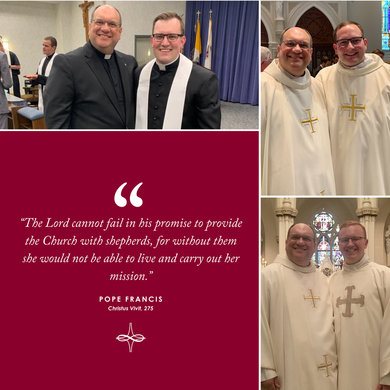 Over the last two weekends, in the midst of an ongoing sexual abuse scandal in the Church in the United States and throughout the world, I have had the privilege of concelebrating at three Masses of ordination of men I have known since their first month of college at The Catholic University of America due to my pastoral work there. They were also instrumental in the growth and development of the Catholic Apostolate Center in its early years. Deacon Alex Boucher of the Diocese of Portland, Deacon Joseph Hubbard of the Archdiocese of Boston, and Father Andrew St. Hilaire of the Diocese of Harrisburg, along with another Catholic University alumnus and Center colleague, Father Brett Garland of the Diocese of Columbus, who was ordained last year, are men of steadfast prayer, selfless service, and great integrity. They strive to live lives of joyful holiness. Each of them, in their own way, has helped me to be a better priest and a better Pallottine. They and many young people who are devoted to Christ and his Church give me much hope, not only for the future, but now. I see it every day in ministry, especially with the Center team, many of whom witnessed along with me the ordinations of these men. Pope Francis has this hope as well when he says in his Apostolic Exhortation, Christus Vivit: “The Lord cannot fail in his promise to provide the Church with shepherds, for without them she would not be able to live and carry out her mission. If it is true that some priests do not give good witness, that does not mean that the Lord stops calling. On the contrary, he doubles the stakes, for he never ceases to care for his beloved Church” (275). Deacon Boucher and Deacon Hubbard will be ordained priests next year, God willing. Please keep them and Fathers Garland and St. Hilaire in your prayers as they minister to and with the People of God. May the Blessed Virgin Mary, Queen of Apostles and Mother of the Church, and St. Vincent Pallotti, zealous and faithful priest of the Diocese of Rome and Founder of the Union of Catholic Apostolate, intercede for them and for our Church! May the Charity of Christ urge them and us on!
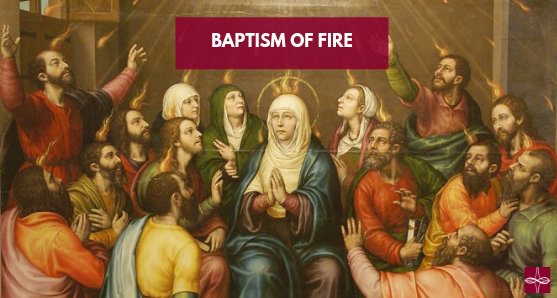 The Feast of Pentecost occurs on the seventh Sunday following Easter Sunday. On this day, we commemorate the occasion of the Holy Spirit descending upon the disciples of Jesus, marking them each with “tongues of flame,” and allowing them to speak and proclaim in different tongues, or languages. To describe this moment in early Church history as a “tipping point” would be an understatement. Pentecost signifies a unique outpouring of God’s love and spirit upon those first men and women to follow Jesus Christ, empowering them to expand and carry His message of salvation to all nations. Today’s first reading from the Acts of the Apostles depicts this anointing of the Holy Spirit, in such a way that has inspired numerous works of music, literature, and art – including some artwork appearing here at the Catholic Apostolate Center! As I reflect on the mystery of Pentecost, and ponder what it could mean for us in this current day, I am drawn to these particular passages from today’s Scriptures: Reading 1: ACTS 2:1-11 “And suddenly there came from the sky a noise like a strong driving wind, and it filled the entire house in which they were. Then there appeared to them tongues as of fire, which parted and came to rest on each one of them.” Have you ever been in a room that was particularly quiet – and then suddenly, for no discernable reason, your senses sharpened dramatically? When I read today about the “strong driving wind” filling the entire house where the disciples were, this sort of heightened awareness is what I imagine the disciples could have felt right before the Spirit arrived and the tongues of flame appeared. Especially in this season following the Paschal mystery, I view this reading as an invitation to seek and contemplate God in the quiet places with an open heart to what may come. Reading 2: 1 COR 12:3B-7, 12-13 “There are different kinds of spiritual gifts but the same Spirit; there are different forms of service but the same Lord; there are different workings but the same God who produces all of them in everyone.” At Pentecost, the flames parted and “came to rest on each one of them [disciples].” I find this so encouraging! This past Lent, we read about Moses and the burning bush, from which God calls out, “Moses! Moses! ...Do not come near! Remove your sandals from your feet, for the place where you stand is holy ground.” Now, at the historical moment of Pentecost, fire is actually sent and bestowed upon each follower. God is still a mystery, as is the Holy Spirit – but a mystery that comes to us and rests upon us. We should not be afraid to be humble like Moses (removing our sandals before God) while at the same time accepting with joy and utilizing with courage the gifts the Spirit may bestow to each of us, according to our unique natures. Gospel: JN 14:15-16, 23B-26 "I have told you this while I am with you. The Advocate, the Holy Spirit whom the Father will send in my name, will teach you everything and remind you of all that I told you." This age of instant communication is hopeful and perplexing all at once. On the one hand, technological advances have made worldwide communication easier than ever – truly a remarkable gift! On the other hand, we have all experienced how shorthand communication styles can misconstrue intended messages and cause confusion or even lasting harm. To me, the promise of Pentecost speaks directly to these challenges. Through the Holy Spirit, we may learn to genuinely and faithfully connect with one another despite all of our perceived differences. There is a definitive continuation of the Easter message contained in today’s Gospel when we are told of “The Advocate… who the Father will send in my name.” We are not alone, even though we live long after the age of Christ. Perhaps this is what is meant when He once said, “I am with you always, until the end of the age” or “Where two or three are gathered together in my name, there am I in the midst of them.” I believe that the Holy Spirit does blow through the rooms of our houses and within our hearts, even today. And while we may not see with human eyes the flames and the dove from this narrative, I believe that we are all surrounded by people who possess the flame within and have allowed The Advocate to work through them – helping them to become little advocates, little flames, and little doves, living among us, bringing peace.
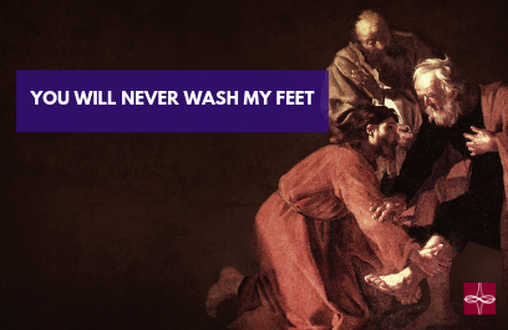 On the evening of our wedding, after the ceremony and reception, my husband and I knelt down and washed each other’s feet. It was an act of love and humility that we wanted to be the foundation of our marriage. We had a beautiful example: A King who washed the feet of peasants; a Savior who washed the feet of sinners; a Friend who washed the feet of betrayers. The washing of the disciples’ feet was the act of a dying man. With the last few moments of his precious life, Jesus knelt down. In the last hours with his closest friends, he served. This was the manifestation of the new commandment he was to give moments later at the Last Supper: “Love one another. As I have loved you, so you also should love one another.” Love. This is what it is all about—the meaning of the Christian life. Jesus models love by washing not only the feet of his beloved friends, but of those who will betray him. He knows not only of Judas’ betrayal, but also of Peter’s—which probably stung him even more. He knows Peter, James, and John will fall asleep with him in the Garden. He knows that almost all of his disciples will flee during his torture and crucifixion. And yet he removes his outer garments and kneels to wash their dusty feet. It would not have been a pleasant affair; their feet would have been caked in dirt and bathed in dust. Perhaps their toenails were long. The feet of these gruff men would have stunk. But I do not imagine that Christ poured just a few drops of water on their feet ceremoniously and then moved on. I believe he spent a few quiet moments with each Apostle, truly washing their feet clean of dirt and grime, and making each feel like the only person in the room. I imagine him drying them tenderly, and looking up with eyes that said, “I do all of this for you.” Were the Apostles embarrassed by such a vulnerable display of affection? Scripture tells us that Peter recoils and says, “You will never wash my feet.” For one man to kneel down and wash the feet of another required vulnerability. For the King of Kings to kneel down and wash the feet of sinners required sacrificial, humble, earth-shattering love. This love culminates for us this week on Good Friday, when we commemorate the crucifixion and death of Christ. While the Church remembers the washing of the disciple’s feet on Holy Thursday, my husband and I have started a tradition of washing each other’s feet on our anniversary. Most recently, we did this on Valentine’s Day. On the day our culture celebrates love, it seemed appropriate to once again remind ourselves of what love actually looks like. Has anyone ever washed your feet? Perhaps it was part of a Holy Week service at your church or school. Perhaps it was part of a retreat you went on. To have your feet washed is an intimate experience. I think it is often more uncomfortable for the one getting their feet washed than it is for the one doing the washing. In my case, I’m usually worried my feet smell or that my nails aren’t groomed. I’m so worried about what my feet will reveal about me and what the other person is thinking that it’s hard for me to enjoy and appreciate the solemnity and beauty of this moment. Perhaps my thoughts echo Peter: “You will never wash my feet.” As we draw nearer and nearer to the pinnacle of our faith celebrated in the Triduum, we are probably coming to the end of Lent with dusty feet. We’ve trampled for about forty days in the desert and have probably stumbled in our Lenten observances a few times. Our feet may be caked in inadequacy, sin, or weakness. Maybe you, like me, are thinking so much about what’s on your feet that you’re unable to look Christ in the eye and allow him to thoroughly wash you. As we enter into Holy Week, I invite you to pray about what keeps you from allowing Christ’s gaze to meet your own. What causes you to join Peter in saying, “You will never wash my feet”? As Pope Francis said during his Apostolic Visit to Cuba, Jesus “came precisely to seek out all those who feel unworthy of God, unworthy of others. Let us allow Jesus to look at us. Let us allow his gaze to run over our streets. Let us allow that look to become our joy, our hope.” Christ’s response to Peter’s hesitancy is: “Unless I wash you, you will have no inheritance with me.” Perhaps he is saying that we will be unable to live a life of discipleship if we have not experienced his gaze—the sacrificial love of God. It is this encounter with Christ, with his gaze, that transforms us. We love because we have first been loved—this is our joy, our hope. This Easter season, may you experience Christ’s life-changing gaze as you allow him to wash your feet. Questions for Reflection: What keeps you from allowing Christ’s gaze to meet your own? What causes you to join Peter in saying, “You will never wash my feet”? For more resources to accompany you during the Lenten and Easter seasons, please click here.
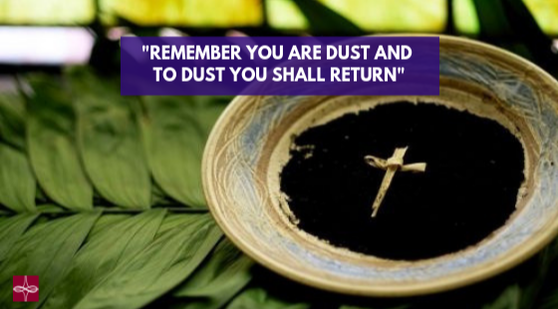 “Remember you are dust and to dust you shall return.” We are now over a week into our Lenten journey; the reality has set in. We are questioning our decisions to give up sweets or the snooze button, and we are tired. Perhaps we have even failed a few times. The forty days seem to drag, and the somberness of the liturgical season has made itself known. Yet during the Ash Wednesday service at my parish, our priest was talking about the joy of the season and how our failures are meant to bring us closer to Our Lord. In a word, he talked about the hope of Lent. As someone who would rather stay in the joy and light of the Christmas season, I was really challenged by Father’s perspective, especially now, after my many failed attempts to give up the snooze button. We often focus so much on the “giving up” aspect of Lent that the words joy and hope do not seem to go hand in hand with this season. This is especially true when I think of the phrase that kickstarts our Lenten journey: “Remember you are dust and to dust you shall return.” On a superficial level, this sign on our forehead doesn’t look so good. Where are the hope and joy in having ashes smeared on your forehead? Throughout his homily, Father also encouraged us to change our perspective on the difficult acts of penance we are attempting and instead to live in the reality that this season could be a time of true conversion of heart. Our Lord desires us to be holy! The acts of penance we choose could be the very means He uses to break us of habitual sin and to bring a deeper level of charity into our hearts. Conversion of heart and holiness? I could get behind that; I can see the joy there! The priest did not say “if you fail your resolutions” but “when you fail.” This is a reminder of our weakness and utter dependence on Jesus, who will be making His way to Calvary soon, in Scripture, to save our souls. This dependence on Him will assist in our conversion of heart, considering “we can do nothing without him” (John 15:5). So: it’s alright to fail, but run back to Him. Beg Him for more grace! Now let’s read this sentence from the Ash Wednesday service one more time: “Remember you are dust and to dust you shall return.” Where is the hope there? Father explained that this is the most hopeful reality yet. Ultimately this reminder of our sinfulness and our death paradoxically represents the life we have in Christ, the Resurrection of Jesus, and the hope we have of entering into the Eternal Reward. Even though the phrase seems bleak, it can propel our hope throughout these 40 days. We have something to strive for, to live for, and to love for. Though I have failed at my Lenten resolutions more times than I have not, I pray with the hope that my humanity might be resurrected, that Our Lord may convert my sinful ways, and that I may remember that this liturgical season is less about what I do and more about what the Lord is doing in my heart to get me home. What are ways you need to be renewed in hope and joy? How can you accept the failures that come with penance and run to Jesus this Lenten season? “Remember you are dust and to dust you shall return.” For more resources to accompany you on your Lenten journey, please click here.
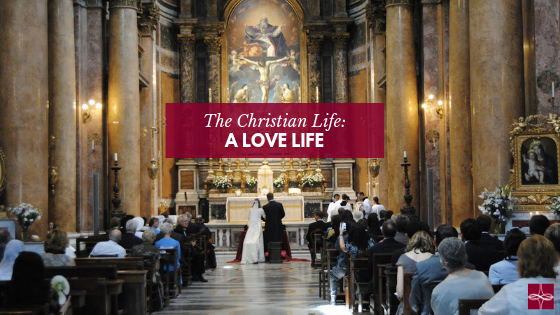 The authentic Christian life resounds with love. Beyond any fleeting attraction or fondness, this love is not meant to be hoarded, but to be given in charity and service to others. The love of a Christian reflects the love of God, without Whom we would not exist nor would we have the capacity to love beyond the other, lesser creatures of this planet. This love cannot be restricted to a single day on the calendar but is meant to flow freely every day at every hour through every difficulty and joy, every sorrow and labor, and every moment of pain and peace. It is love which motivates us not only to live for others, but always for the glory of God. Normally, the marital love between a man and a woman manifests and literally takes on new life in the conception of a child. That child adds another wonderful dimension to the love of married life that encompasses parenthood. Years of teaching, correcting, protecting, caring for, playing with, cherishing, and feeding children are physical and emotional applications of love purposed with raising them as members of the domestic church. Eventually, the outpouring of parental love for children can be reciprocated by them in selfless acts of charity, gratitude, joy, or other expressions of affection. Think of the times your parents would beam at seeing your room tidy without asking, warmly embrace you, offer a surprise gift, or watch you shine at school or on the field. Similarly, the example of love shown between parents is not lost on children. This example imprints the strength of the sacrament of marriage—especially during times of difficulty or stress—and encourages children to better appreciate and actively participate in the love of family life. For example, chores or other labors may be done more freely as intrinsically valuable to the functioning of the domestic church; without love, children might only begrudgingly pick up after themselves when forced. How does love otherwise radiate through family life? The eyes which looked upon the spouse on the wedding day can continue to hold the same gaze of awe-filled love through later moments of despair or pain. The hands which exchanged wedding rings can embrace one another with tenderness, consolation, joy, or mercy. They can also be used in service to the poor, the lonely, or the dying. The lips which uttered sacred vows can impart wisdom, praise, blessings, or part in radiant smiles. Just as God lovingly created the human body down to the smallest detail as “good”, so too can the body we have been gifted be utilized to facilitate God’s love among loved ones and neighbors. Perhaps the first lesson your parents taught you was that God is love. By virtue of our baptism, we have become adopted sons and daughters of our Heavenly Father. As such, every answer to our prayers is entirely out of love, regardless of the result. Similarly, our parents, having been entrusted with caring for us, draw upon the love in their marriage to instruct, guide, nourish, or chastise. While our parents’ love may be imperfect, we can look upon the perfect example of the love of the Trinity to shape our applications of love to transcend human limitations. As St. Paul famously wrote, “love bears all things, believes all things, hopes all things, endures all things.” If it did not, how could any of us be forgiven for our sins against each other or God? How would salvation history exist without love? Authentic marriage or family life is not sustainable without love. And yet, our human limitations may restrict our application of love in certain circumstances. That is why love must be renewed. It must deepen over time to reflect the experiences of life and extend to others. Couples may go on date nights, retreats, vacations, or other activities which can foster relaxation and various communications of love. Similarly, we are reminded of God’s love at each Mass, in which recalling the ultimate Love on the cross helps us receive spiritual renewal to offer that same love to all we encounter. The spiritual renewal we attain allows us to recall the presence of God in our daily lives at every moment and to live up to the potential He calls us to. If our vocation is religious life, then we can hold steadfast to the rules of the order to which we belong and rejoice in our sacred calling. If we are single, we can allow ourselves to increase our capacity to love or extend it to others. If we are married, we can reaffirm the gifts of love in the family— raising children in the Faith or cherishing our spouse. In doing so, we realize that love does not come from ourselves. Rather, God, the source of all love, dwells in our hearts and provides the strength and courage to open ourselves in vulnerability to another. Our love may be spurned, mocked, or tested, but just as God will not refuse His infinite mercy to the hardest of sinners’ hearts, so too are we called to rise above human judgements or inclinations and extend to others the great gift of love God Himself never tires of bestowing. Question for Reflection: Who are some examples of authentic Christian love in your own life? For more resources on Marriage and Family, please click here.
|
Archives
November 2026
Categories
All
|










 RSS Feed
About |
Media |
© COPYRIGHT 2026 | ALL RIGHTS RESERVED