
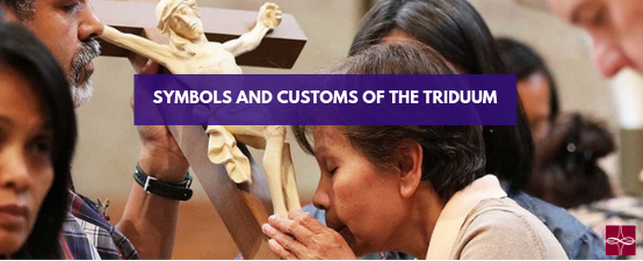
 From the evening Mass of the Lord’s Supper until Evening Prayer on Easter Sunday, the Church celebrates a very special period called the Paschal Triduum. As the USCCB explains, the Easter Triduum is the summit of the Liturgical Year which “marks the end of the Lenten season.” Because of this important spiritual shift, there are some symbols used during this liturgical season that are unique to the Paschal Triduum, and I hope that you might find and reflect on these symbols this year as we commemorate the life, death, and Resurrection of Christ. Holy Thursday Holy Oils The Holy Oils that are used by the Church throughout the year (Oil of the Sick, Oil of the Catechumens, and Holy chrism) may be presented during the entrance procession of the Mass of the Lord’s Supper on Holy Thursday. These oils are blessed by the Bishop during the Chrism Mass—which can happen on Holy Thursday or another time during Holy Week—with the priests of the diocese gathered at the local cathedral. During this celebration, all of the priests present renew their priestly vows. Ringing of the Bells During the “Gloria” which is sung on Holy Thursday, we hear the altar bells ringing! We are celebrating the Mass for the last time until the Easter Vigil, and the Church is in mourning so the bells will remain silent until we sing the “Gloria” again. Washing of the Feet As Jesus did at the Last Supper (John 14:1-17), the Church is called to wash the feet of the members of the Body of Christ during the celebration of the Institution of the Eucharist. This symbol of humility is a wonderful connection with the service of Christ. Ubi Caritas It is rare that the Church prescribes a specific hymn to be sung other than those prescribed for the Proper of the Mass, yet on Holy Thursday the Roman Missal says that we should sing the ancient song “Ubi Caritas” during the Offertory. A very simple song, the lyrics are very meaningful, especially for the Mass of the Lord’s Supper. Translated, they mean "Where charity is, God is there." Eucharistic Procession and Reposition The Church’s tabernacle, while normally filled with the Blessed Sacrament and reserved hosts, is emptied and brought to the Altar of Repose where the faithful are invited to join in Adoration. This procession is meant to be of great importance for the community and reminds us of the walk that Christ is about to take the following day on the Via Dolorosa, but instead of being nailed to a cross, we place our King in a place of honor. Good Friday Fonts After the Mass of the Lord’s Supper on Holy Thursday, churches are supposed to empty their Holy Water fonts “in preparation of the blessing of the water at the Easter Vigil, and it corresponds to those days on which the Eucharist is not celebrated (i.e., Good Friday and Holy Saturday).” (EWTN) Prostration On Good Friday, the Church is mourning the death of Christ and is full of sorrow. In response to this sorrow, the priest (and deacon, if present) prostates himself in front of a stark, barren altar. There is no music and none of the regular pomp and circumstance that comes with the beginning of a liturgical celebration. No sacraments are to be celebrated but that of penance and the anointing of the sick. The earth has gone quiet. No Invitation Normally, when a priest begins Mass, he invites us all to pray along with him, saying, “Let us pray.” During the Celebration of the Lord’s Passion (Good Friday), no such invitation is made. The priest just begins his invocation. Solemn Intercessions You may find that the prayers of the faithful may take longer than normal. Your church may sing them or have them chanted, with some kneeling and standing interspersed. Adoration of the Holy Cross There are many ways in which the Celebration of the Lord’s Passion is different from other liturgical celebrations, and the adoration of the Cross is certainly one of them. We are invited to come forward and spend time in veneration and adoration of the Cross on this most solemn of days – the day on which Christ perished while hanging from the very cross which we venerate. You may notice people genuflecting to the cross – this is something reserved specifically for Good Friday, out of veneration and sorrow for the blood which was shed and soaked up by the wood of the cross. Communion The Celebration of the Lord’s Supper is not a Mass. It is the one day out of the year in which no Mass is celebrated anywhere on Earth. Therefore, when we come to the celebration, there is no Eucharistic Prayer or any prayer related until, after the Adoration of the Holy Cross, the priest or deacon brings out the Blessed Sacrament and begins praying the Agnus Dei as it is normally done at Mass, which follows with himself and others receiving the Blessed Sacrament. Holy Saturday and the Easter Vigil Decoration When one walks into the church for the Easter Vigil, they will notice a big change from the celebrations of Lent and Holy Week – the church should be decorated with lilies, white and gold, and a joyful décor! While the lights should be turned down as well, we are anticipating the Resurrection and the excitement is palpable! The Light of Christ From the fire used to light the Easter Candle, the inscriptions on the Easter Candle, and the procession into the Church, light is integral to the Easter Vigil due to its representation of the "light of Christ, rising in glory," scattering the "darkness of our hearts and minds." We process into the Church with the Easter Candle, “just as the children of Israel were guided at night by the pillar of fire, so Christians follow the risen Christ” as we proclaim The Light of Christ while singing praises of thanksgiving! (USCCB) Readings Instead of the standard 3 readings at a Sunday Mass, at the Easter Vigil we generally hear anywhere between 5 and 9 readings. As we prepare to celebrate some of the holiest days in our Church, I invite you to observe the different rituals, customs, and symbols present during the Triduum. May you have a blessed and joyous Easter season! Question for Reflection: What changes do you notice from the Lent to Easter season? For more resources to guide you throughout the Triduum into the Easter season, please click here. *This post was originally published on 4/9/2019.
0 Comments
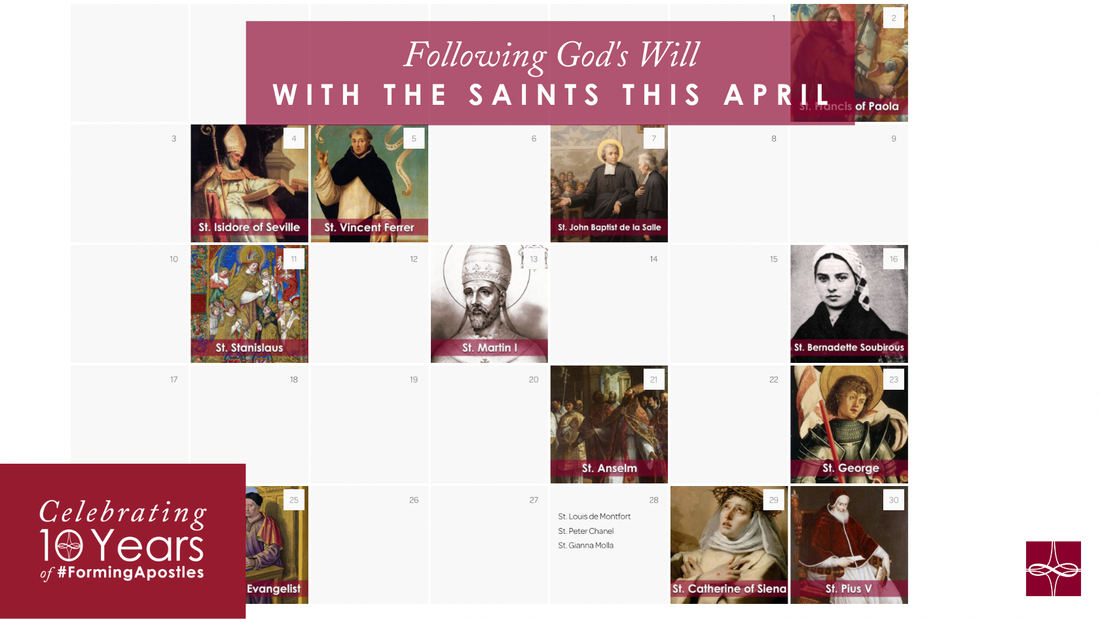 This April, we have a busy season of liturgical events. From the conclusion of Lent to Palm Sunday, Holy Week, Easter, and the Octave of Easter, the entire Easter season is filled with solemn liturgies, commemorations, and celebrations. Through it all, we are called to grow in our relationship with the Lord. When every Sunday seems to be celebrating or commemorating something different, I often find myself turning to the saints for some consistency and routine. Saints to Prepare us for Holy Week This week, we celebrate three saints who can help us prepare for Holy Week. Today, we celebrate the 14th century Dominican St. Vincent Ferrer. He was a gifted intellectual who discerned God’s call for him to be a missionary and ultimately became known for his missionary work all throughout Europe. St. Vincent Ferrer incorporated his intellectual gifts into missionary work for the good of the universal Church. Yesterday, we celebrated another gifted intellectual in the history of the Church: St. Isidore of Seville. St. Isidore is known for his writings which helped spread the faith even long after he had died. On Thursday, we will celebrate St. John Baptist de la Salle. He is known for his educational reforms which included the founding of the Institute of the Brothers of the Christian Schools. Through prayer and discernment, he recognized the need for education reform which included having trained lay teachers. He devoted his life to increasing the access to education for those who normally would not get such opportunities. We can look to all three of these saints to help us prepare for Holy Week by allowing the Lord to work in our lives using the gifts He gave us. April 28th On April 28th, we will celebrate three saints who have left a great impact on the Church: St. Louis de Montfort, St. Peter Chanel, and St. Gianna Molla. St. Louis de Montfort was alive from the late 1600s to the early 1700s. Even though he died when he was only 43 years old, many of his writings form the basis of much of Mariology (the study of Mary) today. St. Peter Chanel was a 19th century Marist who was a missionary on the Polynesian island of Futuna. After four years of tireless work helping the islanders with daily life, Peter Chanel was martyred when the chief’s son converted to Catholicism. After his martyrdom, many of the islanders eventually converted to Catholicism, including the chief himself. Now the island (as well most of Oceania) has a strong devotion to St. Peter Chanel. Lastly, we will celebrate the 20th century saint, St. Gianna Molla on April 28th. St. Gianna Molla was an Italian pediatrician who refused an abortion and hysterectomy despite her life-threatening pregnancy and eventually died after giving birth. She is known for following the teachings of the faith while serving as a doctor and is a model for Catholics practicing medicine today. As we enter this liturgically busy April, let us look to the saints we celebrate this month for inspiration in following God’s will throughout our lives using the gifts He has given us. To learn more about the saints, visit our Catholic Feast Days Website by clicking here. To view a calendar of the feast days in April, and each month, click here. For more Lenten and Easter resources, please click here.
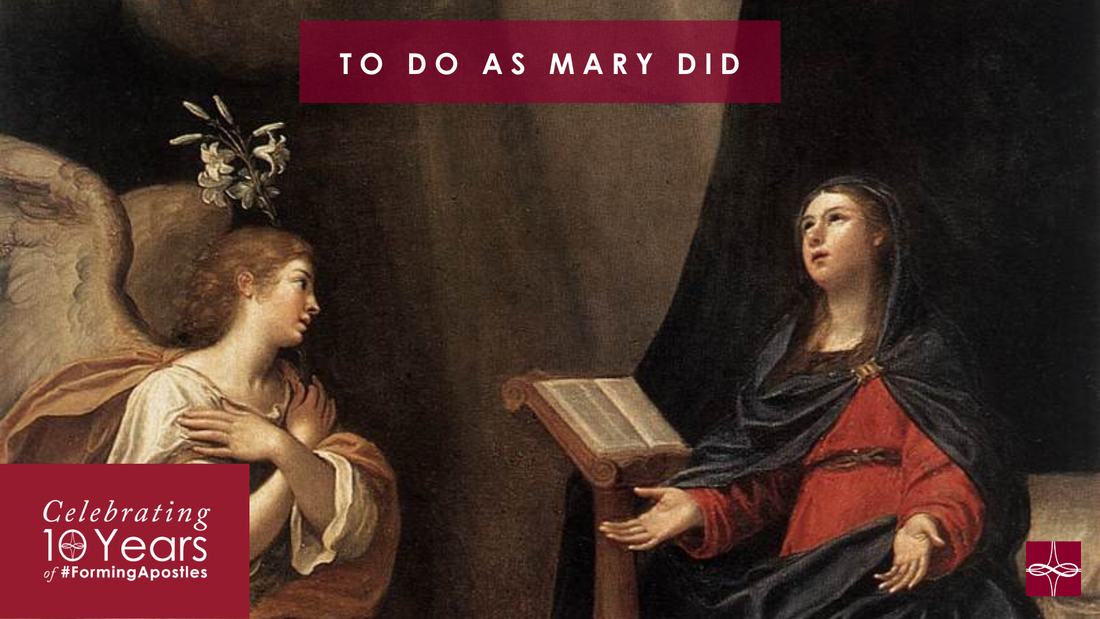 How much time do we spend fretting about the items on our to-do list? Whether it’s a long-term goal or a set of tasks for the day, the pressure to do all things (and to do them well) seems overwhelming at times. In tomorrow’s feast of the Solemnity of the Annunciation of the Lord, we see how the Blessed Virgin Mary offers us an alternative to our preoccupation with personal accomplishments. Her response to the angel Gabriel’s message focuses instead on God’s initiative. The angel greets her saying, “Hail, full of grace!” (Luke 1:28), or in other biblical translations he refers to her as “highly favored.” Gabriel goes on to describe the greatness of the child she will bear: “He will be great and will be called Son of the Most High, and the Lord God will give him the throne of David his father, and he will rule over the house of Jacob forever, and of his kingdom there will be no end” (Luke 1:32-33). If I imagine myself in Mary’s place, I would find it very hard to resist merely contemplating my merits and basking in the divine recognition I had just received. Our Blessed Mother, however, thinks only of her lowliness before the Lord, identifying herself simply as “the handmaid of the Lord” (Luke 1:38). She knows that her “yes” to the Lord is far from simple. Because she was only betrothed to Joseph, her pregnancy could mean not only shame, but death by stoning. Despite such difficult circumstances and uncertainty as to how this could possibly come about (she asks, “How can this be?” (Luke 1:34)), she trusts in the power of the Most High. Allowing the Holy Spirit to work freely within her, she grants her full assent: “May it be done to me according to your word” (Luke 1:38). She gives no thought to how she can do this, but instead marvels at all that God does. Just a few verses later (Luke 1:46-55), Mary offers her great canticle known as the Magnificat, in which she proclaims the greatness of the Lord and all God’s mighty deeds. In her singular role within the history of salvation, Mary directs all attention to the grace of God that works within her. What a timely message during this liturgical season! It can be tempting to focus on what we have been doing (or not doing) for Lent. Yet this joyful mystery of the Annunciation prompts us to recognize what God is doing within us. After all, the purpose of a Lenten resolution is not simply to achieve a goal we have set for ourselves but to allow ourselves to be transformed by God’s grace. Perhaps in prayer over the next few days we might consider: How has God’s grace been at work in me lately? How can I entrust myself to the power of the Most High instead of getting bogged down in what I need to do and how challenging it may be? How can I allow the Holy Spirit to work in and through me? May our celebration of Mary’s life of charity, hidden sanctity, and faithful fulfillment of God’s will lead us to imitate her example, so that we too may be mindful of the great things the Lord has done in us and for us.
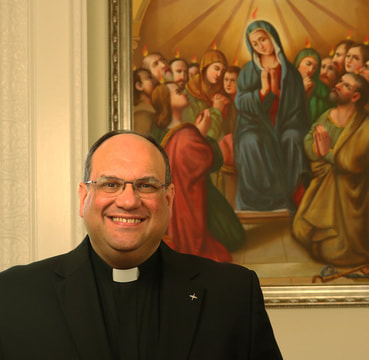
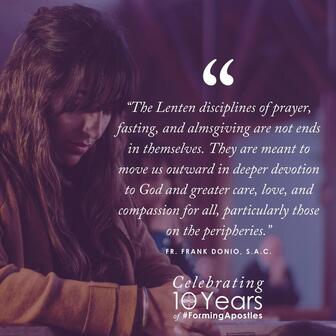 In two days, on the Solemnity of the Annunciation of the Lord, Pope Francis will consecrate Russia and Ukraine to the Immaculate Heart of Mary. He has invited the bishops and priests of the world to join him that day in offering prayer for peace and consecration. The Lenten season is a time for us to intensify our prayer. May we be in prayerful solidarity with Pope Francis on March 25th! Fasting is another aspect of Lent. It provides us a means to purify our body and mind to focus greater attention on love of God and love of neighbor. May our fasting lead us to a deeper encounter with Christ as well as with those who are suffering, abandoned, and marginalized! Lent is also a time to give alms, especially to those who are most in need. There is truly a refugee crisis in many parts of the world, most especially those who are fleeing the war in Ukraine. May we join with those whose lives are uprooted by force and give to charities that are aiding them! The Lenten disciplines of prayer, fasting, and almsgiving are not ends in themselves. They are meant to move us outward in deeper devotion to God and greater care, love, and compassion for all, particularly those on the peripheries. May the Charity of Christ urge us on! In God, the Infinite Love, Fr. Frank
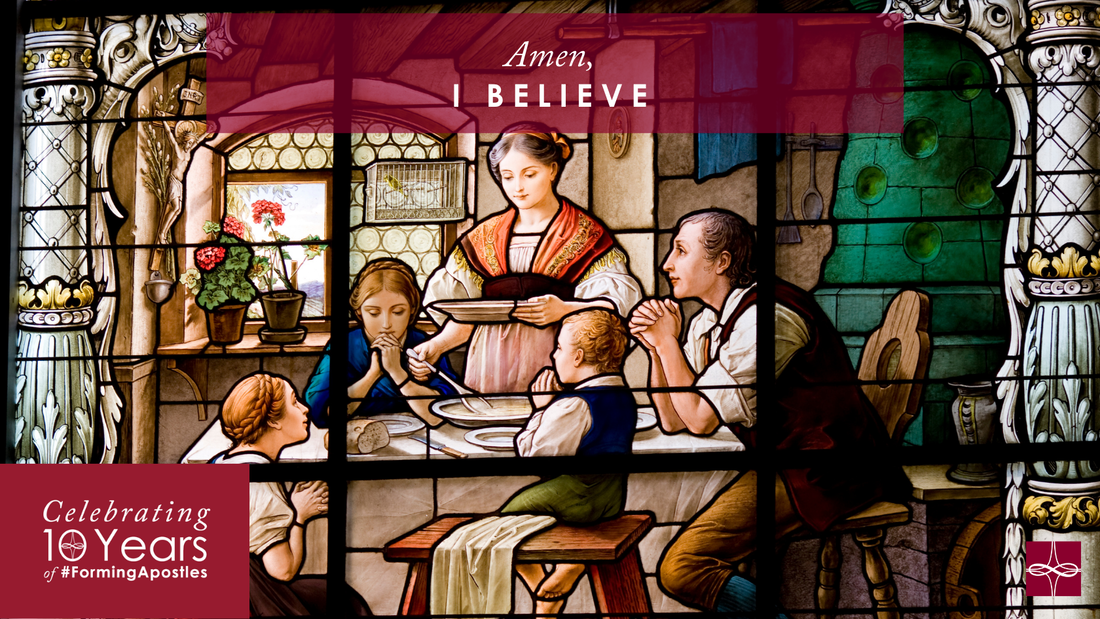 Fairly recently, we taught my son to say grace before meals. He contributes by saying, “Amen” and folding his hands. My husband patiently encourages him to keep them folded and he knows we pray before he eats. He even got his Grandma to say “Amen” when they’re together. It’s the sweetest thing and fills my heart with hope. Saying, “Amen” got me thinking though: What a perfect word to carry my family through Lent this year! Think about it: what do we say to begin and end prayer? Amen. The Creed, the Our Father, the Hail Mary, our spontaneous prayers–every prayer ends with Amen. The faithful participate in the Great Amen in the Eucharistic liturgy at Mass, As the USCCB explains, “The Eucharistic Prayer concludes with the Final Doxology…The people respond with the Great Amen a joyous affirmation of their faith and participation in this great sacrifice of praise.” What exactly does “Amen” mean though? The Catechism elaborates when discussing the Creed, “In Hebrew, amen comes from the same root as the word ‘believe’...Amen expresses both God’s faithfulness towards us and our trust in him.” (CCC 1062). This seems pretty powerful for a Lenten reflection on God’s love and mercy. God’s faithfulness endures. By responding with Amen, we acknowledge this faithfulness and express our trust in him. The section goes on to say, “To believe is to say ‘Amen’ to God’s words, promises, and commandments; to entrust oneself completely to him who is the ‘Amen’ of infinite love and perfect faithfulness” (CCC 1064). When we say Amen, we are saying “I believe” –a beautiful reiteration of our Baptismal vows. I believe. Amen. I believe. I’m certain my two-year-old son already sees God in so many things. Already, he has many opportunities to acknowledge God’s faithfulness: After grace when he says Amen, at Mass when he closely watches the priest lift the host in consecration, and at bedtime when he says goodnight to Jesus. And through my son and his budding faith, I also see God. My son’s namesake, St. Vincent Pallotti, spoke about finding God when he said, “Seek God and you will find God. Seek God in all things and you will find God in all things. Seek God always and you will always find God.” This is such a practical application of big concepts in our understanding of God, perfect for a child to consider as he grows in faith and as we accompany his journey in life. “Seek God always and you will always find God” is also a great phrase to take to prayer this Lent. I think it will continue to help shape my prayer during this season of reflection. As we continue throughout Lent, consider these different aspects of our faith. Every time you say Amen, I invite you to reflect on who you are saying it to and what you believe. May you more earnestly seek God, find God, and trust in his faithfulness throughout your life and during this time of prayer, fasting, and almsgiving. Lent can be a powerful season for us, fortifying our hearts with Christ at the center. As Vinny learns more about prayer, I hope that I can continue to teach him about our Faith, the faithfulness of God, and how to “Seek God” in order to find him. Amen, I believe. Catholic Church. Catechism of the Catholic Church. 2nd ed. Washington, DC: United States Catholic Conference, 2011. http://www.usccb.org/beliefs-and-teachings/what-webelieve/catechism/catechism-of-the-catholic-church/epub/index.cfm
 Ever since creation, mankind has had to battle against evil. In every age, Satan has been prowling about seeking to destroy, attempting to separate us from our life in Christ. Fortunately, because God cares for us so immensely, He has given us countless tools to equip us in this battle. Romans 8 reminds us: “What will separate us from the love of Christ? Will anguish, or distress, or persecution, or famine, or nakedness, or peril, or the sword?... For I am convinced that neither death, nor life, nor angels, nor principalities, nor present things, nor future things, nor powers, nor height, nor depth, nor any other creature will be able to separate us from the love of God in Christ Jesus our Lord.” However, because our loving God created us in freedom, it is a daily act of the will to remain in His love and under His umbrella of protection. We have resources to help in the fight against evil, as well as advocates we can call upon to accompany us in driving away the demons that seek our ruin. One such advocate whom we celebrate today is St. Patrick. A simple young man who was sold into slavery to Ireland in the 5th century, St. Patrick ultimately gained his freedom and chose to return to the land of his captivity as a missionary to spread the love and truth of God. While in captivity, Patrick prayed constantly and nurtured his faith to overcome the harsh circumstances, and God strengthened him to grow into a saintly superhero known for driving out demons. His prayer, the Lorica (otherwise known as St. Patrick’s Breastplate), is comprehensive in covering all the ways we can be attacked by evil. It is a beautiful prayer that my husband and I pray aloud together each morning; and I can attest to its protection in many incidences. The act of reciting this prayer brings a spiritual covering over us when prayed in faith. St. Patrick is celebrated annually on March 17th, a feast day which occurs during the season of Lent. Today, we can attend Mass on this day and enjoy a traditional Irish meal and festivities as we remember the gift Patrick gave us by his example of driving out evil and spreading God’s love amidst treacherous conditions. He is a bigger than life example for me of how God can equip us with His power to do battle against evil. And Lent is a perfect time in the Church year to remember and celebrate him. During the season of Lent, we focus on our individual weaknesses that allow evil to creep into our lives and practice ways to defeat the darkness within and around us. We look inward and examine our thoughts, words, and actions through prayer, fasting, and almsgiving. These three Lenten pillars can be physical ways to drive out evil influences, reorient our hearts and minds to serve others, and recommit to living in Christ. Having such a superhero of faith as Patrick helps me realize that I need help and cannot do it on my own. Cardinal John Henry Neumann reminds us: “We are not our own masters. Through creation, redemption and regeneration we are God’s property and He has a triple claim upon us. We find that independence was not made for us – it’s an unnatural state, and will not carry us on safely to the end. We are creatures and have two duties – to be resigned and to be thankful.” So, I contemplate during this season of Lent that I am in need of a Savior! Each day I need to rededicate myself to more time in self-examination and prayer for divine assistance to battle against the evil in my life. The Church offers us ways to walk with our brothers and sisters through the Stations of the Cross, to redirect us to follow in Christ’s footsteps. There’s great power in doing this together, as most battles are won by an army working together. Other suggestions for becoming more adept in driving away the demons and battling evil are:
Lastly, I encourage you to adjust your armor daily as instructed in Ephesians 6:11, 14-18: “Put on the full armour of God so as to be able to resist the devil’s tactics. So, stand your ground, with truth a belt around your waist, and uprightness a breastplate, wearing for shoes on your feet the eagerness to spread the gospel of peace and always carrying the shield of faith so that you can use it to quench the burning arrows of the Evil One. And then you must take salvation as your helmet and the sword of the Spirit, that is, the word of God. In all your prayer and entreaty keep praying in the Spirit on every possible occasion. Never get tired of staying awake to pray for all God’s holy people.” Through Christ and the intercession of the saints, particularly St. Patrick, I can wholeheartedly enter into these weeks of Lent to learn more precisely how to drive out the evil in my own life so I can be more disposed to proclaim the love of Christ in who I am and what I do. May you have a Lent filled with freedom from all evil and experience a deep renewal in living for Christ! For more Lenten resources, please click here. To learn more about St. Patrick, please click here.
 I remember singing the songs over and over again and thinking, “I can’t wait to teach these to my children.” I envisioned us waking up to greet the day with certain hymns, humming them during chores and tasks, listening to them during meals, or resting our heads with their familiar words in the air. Years later, they are barely known. Yet they resurrect in my heart and on my lips as I wash the dishes after bedtime, exhausted but experiencing a newfound contentedness. “In the Lord, I’ll be ever thankful. In the Lord, I will rejoice. Look to God, do not be afraid. Lift up your voices the Lord is near. Lift up your voices the Lord is near.” At some point, the music stopped. I found myself too frazzled by all the other noise to add any more. There were constant questions to be answered like, “How are popsicle sticks made?” and “Is heaven farther than outer space?” There were sibling squabbles to ameliorate, stomping to quiet, odd raspberry noises during meals made by silly little boys to redirect. Throughout motherhood, I have often found my head and heart pulled in all directions at once – caring deeply for my little family, attempting to be present to each of my children, nourishing them, educating them, creating a clean environment for them, being a good spouse, daughter, sister, parishioner, friend. There have been people to pray for, close by and across oceans. There have been bad habits to overcome. There has been communication to improve on. Works of mercy to be lived. On top of everything, a digital life to participate in and comment on—my own and the lives and reflections and insights and meals of others. How could I be adding more noise? It seemed too much. But Scripture, especially when sung in hymns, is not noise. And so, I found myself the other day on Ash Wednesday standing at the kitchen sink after bedtime singing. “In the Lord, I’ll be ever thankful. In the Lord, I will rejoice. Look to God, do not be afraid. Lift up your voices the Lord is near. Lift up your voices the Lord is near.” In spite of a long day, with dishes still strewn about, sticky counters, and a kitchen floor sprinkled with crumbs, I found myself singing. In spite of the laundry that needed to be moved to the dryer, I found myself singing. In spite of the article I still needed to write and the prayer I still needed to rest in, I found myself singing—with joy and renewed in strength. This is what I love about hymns and Scripture. They so often speak the words of my heart that I cannot find the strength to compose myself. This is so true especially of the psalms. In this case, I was prompted by the Holy Spirit, who reminded me of the words and melody. And I responded with an act of the will. It was a small moment where I said “yes” to the Lord and an example of how he gave me the strength to carry on in my vocation. The words never would have erupted from my heart otherwise. Instead of thanksgiving, I could have muttered complaint and grumbled through my late-night tasks. I could have given up and gone to bed, promising to wake up early and take care of things in the morning. I could have ignored the song of my heart. But as I hummed and sang aloud, I remembered that we were made for praise, for worship. These are so deeply part of our identity and humanity. Creation praises the Creator. When we praise and give thanks, we live out our deepest identity. Selfishness, ego, and pride melt away, leaving humility and a rightly-disposed heart. And that’s something God can work with. I’ve had so many ideas for how to experience renewal this Lenten season, but that evening, the Lord revealed his plan for me. My yearning to quiet the noise is worthwhile and important. I can do that by eliminating as many distractions as possible and creating boundaries for the information I process and encounter. I can set times to check my email. I can put my phone in the other room during the day. I can set a limit to how much I go online or scroll. But I can also keep singing. My goal for this Lenten season is to remember and rest in my belovedness. And I think praising God and singing in gratitude, small as it may seem, will help me remember. “In the Lord, I’ll be ever thankful. In the Lord, I will rejoice. Look to God, do not be afraid. Lift up your voices the Lord is near. Lift up your voices the Lord is near.”
 I often find Lent to be a struggle. I’m the sort of person who likes to set goals and achieve them. Typically, this translates into making lofty Lenten resolutions, trying to rid myself of every bad habit, and ending up disappointed and disheartened when I fall short. When I heard the readings on the final Sunday before Lent, they seemed to be calling me to break out of this pattern. These readings, just a few days before Ash Wednesday, do not issue a challenge to achieve ambitious spiritual goals. Rather, the readings speak to us of growth and fruitfulness. The first reading sets the theme by describing how “The fruit of a tree shows the care it has had” (). Similarly, in the Gospel, Jesus reminds us that “every tree is known by its own fruit” (Luke 6:44-45). Sirach 27:6). Similarly, in the Gospel, Jesus reminds us that “every tree is known by its own fruit” (Luke 6:44-45). This theme of fruitfulness is woven throughout Scripture. In the Gospel of John, Jesus commands the disciples to “go and bear fruit that will remain” (John 15:16). Pope Francis describes bearing fruit as one of the identifying characteristics of missionary disciples. His description of the Church as an evangelizing community contains wisdom that can be applied to our approach to Lent: “An evangelizing community is always concerned with fruit, because the Lord wants her to be fruitful. It cares for the grain and does not grow impatient at the weeds. The sower, when he sees weeds sprouting among the grain does not grumble or overreact. He or she finds a way to let the word take flesh in a particular situation and bear fruits of new life, however imperfect or incomplete these may appear” (Evangelii Gaudium, 24). What if instead of thinking about what I should be giving up for Lent or how I’m doing with what I resolved, I reflected on how I can allow this Lent to be a season of growth and lasting fruit? Shifting our focus and directing our attention to the fruit that God wants our lives to bear opens us up to the possibility of new life. It reminds us that this Lenten journey is not about achieving something on our own merits. It is the Lord, the sower, who scatters seed generously and brings forth new life. Pruning all that is unhealthy is an important part of the growing process, yet our focus is not on what we leave behind. When we set our eyes on the good fruits God is bringing about, we maintain a much healthier perspective. Instead of getting caught up in feelings of defeat or failure for missing the mark, Lent can truly prepare us for the newness of life we celebrate in a special way during the Easter season. Lenten resolutions are a good and worthwhile practice, but we must be careful not to lose sight of their greater purpose. They are not about giving up something as if that were the end in itself. Giving up sweets or putting limits on our binge-watching is not simply about an exercise of willpower. They are meant to open us up something more. Instead of seeing our Lenten resolutions as a “no” to something, we can see them as a “yes” to caring for our well-being, a “yes” to more time for prayer and meaningful conversation with friends and family. These are the lasting fruits toward which such disciplines are intended. As we continue our Lenten journey, let us not grow impatient at the weeds that crop up and threaten our good intentions. Let us not grumble or overreact when we stumble. Rather than giving in to feelings of defeat and failure, let us allow God’s grace to take root in us and renew us so that we may bear fruit that will remain, no matter how great or small it may be.
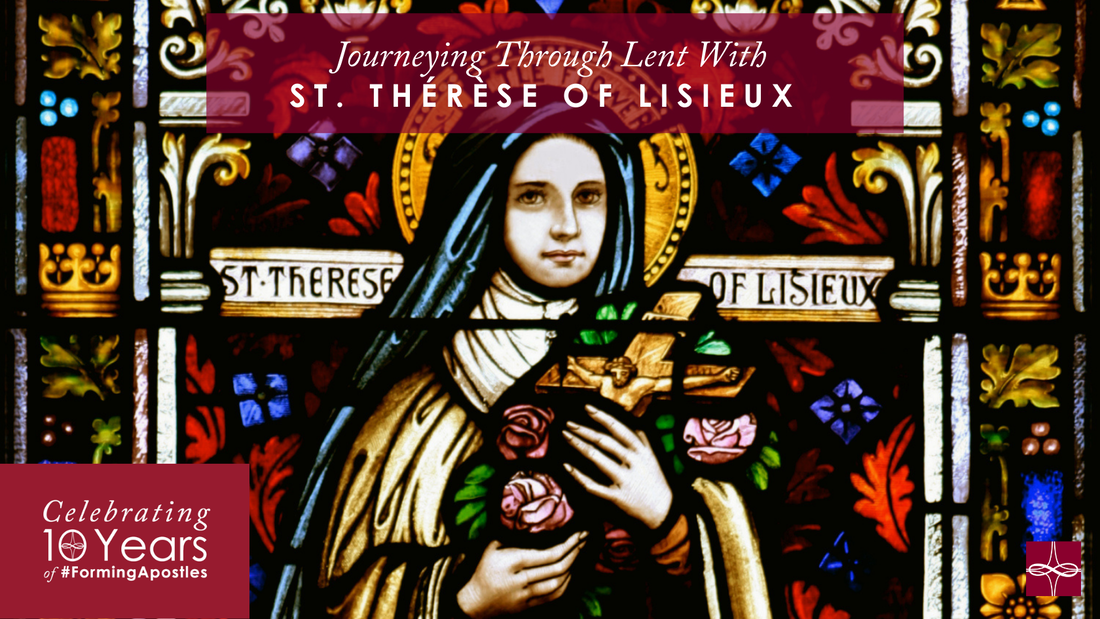 “For he knows our frailty, He remembers we are only dust”--St. Thérèse of Lisieux Since Lent of 2022 is already upon us, I would like to pause and reflect on how Lent is a deeply penitential season that can bring us closer to Christ through our love of Him and those around us. I want to consider this by examining St. Thérèse of Lisieux, the Little Flower, and the concept of Merciful Love. St. Thérèse of Lisieux was deeply attuned to Jesus’s love and mercy for all mankind, especially when it came to little souls who had a repentant heart. St. Thérèse expresses her devotion to the Divine Mercy across her many writings, and her insights shaped her “Little Way” into Jesus’s merciful heart as it is poured out to sinners. However, many reject Christ’s mercy, not believing it to be the free gift it is. In my opinion, this is one of the hardest realities to accept in the spiritual life because of its ubiquitous nature. As humans, we are constantly anxious that we are offending God, inadvertently hurting those around us, and making mistakes in our day-to-day lives at work or in school. But no matter the situation, anxiety, or fault, Christ’s mercy enters that space and works to heal us, even if we do not acknowledge it or if we reject it outright. Jesus comes to us and can live in us no matter what. St. Thérèse points to Jesus’s Infinite love and mercy as a model for our own love. In Story of a Soul, she writes, “How good is the Lord, his mercy endures forever! It seems to me that if all creatures had received the same graces I received, God would be feared by none but would be loved to the point of folly; and through love, not through fear, no one would ever consent to causing Him any pain.” Lent is a time of Prayer, Fasting, and Almsgiving that is focused on love of God and love of neighbor. The three core pillars of Lent are not ends in themselves; they are a means to grow closer in relationship to Jesus, the Church, and those who live in our communities. Christ offers us his love and mercy so that we can extend them to those around us, and once we accept His gifts, we are changed forever. Nevertheless, one must trust God in His love, and we must see ourselves as reflections of His love. Much of St. Thérèse’s writings and spirituality revolve around being a small child before God. Our littleness allows the Lord to love and minister to us as He intended since we cannot attain the heights of the Christian life on our own. Instead, Jesus and the Holy Spirit draw near to illuminate the darkness in our lives with their love. Yet, despite the presence of Christ in our lives, we turn away from Him, and this then allows us to run back to Him as the Prodigal Son did. This turning back to God fosters deeper trust in God within our hearts. St. Thérèse enunciates that we have to receive and accept our brokenness and the reality that we will never be perfect. Once this occurs, we gain a relationship with Jesus. Through His love for us, we see ourselves as a vessel for His love. We value our own selves as well as helping those around us. We Christians move outward to love the world as Jesus called us to do through God the Infinite Love and Infinite Mercy. To learn more about the saints, visit our Catholic Feast Days Website by clicking here.
 “Lent came quickly!” How often have we said or heard these words? No matter how fast it seems to come, Paul Jarzembowski in his new book, Hope from the Ashes: Insights and Resources for Welcoming Lenten Visitors, notes that, “Lent serves as an opportunity for our personal renewal toward holiness –to assess and reform our habits and routines, to mend relationships with God and others” (29). Our focus, though, is not simply on ourselves and our growth in holiness. The Lenten season offers us the opportunity to welcome and accompany others, especially those who join our faith communities, particularly on Ash Wednesday. Jarzembowski offers that “Ash Wednesday is like a laboratory for learning the ‘art of accompaniment’ (Evangelii Gaudium, 169)” (184). To accompany others takes time, patience, and compassion. Lent offers us that time. Prayer and fasting help us practice patience. Almsgiving, which includes our valuable time, helps us grow in compassion –suffering with others. Lent is journeying together, which is what being synodal is about. Many are isolated and alone; we are called to accompany them into deeper life in Christ in and through the Church. May our Lenten journey together lead us to an Easter of deeper personal holiness and greater accompaniment of all. May the Charity of Christ urge us on! In God, the Infinite Love, Fr. Frank
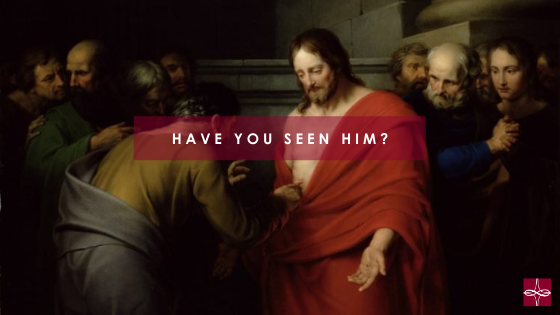
“Have you seen Him?”
The question is uttered among the bewildered Apostles and echoes out to us this Easter season. In the Gospel reading for Divine Mercy Sunday, Thomas hadn’t seen him. Thomas didn’t believe the men who had become his brothers when they told him about the resurrected Christ. Not even the details of his wounds swayed him. “Unless I see the mark of the nails in his hands and put my finger into the nailmarks and put my hand into his side, I will not believe,” he says. Believing meant vulnerability. It meant more heartbreak. The Man for whom Thomas and the others had left everything, the Teacher who had sent them two by two to preach and heal, the Master who had washed their feet and fed thousands with a few loaves and fish was gone—betrayed, tortured, killed. It was easier not to believe. It was easier to stay hidden away in the Upper Room with a heart as locked up as the doors. It was easier to go back to what they knew. Even Peter resumed fishing. Today as we continue in the third week of Easter, I ask you what the disciples likely asked each other in those first days: Have you seen Him? We prepared for Easter throughout 40 days with prayers, fasting, and almsgiving. We kept vigil with Jesus on Holy Thursday in the Garden of Gethsemane and in Caiaphas’s prison. We shuddered at His scourging, covered our ears to the mocking, and knelt in front of Him at the foot of the Cross. We waited in silence as the tomb was closed and we entered into Holy Saturday. Then, we celebrated His rising on the third day. But as we continue in the Easter season, can we truly say we have seen Him? Have we experienced Easter joy or are we locked in the Upper Room or back to fishing? Grief, anger, passivity, media consumption, alcohol, food, loneliness—all of these could be our Upper Rooms. All of these could be means of locking our hearts to the Good News of Jesus Christ. But what does Jesus do in response to our locked hearts? He shows up. He extends His wounded hands. He breathes peace. This is what this fifty-day Easter season is all about: encountering the Risen Lord. Seeing Him. Touching His wounds. Sharing a meal with Him. Allowing Him to open the Scriptures to us and reveal God’s plan of salvation—even in the here and now, even in our own lives. Our fasting, grieving, and sighing is over. Our desert is over. But sometimes entering into the light, joy, and beauty of the Easter season can seem jarring after all we’ve worked on spiritually or given up. Even more so, we look at the world and may not hear the Easter song. We see humanity still trapped by sin, death, and division. Perhaps our hearts, like Thomas’s and the other disciples’, are broken. Perhaps after a year of fear, isolation, confusion, and division, it feels easier to lock the doors than to believe. Believing requires faith, hope, vulnerability. It requires opening yourself to the possibility of another heartbreak. And it requires letting go. And so, Thomas says, “I will not believe.” And we may say, “I cannot believe.” But Christ’s wounds change everything. They show that suffering can be redeemed. That our scars, while part of our story, are not the end. That death has been humbled, and that glory and resurrection await us. Over these next few weeks of Easter, as we prepare to celebrate the Ascension of Jesus and the gift of the Holy Spirit at Pentecost, I invite you to spend time with the disciples as they sit once again at the feet of Christ. Jesus spends 40 days with them—the same length of time as the Lenten season—instructing them, encouraging them, accompanying them. Do not let this most holy of liturgical seasons end on Easter Sunday. I invite you today and every day to encounter the Risen Lord. Spend time with His wounds. Show Him your own. Allow His words to penetrate your heart: “Peace be with you.” Only then can the doors of our hearts be unlocked. Only then can our wounds be transfigured. Only then can we fall to our knees and proclaim with Thomas, “My Lord and my God.” Click here for more ideas to cultivate Easter joy.
 We may be well-acquainted with Lenten practices and devotions such as giving something up, abstaining from meat, or praying the Stations of the Cross. It can be more difficult, however, to name ways to observe the Easter season. Yet in the Preface of the Eucharistic Prayer at every Mass during the Easter season, we hear: “It is truly right and just, our duty and our salvation, at all times to acclaim you, O Lord, but in this time above all to laud you yet more gloriously, when Christ our Passover has been sacrificed… Therefore, overcome with paschal joy, every land, every people exults in your praise and even the heavenly Powers, with the angelic hosts, sing together the unending hymn of your glory…”[1] What is “paschal joy” and how do we praise the Lord “more gloriously” in the Easter season? It is unreasonable to expect anyone to will themselves to be happy at any given moment, much less for an entire season. But joy is not the same as happiness, nor is it the absence of sadness. Joy is a fruit of charity. It flows out of love; it results from a participation in goodness. We feel joy in the presence of someone or something we love; we rejoice in the well-being of our loved ones. If our Lenten observance is focused on charity—particularly acts of charity such as prayer, fasting, and almsgiving—then joy flows naturally from them. The disciplines that turn our gaze outward to God and neighbor, the sacrifices we make, are all a participation in goodness, an act of love. Paschal (Easter) joy, then, can be seen as the fruit of our Lenten journey. Our Lenten efforts are not meant to be temporary measures. They are intended to effect lasting change in us, to conform us more profoundly to our Lord who died but has been raised. What can we do then, so that we don’t simply drop our Lenten observance now that Easter has arrived? How can we instead allow these observances to take root in such a way that they enable us to celebrate the Easter season more fully and joyfully? Consider one or more of the following suggestions to cultivate paschal joy and fill each of the fifty days of the season with festivities and devotions:
Click here for more resources to accompany you this Easter season. [1] Preface I-V of Easter, Roman Missal, Third Typical Edition. [2] Directory on Popular Piety and the Liturgy, no. 150, no. 152. [3] Directory on Popular Piety and the Liturgy, no. 153. [4] Directory on Popular Piety and the Liturgy, no. 154. [5] Directory on Popular Piety and the Liturgy, no. 155. [6] Cf John Paul II, General Audience, Wednesday, 30 May 1979
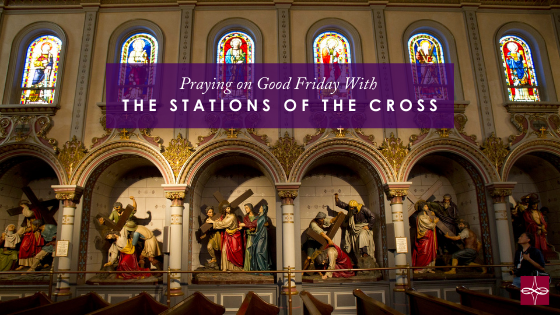 I often find myself avoiding sad and painful things, searching to find a silver lining and help make me or someone else feel better. It can be at the cost of seeming empathetic, too, like avoiding sitting with the pain and instead dealing with it head on. My immediate reaction is to fix something broken or to solve a problem instead of to actually let it sink in and affect me. Growing up, this was a coping mechanism that I’ve been able to turn into a strength of mine as a teacher, making split-second decisions and problem-solving throughout the day. Personally though, I think I need to wrestle with it. As we enter into the saddest, most heart-wrenching day of the year, my gut says “avoid the topic, think about Sunday,” but instead I’m going to go a little deeper for Good Friday this year. Good Friday was what I can only imagine to be a marathon of a day for Christ to endure, only to end with his sacrifice in the Crucifixion. The brutality and agony that he must have felt while carrying his cross can be overwhelming to think about. He carried it bleeding, tired, hungry, and aching from the weight of such an enormous cross. I’ve never experienced pain like that, so I’ve found it easy to skip through, acknowledging it happened and moving on. But this is where I’ve gotten it wrong: Christ did all of that for me, for us, for every human being on this Earth. Jesus did that so we wouldn’t have to experience it for ourselves and could be together with God in his Kingdom one day. This day is the one I shouldn’t overlook. The Stations of the Cross, a 14-step reflection on the Passion of Christ, is the perfect place for me to start contemplating Christ’s sacrifice on Good Friday. While there are many versions of this devotion, I’m using the Stations of the Cross in the Spirit of St. Vincent Pallotti to help me think more clearly about the meaning of Good Friday. There are many different Stations of the Cross to use depending on your spirituality, vocation, or age. In my classroom I like to use a coloring book version and when I taught 2nd grade, we liked this one for children. For this year’s study, I think I’ll also try this Scriptural Stations of the Cross from the USCCB’s website, located on the Catholic Apostolate Center’s resource page as well. I hope to think more deeply and clearly about the Passion of Christ and appreciate a little more heavily the price he paid for me, everyone I know, and beyond. There are many signs throughout this Triduum that we can think about in addition to praying with the Stations of the Cross. Tonight on Holy Thursday, the tabernacle was emptied and colored cloth was placed there instead. There will be no consecration of the Eucharist until the Easter Vigil and instead of Mass, we pray, remember, and venerate the Cross. The color for Good Friday’s services changes too: red is now the color we see and use to remember his blood shed for us. Red was also the color used on Palm Sunday, when Jesus made his way through palm branches on a donkey into the City of Jerusalem in joyous celebration. These signs in church help us remember all that Christ did for us. We may take his sacrifice for granted possibly because it is easier to avoid the sad and scary realities about the time between Jesus’ arrest and Easter morning. We also may be too “busy” to stop and reflect on not just the happy moments when Jesus was teaching, but also how he gave His life to save ours. In our lives, we must continue to appreciate and enjoy the good parts of Christ’s life and ministry. We can live knowing that the end is happy and He is Risen on Easter morning. But without Good Friday, we wouldn’t have Easter Sunday. Tomorrow on Good Friday, I invite you to join me on this sad and painful day as I look more deeply at the Stations of the Cross. For additional resources, please visit the “Additional Lenten Resources” page on the Catholic Apostolate Center page.
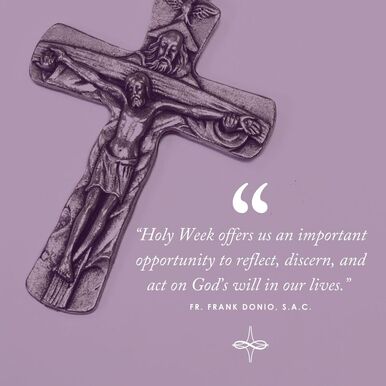 Next week is Holy Week. Before we arrive there and enter the most solemn of days of the Church year, the Easter Triduum, we come to another Solemnity during the Lenten season. Last week, it was the Solemnity of St. Joseph, spouse of the Blessed Virgin Mary and patron of the Universal Church. Tomorrow, it is the Solemnity of the Annunciation of the Lord. Both offer us examples of how to respond to God’s action in our lives. The Blessed Virgin Mary and St. Joseph responded freely and fully to God’s invitation announced by the angel to move in directions that they did not expect. While we may not have an angel announcing God’s will for us, in what ways do we discern the direction that we are called to take? Recently, I attended the religious profession of a Benedictine monk who is a former student of mine. Some of those who attended the Mass and profession ceremony in support of him were also former students who are now either diocesan or religious priests or married with children. (Some are also former staff members and collaborators of the Center.) Each in their own way has followed God’s invitation to them. In and through their chosen vocations, they have found joy in living more deeply their Christian life.. While they have found joy, they also know what it means to take up the cross and follow Jesus Christ as his disciples. None of them made the choices that they did easily, but did so through cooperation with the grace of Christ. We are called to the same. Holy Week offers us an important opportunity to reflect, discern, and act on God’s will in our lives. Join us on social media for our Virtual Holy Week retreat. We offer it as a way of doing this type of discernment in the context of this most solemn time. Please know that our prayers are with you, especially during the Easter Triduum and season. May the charity of Christ urge us on!
Lent is the perfect time each year to do a personal assessment of our relationship with Jesus – to see if we are walking the path to sainthood as we are called. God calls each of us to become saints and it is imperative that we evaluate our spirituality, our actions, and our goals. This year I have been using three specific resources to aid in my self-reflection and in resetting my focus. Fr. Thomas Dubay’s Happy Are You Poor, Matthew Kelly’s I Heard God Laugh, and the music of Danielle Rose are helping me with my grand reset.
During this beautiful time of Lent, my individual assessment of my growth in holiness is both difficult and reassuring. In reflection, I am reminded that I am here to live out the Beatitudes – not to have memorized them, but to daily use the opportunities in my station in life to live them out. God also reveals to me that I am not to be like my favorite saints, but to become a saint by being authentically me, the unique person He created me to be. He also continues to enlighten me about deeper ways to communicate with Him in prayer. Little snippets in the morning give me focus to be the living sign of God’s love in the world I walk in. Then, throughout the day, I ask for help to physically live out the mission He has called me to. Simple little mantras such as: “Lord, help”, “Jesus, not my words and responses, but Yours”, “Jesus, Mary and Joseph give me strength and courage” are prayers I repeat throughout the day to help me remain in God’s will and not in my own. Growing in our Christian life is a continual moment by moment journey of self-discovery. The more we grow in love of Jesus, the better we come to know ourselves and the importance of our individual participation in His glorious mission in the world. I am struck by the essential commitment I must have to become who I was created to be, because that is how the presence of our Lord Jesus Christ is made known to those around us. “When you hung upon the cross looking at me, You didn’t die so I would try to be somebody else. You died so I could be the saint that is just me” is the refrain Danielle Rose sings that speaks of the magnitude of Jesus’ love for each of us and the intimate connection He desires with us. These little rituals and inspired guides keep me grounded as I live in the messiness of my humanity in this complicated world. Another aspect of my relationship with Jesus that I am examining comes from Happy Are You Poor. Fr. Dubay helps us to understand the things we are attached to, and why, and if these attachments are leading us deeper into the heart of Jesus or driving us away from Jesus. This is always a difficult process because I have to repeatedly admit to the things I am attached to that bring me temporary comfort and feed my selfish nature, and then I have ask for the grace to let go of these things I cling to so that Jesus can live in me. These practices in Lent are difficult, but not out of my reach. I attend daily Mass as frequently as possible and this communion builds the holy virtues to let go of my earth stuff, my temporal comforts, and to open myself to be God’s. At the beginning of each Mass, we recognize our fallenness and verbally repent and commit to do better. God’s love and mercy are always available to us so that we can change for the better. That is the assurance that keeps me striving. And in the quiet after receiving the Eucharist, I speak in my mind part of Psalm 95: “For You, O Lord, my soul in stillness waits, truly my hope is in You.” Matthew Kelly gives me such tangible and direct instruction to realign my life within God’s will. His emphasis on deepening our prayer life and then giving direct ways to accomplish this are worth reading and putting into practice. He speaks to us in the reality of our busy, chaotic, and very full lives with a simpleness that I can relate with. His theology is completely understandable and therefore gives me assurance that I can put it into practice in my daily life. Lenten rituals cause us to be uncomfortable in our flesh (as Jesus was in the desert) so that we can be totally dependent on our God to lead us. This examination, this ‘coming clean,’ is a necessary element of our Christian journey. Receiving the Eucharist to nourish us and receiving absolution in the Sacrament of Reconciliation are the wonderful gifts we have to assist us in our closer walk with Jesus and in fulfilling the individual purpose of our lives. Finding scriptures to meditate upon and asking God to reveal what He wants us to do daily to lead us to deeper levels of intimacy with Christ. All of these are designed to enlighten us, to transform us, and to bring us to a more joyful celebration of the victory of Easter! So, my fellow comrades, embrace the work that this season of Lent provides so that we may all grow deeper in love with our Lord and He may live and move and breathe through us! “Lord make us turn to you, let us see your face that we may be saved.” -Psalm 80 Click here for more resources to accompany you this Lenten season.
|
Archives
April 2024
Categories
All
|











 RSS Feed
About |
Media |
© COPYRIGHT 2024 | ALL RIGHTS RESERVED