
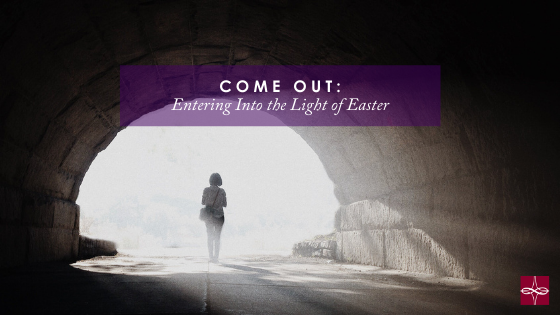
 “O my people, I will open your graves and have you rise from them, and bring you back to the land of Israel. Then you shall know that I am the LORD.”-Ez. 37:12-13 “Come out!” The words reverberate and resound in the stench-filled tomb. We too need to hear the words proclaimed to the dead man as we approach the end of our Lenten journeys. Come out! Lent has been our own time of preparing for resurrection—abstaining from anything that deadens us to the voice of Christ inviting us to the fullness of life. For the past few weeks, we have participated in spiritual practices that renew and refresh our spirits. We’ve journeyed with Jesus in our own deserts. And the culmination of this journey is about to occur in only a couple more weeks. Lazarus’ resurrection precedes the Resurrection that changes everything. It is a glimpse of what awaits us after death. The once rotting man stumbles out of the dark and into the light of Christ—his dear friend. Lazarus’ sisters, Mary and Martha, do not even say his name when telling Jesus of his illness, but identify him simply as “the one you love.” The one you love…What a beautiful way to be identified. I think about this for a moment before realizing this is what we are all called to and all invited to: to be the ones Christ loves. This short phrase is our deepest identity as baptized sons and daughters. We are the ones He loves. And as we prepare for Holy Week and Easter Sunday, this reality will be fully demonstrated: “For God so loved the world that he gave his only Son” (John 3:16). Jesus will tell us on Good Friday, embracing us with arms wide open on the Cross, “you are the one I love.” As a result of this great gift, Christ can call us to resurrection—not only after death, but in the here and now. So many realities in our world today threaten to numb us from this true reality. Perhaps we find ourselves in Mary’s shoes. When she and her sister hear of Jesus’ coming, Martha runs to meet Him, but Mary stays where she is. Was hope dead within her? Was she too consumed with her grief to dare to have faith? Did death have the last word? Perhaps many of us feel the same way: disillusioned. Tired. Grieving. Doubtful. But Mary’s sister, Martha, shows us another way. Her path leads to the resurrection of her heart in the here and now. In today’s Gospel, the sisters seem to have traded places. Today, it is Martha who chooses the better part. She runs to meet Christ at the moment she hears of His coming. In spite of any doubt, fear, disillusion, or grief—she acts in hope. And this leap of faith is what enables her to give Jesus her all and say, “Lord, if you had been here, my brother would not have died. But even now I know that whatever you ask of God, God will give you.” (emphasis added) (John 11:22) In these words, I hear her say, “Lord, I am disappointed. I am grieving. My brother has died and you were not here. Had you been here, he would have lived. But I give this desire to you. I trust in you. Let it be done according to God’s word.” This, in a sense, can be Martha’s fiat. Her surrendered disposition, mixed with faith, trust, and hope, is what then enables her to confirm, “Yes, Lord. I have come to believe that you are the Christ, the Son of God, the one who is coming into the world.” Martha has joined the woman at the well and the Apostle Peter in confirming Christ’s identity as the Messiah. She has “come out” of her own tomb. This past calendar year has likely felt like a tomb for many of us. Perhaps we feel most like the seemingly abandoned Lazarus languishing in the dark. “Where were you, Jesus?” we may ask with Mary and Martha. “Do you not care that the one you love is suffering?” Jesus does more than care. It is so comforting to read that “Jesus wept” at the knowledge of Lazarus’ death and became greatly perturbed. I can imagine the same, if not a greater, reaction at the death of his earthly father, Joseph. Christ weeps at our suffering. The Creator shudders to see His creation perish. This is not what we were made for. And in His humanity, Christ weeps with us and for us. But not only will the Son of God weep for His loved ones; He will die for them in just a few days. It is not enough for Him to acknowledge our suffering—He takes it on. He transforms it. He transfigures it. He resurrects it. As we approach the end of the Lenten season, let us not stay put with Mary but run out with hope like Martha. I pray this Easter Sunday to say firmly with her, “Yes, Lord. I have come to believe that you are the Christ, the Son of God, the one who is coming into the world.” We are the ones whom He loves. Let us spend some time relishing, resting, and growing in this identity in the remainder of the Lenten season and beyond. In these final weeks of Lent, let us continue to “come out” of our tombs with our prayers, fasting, and almsgiving so that we may not stumble as Lazarus did but run out towards Him who calls our name. Let us come out into the light. For more resources to accompany you on your Lenten journey, please click here. Click here for this Sunday's Mass readings.
0 Comments
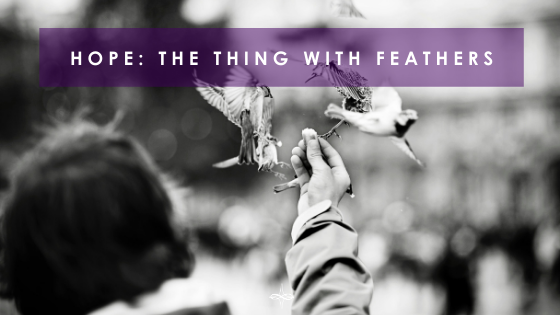
I’m not much of a poetry person. I did what I could to avoid it in middle and high school, as well as college. But there is one poem that I like—in fact, that I love. It goes like this:
“Hope” is the thing with feathers -
That perches in the soul - And sings the tune without the words - And never stops - at all - And sweetest - in the Gale - is heard - And sore must be the storm - That could abash the little Bird That kept so many warm - I’ve heard it in the chillest land - And on the strangest Sea - Yet - never - in Extremity, It asked a crumb - of me.
That is “Hope is the Thing with Feathers” by Emily Dickenson. I always liked the poem, the way it rhymes and the way it rolls off the tongue. It became even more important to me when my father became ill. I clung to this poem because it reminded me that hope is always with us; that even in the greatest storm, hope remains and remains without ceasing.
As Christians, we cling to hope. This season of Lent which we find ourselves in right now is a period that prepares and leads us to that ultimate instance of hope in the Christian life: the Resurrection. Much like the hope that Dickenson writes of in her poem, the hope of the Resurrection remains with us at all times. It never stops, it remains with us in our souls, and it is, if I may create a word, “unabashable.” The thing is, it can be hard to see this hope in our lives, regardless of its unceasing presence. Pope Francis dedicates two paragraphs of Fratelli Tutti to the virtue of hope. He writes: Hope speaks to us of a thirst, an aspiration, a longing for a life of fulfillment, a desire to achieve great things, things that fill our heart and lift our spirit to lofty realities like truth, goodness and beauty, justice and love… Hope is bold; it can look beyond personal convenience, the petty securities and compensations which limit our horizon, and it can open us up to grand ideals that make life more beautiful and worthwhile” (Fratelli Tutti, 55). Hope transcends our ups and our downs, our individual trials and tribulations, not because they are insignificant, but because the Resurrection, in the end, is greater than every one of those. The hope of the Resurrection doesn’t minimize our trials, or even our personal convenience and petty securities, but it is the light which illuminates the darkness and allows us to move past them on our journey with Christ. The hope of the Resurrection, the hope of Christ perches in our soul and it sings the tune of Alleluia (pardon my use during Lent) without ceasing. This hope, much like the little bird that Dickenson describes, is in fact sweetest in the gale, in the storm, because we are called to recall that Jesus Christ will provide for us in ways that no other person or thing ever can. In the midst of Lent, much like through all of our sufferings, hope can be heard as a melodious tune above the groans of those trials which we face. May we look to hope, the thing with feathers, the Resurrection, this Lent and always. For more resources to accompany you during your Lenten journey, please click here.
 I’m always skeptical when I hear others describe instances of suffering as “blessings in disguise.” Can you imagine breaking your arm and having a friend say, “That’s a blessing in disguise!” – while you’re still sitting in the ER? Sure, they might be right eventually; but in that moment you would be in too much pain for their words to be helpful. You might even consider deleting that friend’s phone number. The events of the last year have made it even harder to recognize such hidden blessings. Amidst universal confusion, we are thirsting for straightforwardness. Maybe that’s why today’s Gospel reading is hitting me differently. In this passage, we receive a clear and radiant report of Jesus’ person and ministry: “For God so loved the world that he gave his only Son, so that everyone who believes in him might not perish but might have eternal life.” In these words, we find Jesus directly offering Himself and extending His invitation to each one of us: believe and trust me. He is unmasked, undisguised. Now, will Jesus’ straightforwardness give me the courage this Lent to step out from behind my own disguises? Focus (Social Justice): Today’s Gospel suggests that darkness is part of the human experience. When I reflect on the world, the United States, and even my city of Washington, D.C., there is surely darkness preventing us from achieving equality and equity for all. This darkness is within me too, in the moments when I doubt change is possible. God acknowledges this darkness by sending his light and messengers into the world. Their examples help guide us and strengthen us. Is there a particular messenger who inspires your own prayers and actions this Lent? Prayer: God, thank you for this life and journey. Please help me along the way. When the world seems dark, please help me remember the hope and humor you’ve placed in my heart. When my own darkness attacks me from within, please help me to reach out beyond myself to others. You have placed good friends in my life – help me to remember they are there for me! Please help me to be a friend and helper in return. Amen. Service Suggestion: This Lent, reach out and call or Zoom each week with someone in your life who you haven’t seen or heard from in a while. You may help to reduce the isolation that person may be feeling during this lengthy pandemic. This reflection is from the 2021 Lenten Reflection Guide. To access the complete guide, please click here.
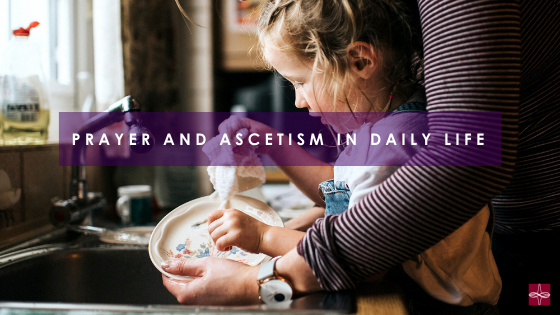 Before Lent 2021 began, I had fallen into a habit of making excuses for my weaknesses, the biggest of which was: "I would be able to have the spiritual life I want if I didn't have three children, a husband, and a household taking up all of my time!" The idea of spending most of the day in quiet or chanted prayer is attractive—especially now, when I have a husband, a house, and three children. St Frances of Rome would have understood this—as a preteen she desperately wanted to be a nun, but her family arranged a marriage for her instead; rather than entering the convent, she entered a wealthy and connected family. Frances never let go of her devotion to God, although she did eventually grow into and embrace her temporal vocation as the manager of a wealthy and influential Roman household. She found a balance of work, prayer, and asceticism that she could incorporate into her daily life. For Lent this year, I decided to imitate St. Frances and take a page from her playbook, incorporating more prayer into my daily work and adding ascetic practices that are realistic for my current phase of life. I have a specific time of day for meditative and personal prayer with God that I try to maintain every day, but in addition to that, I have been trying to intertwine work, prayer, and asceticism whenever I can. Instead of listening to current events podcasts when I do the dishes, I am using one of these abacus style kitchen rosaries so that I can pray while I work and so that I can keep track of where I had to stop when I was interrupted by the needs of my children. Instead of scrolling through social media or aimlessly puttering around on my phone while I nurse the baby, I am working my way through St. Ignatius of Loyola’s Personal Writings. I may not be able to fully partake in Lenten fasts due to my nursing baby, but I can avoid snacking whenever possible—and when I have to watch my children eating my favorite granola bars while my stomach is starting to rumble, I try to offer it as a prayer and remind myself that small acts of self-denial prepare us for big acts of self-denial. Other ideas for minor ascetic practices that we can add to our Lenten promises (or Fridays in Ordinary Time) include: taking cold or cool showers instead of hot ones, not eating any sweets or desserts, not using a pillow at night, and adopting more days of the week when we abstain from meat. St. Frances of Rome is quoted as saying, “A married woman must, when called upon, quit her devotions to God at the altar to find him in her household affairs.” This is definitely true for me; doing the laundry, cooking the meals, and giving the reading lessons are my responsibilities. I can show my love for God by loving my family and by making these humble sacrifices rather than neglecting my duties in favor of carrying out an arbitrary set of devotions every day. As we continue on our Lenten journeys, I encourage you to think about how you can incorporate more prayer and asceticism into your daily routines. For more resources to accompany you this Lent, please click here. For more resources on Marriage and Family, please click here.
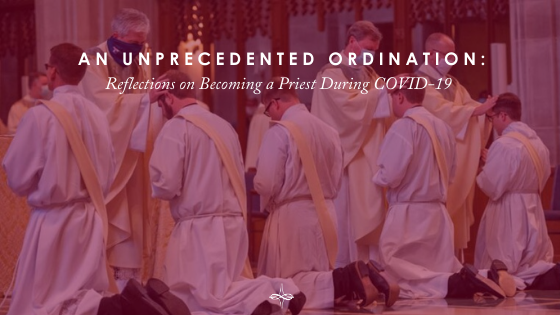 I am grateful for the occasion to share just a few reflections on my discernment journey and priestly ordination during the pandemic, the “COVID class” of 2020! It was about one year ago—March 2020—with less than two months before graduation from St. Mary’s Seminary in Baltimore, MD and ordination scheduled for June when those plans began to change. Like the many high school and college students preparing for graduation, my deacon classmates and I (and the rest of the seminary) were sent home to complete our coursework alone online. Like the many engaged couples preparing for their summer weddings and receptions, our priestly ordination dates were postponed and receptions cancelled. While trusting in God’s grace and purpose, how could I help but feel at least a little disappointed and even frustrated? And yet, therein lie some important lessons God wanted to show me about the life we are each called to live. Every vocation—life’s path and purpose—begins by accepting our way is not always God’s way, and our time is not always God’s time (Isa 55:8-9). And yet, I’ve slowly recognized a great freedom in that fact. A vocation is not about “planning out” your life, or making sure things happen the “right” way. Life does not follow a predetermined script. A vocation is not an intellectual puzzle we work on and hope to “figure out” (or else fail…), but a stepping out in faith day-by-day. Vocation is more about letting go of the controls to be free enough to move in the direction God beckons. A vocation is always a dynamic response to God’s call from a place of freedom and love. And so, while a vocation does involve making a free choice, it’s not about calling the shots in life or predicting the future, but trusting God with the simple question, “where and what next?” Due to the COVID lockdown of 2020, I realized the date and circumstances of my ordination were beyond anyone’s control. Some suggested having small, private ordinations so we would become priests “sooner,” even if we still couldn’t yet go out and serve in parishes, but respectfully, I personally disagreed with that idea. The pandemic re-affirmed my conviction that we were becoming priests for the people of God, not for ourselves. Compared with the physical and emotional toll of the pandemic, the waiting game was an easy burden to bear. The background of the pandemic created a new context to reflect on what shape my life and ministry might take. In our society’s fixation on “finding our best selves,” the gospel-centered vocation acknowledges that “whoever loses his life for my [Jesus’] sake will find it” (Mt 10:39). Vocation is part of our personal participation in the great “mystery of faith,” the “Paschal Mystery” of Christ’s death and Resurrection the Church celebrates most powerfully in Lent and Easter. We cannot experience the true Jesus without both his Resurrection and Cross, and so every authentic vocation will have both its cross (struggle and sacrifice) and its resurrection (joy and victory). However you discern, expect your vocation in life to feel like both at times. Amidst the hardship of our world, a small taste of the patient suffering of the Cross leading up to my ordination turned out to be a small but precious gift not to take for granted. For months during quarantine, I watched medical professionals and other essential workers care for the sick and deliver basic needs—the corporal works of mercy—on the local, national, and international stage. As a deacon waiting in the wings to be deployed to a parish, I felt primed to be sent and make an impact. But all I could do was stay home and pray the Liturgy of the Hours. That summer I did not feel heroic or “essential.” Having been fed a steady diet all through seminary of “the Church needs you!”, I had to accept it wasn’t my moment to be a hero or an influencer. My call was behind-the-scenes mission support, not leading the charge on the front lines. Following Jesus’ instruction to “watch and pray” (Mt 26:41) as others experienced trial and suffering in hospitals and homes challenged me to rid myself of any pretensions of being a priest as being God’s biggest hero. Vocations—religious or secular—motivated by the muscular desire to save the Church/world and solve Her problems almost always end up hurting people in strongarmed attempts to fix whatever they perceive as broken. Before the Cross, there are times all we can or should do is “behold” the brokenness and hurt (Jn 19:26). On the eve of ordination, that forced inactivity was excruciating, but it also drove home a humble admission behind every vocation: I need God more than God needs me. The Cross is essential to Jesus, and beholding Jesus in the sick and suffering, God became more essential to me. To “behold” is not to evade responsibility, but to see that our suffering does not go unnoticed and unredeemed. Not coincidentally, it is on the Cross that we truly see Jesus as our eternal High Priest, the model of priesthood, who is willingly sacrificed for the redemption of our sins. And so, the experience of being ordained a priest during the pandemic, while full of spiritual and personal challenges, also became the occasion for greater reflection on my identity, vocation, and mission. The delay was not lost time, for any time spent with Christ in prayer or service is only counted as gain. I was ordained a priest of Jesus Christ on August 22, 2020. Behold and follow the Cross, and who but God knows where it may lead! For more resources on Vocational Discernment, please click here. For more resources to accompany you through the COVID-19 pandemic, click here.
 Lent is not a diet program. Yes, the Church recommends the ascetical practices of prayer, fasting, and almsgiving. These, though, are meant to help us love God and neighbor more fully. Pope Francis in his homily for Ash Wednesday offered this consideration: “Lent is a journey that involves our whole life, our entire being. It is a time to reconsider the path we are taking, to find the route that leads us home and to rediscover our profound relationship with God, on whom everything depends. Lent is not just about the little sacrifices we make, but about discerning where our hearts are directed. This is the core of Lent: asking where our hearts are directed.” Where is your heart directed? Is it a divided heart? It is easy to compartmentalize. Or so it seems. Eventually, trying to live life in two directions tears us apart. “Our entire being” needs to be engaged, not simply part. We can pray, fast, and do almsgiving, but still be unconverted within. These acts are a means to an end, not an end in themselves. These “little sacrifices” should sharpen our minds and open our hearts more fully to a life directed toward God and neighbor. If they are done simply for us to feel a sense of accomplishment or as a test of our will, then their focus becomes about us. How do we go forward? By realizing that “everything depends” on God, not on us. Once we do, and cooperate more fully with the grace of Christ, our hearts will be undivided, united in love with God and neighbor. May the charity of Christ urge us on! For more resources to accompany you during your Lenten journey, please click here.
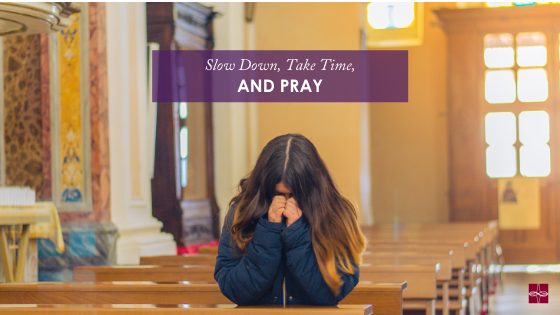
This Lent looks a little different than it has in past years for many reasons. With a little boy starting to walk, it feels like things are changing fast at times and very slowly at others. I’m looking towards speeding things up to get to new milestones like running and talking, but also praying time can stand still enough to savor precious moments and little giggles. In Lent now, we are waiting for Easter and likely wanting to speed through this time of personal reflection, penitence, and prayer. Maybe if we try to slow down and take a moment to reflect, we’ll discover some time we can put into our relationship with God in a meaningful and intentional way.
This Sunday marks the Second Sunday of Lent and there are some really poignant readings to note for our hardened selves. I think they all tell of a hope and light at the end of the tunnel for us in this dark and restless time. The second reading especially tells us to not give up because God has already provided: Brothers and sisters: If God is for us, who can be against us? He who did not spare his own Son but handed him over for us all, how will he not also give us everything else along with him? Who will bring a charge against God’s chosen ones? It is God who acquits us, who will condemn? Christ Jesus it is who died—or, rather, was raised-- who also is at the right hand of God, who indeed intercedes for us. (Rom 8: 31b-34) This line, “If God is for us, who can be against us?” tells us so much about our God. He is always on our side, no matter what. If God is for us, we can build up a broken relationship with him. If God is for us, we can consider our sins in the Sacrament of Penance and be reconciled. If God is for us, we can slow down and take a moment to breathe in and out in mindfulness. If God is for us, we can have the strength to carry on through this pandemic, perhaps alone physically, but never truly alone. We are never truly alone or abandoned because at the end of this Lenten tunnel, Christ is there waiting for us with open arms and a tissue to wipe our tears. There is beauty in the waiting, and we’ll probably regret it if we don’t allow ourselves to vulnerably open our hearts and our lives to Christ. So how can we build our relationship with God? How do we prepare our hearts for Easter, while still savoring this waiting and dark time before Christ comes? When we are fearful, where can we turn? When we feel exhausted and worn out, how do we go on this Lent? Through prayer. I teach my students about prayer during Lent because it can be the absolute best tool we have as Christians. Saint Vincent Pallotti knew this to be true, saying, “The best method of private prayer is that which the spirit of the person finds easiest and most fruitful.” He totally understands us! In his wisdom, Pallotti sought to humbly serve God through his actions and be an apostle journeying with others and teaching them about God’s eternal Love. Private prayer is so important. It can be as simple as we want it to be or as complex. We can talk to God out loud, in our hearts, through journaling, or in memorized prayers, but private prayer is essential to our spiritual lives. In the moments in which you want to slow down, try praying to God. Each time you think about the next thing that is coming and how you just need to get through it, pray. Ask God to remove your impatience and replace it with humility. Humbly putting ourselves aside during Lent can be a fruitful way to grow closer to God. Intentionality and a few personal moments are the only things we really need this Lent, for if God is for us, who could be against us? For more resources to guide you through your Lenten journey, please click here. For more resources on prayer, please click here.
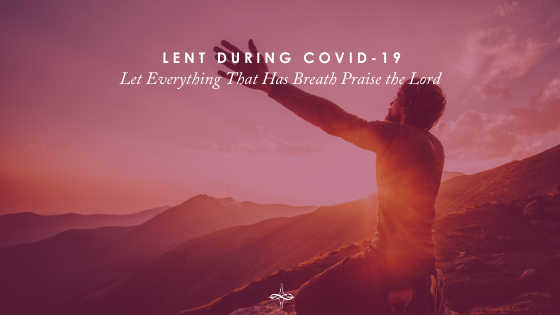 It’s hard to believe that COVID-19 began to take hold of the Mid-Atlantic region of the United States just two weeks after Ash Wednesday 2020. As we approached Holy Week last year, dry jokes abounded as to whether or not we had to continue to give things up during Lent as COVID-19 had already forced us to give up so much. Well, those jokes have returned a year later as Ash Wednesday is just around the corner and the pandemic is still very much a reality in our lives. Lent is a period of the Catholic Big Three: prayer, fasting, and almsgiving. This preparatory and penitential season helps to prepare us for the glory of the Resurrection. Most Catholics know the drill: you give something up for Lent (and hopefully take something on as well) as you have Easter Sunday circled on your calendar. But last year threw us all for a loop. Used to giving up chocolate or swearing, we were forced to give up worshiping in Church, seeing loved ones, going to school, and so much more. In the months since, almost every person knows someone who has contracted or even died from the COVID-19 virus. Though Lent ended on Easter in 2020, it feels as though it still hasn’t quite ended. We’ve abstained from holiday gatherings, birthdays, and so much more than we’d ever planned, even during the Lenten season. Lent, though, is the perfect lens through which to view the COVID-19 pandemic. Even during this penitential season, we don’t forget the glory of the Resurrection. Yes, the “A-word” and the Gloria are omitted from the Mass. Sure, we focus on the preparation and the penance, but we still receive and glorify our Lord. Even though we are without so much now in the Lent-like COVID-19 pandemic, we still praise the Lord. The last line of Psalm 150 reads, “Let everything that has breath give praise to the Lord.” Not just during the liturgical seasons of Ordinary Time, or Christmas, or Easter, but at all times, everything with breath should praise the Lord. This continues even now, with so much going wrong in our world. With so much suffering and pain—from which none of us are immune—there is still reason to praise the Lord. Baptisms and First Communions still occur. Marriages are still celebrated. Four of my closest friends were married this past summer—which brings new context to the promises of commitment in sickness and health. Even when there has been suffering, God has still managed to bring good out of it. When my own grandfather passed away in October, I was able to spend the last few days before his death with him. This was a time whose memory I cherish, and time I’m not sure we would’ve gotten if he hadn’t gone to his eternal rest. As I’ve gone through my own sickness over the last few months, I’ve made Psalm 150 my mantra of sorts. My life hasn’t been perfect, but God has ordained it and he has sustained it. He has given me breath and life, and for that I praise him. As Matt Maher says in his song Alive and Breathing, “Let everything praise the Lord, in the working and the waiting…in the dying and the rising, let us praise the Lord!” With Lent coming up, and COVID still wreaking such havoc in our world, let everything that has breath praise the Lord! For more Lenten resources, please click here. For more resources to help you navigate COVID-19, please click here.
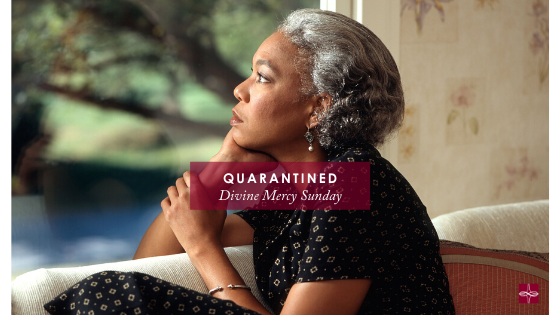 "Humanity will never find peace until it turns with trust to Divine Mercy" (Diary, p. 132). Here we are, with Divine Mercy Sunday this weekend, and instead of being in our churches with our communities, we are at home figuring out how to make this day still sacred. What do we do? Have we entered into the joy of this holy Easter season in the Church, or are have we fallen into despair that we remain in this time of “shelter in place”? Maybe it’s both? For me, I was sort of giving God an ultimatum during the Lenten season: “Lord, we will endure Lent separated from our communities, but shouldn’t you show your power and end all of this when Easter comes?” I have truly wrestled with embracing our new normal at home and fully entering into the joy of the Resurrection—the joy that comes from knowing I have been freed from the bondage of sin and death although it’s completely undeserved. We know this physical separation during the coronavirus pandemic is a way to love our fellow man, and we embrace it for the sake of love. Yet still, have our hearts embraced the message of Divine Mercy? When the message of Divine Mercy was given to Sister Faustina (and then to the world), the world was in a terribly dark place: war, hatred, and brokenness abounded. Jesus knew the world needed hope, a reminder of the infinite love He has for humanity, and to trust in His Mercy. And now, here we find ourselves in a different kind of darkness—a darkness of disease, isolation, blame, and fear. And still in this time and in this place in which we find ourselves separated from our communities, away from our physical Churches, and isolated in our homes, the Lord has gifted us the beautiful message of Divine Mercy. As Bishop Robert Barron said, “Into all the dark corners of our human experience, God’s mercy has come.” The message of Divine Mercy reminds us that no matter how dark it is, or how deep our sin runs, Jesus’ great love for us is greater still! He has defeated sin and DEATH. What more can we fear? He desires to be with us, for us to embrace Love itself. Divine Mercy is summarized by Jesus’ first words to His disciples after returning from the dead: “Peace be with you” (John 20: 19). After greeting his disciples this way, he says it again: “Peace be with you” (John 20: 21). The disciples, like us, needed to embrace the message Jesus brought, a command of peace and trust. When we trust, surrendering our hearts and lives to the one we are meant for, true peace reigns. Peace that cannot be stolen by disease or fear but that is rooted in our identity as beloved sons and daughters of the one who can conquer all things, even death. As we prepare to celebrate the Feast of Divine Mercy, may we surrender ourselves to Jesus, embracing the message of Divine Mercy— that His love on the cross, His resurrection from the dead, His love for me and for you can truly reign over our world in a time of uncomfortable uncertainty. Let us shout with joy, “Jesus we trust in you!” and allow His peace to rule in our hearts once more.
 The ashes of our Lenten journey were more pronounced this year—not fading with Ash Wednesday but thickening in the following weeks with the outbreak of COVID-19. Each of the plans we had for Lent—the sacrifices, the resolutions, the acts of charity—were rearranged, making room for more sacrifices than we thought possible. We sacrificed control, physical freedom, the assurance that our pantries would be stocked or that our bank accounts would be replenished. We sacrificed our physical friendships, birthday celebrations, anniversary milestones, family vacations, date nights. We’ve lost friends, family, or neighbors to a virus that until a few months ago was hardly known about or discussed. We’ve sacrificed our liturgical lives, being able to receive Christ’s Body and Blood in the Eucharist, attendance at weddings or baptisms, pastoral formation, the journey into the Church on Easter via RCIA. Pope Francis likens this pandemic to the evening storm experienced by the disciples in the boat, saying, “For weeks now it has been evening.” This evening has been long, dark, full of the unknown. Throughout this “evening,” we have had to confront our vulnerabilities and experience our littleness. We’ve had to realize that without light, we cannot see. Perhaps we’ve grappled with fear in this darkness—a fear of the unknown, a fear of isolation, a fear that the dawn may never come. Perhaps our minds have been left to imagine: Lord, “Do you not care that we are perishing?” This time of quarantine, social distancing, and pandemic has been our evening storm which, “Exposes our vulnerability and uncovers those false and superfluous certainties around which we have constructed our daily schedules…shows us how we have allowed to become dull and feeble the very things that nourish, sustain and strengthen our lives and our communities… [and] lays bare all our prepackaged ideas and forgetfulness of what nourishes our people’s souls.” We thought “we would stay healthy in a world that was sick,” but the storm has awakened us from our personal slumber. And we need light. This realization is the seed of faith—a faith which recognizes the need for salvation, for one another, for the light of God. The realization of our littleness, our helplessness, our dependence, our mortality, is the perfect place from which to enter into the Triduum and await the lighting of the Easter candle—the Resurrection of Jesus Christ. God has provided flickers of hope, reflections of grace, throughout our journey at sea: livestreams of Masses, daily Scripture reflections, broadcasts of Adoration, priests hearing Confessions in drive-thrus, virtual retreats, Pope Francis’ blessing of the entire world. We have seen a “creativity of love”--the production of ventilators in car factories, the making of masks in workplaces, the donations of money, food, and supplies across the world, the video chats to those in quarantine facing death alone. We see dancing from porch balconies. Teddy bears in windows. Embraces in hospitals. Birthday drive-bys with signs and honking. People on their knees. Yes, the light of Christ exists even in the darkness. And the darkness has not, and will not, overcome it. It will shine ablaze all the more radiantly this year in the midst of our utter darkness, sparkling in the gloom. The darker the night, the better able we are to see the light. And in the darkness, we look up. Let us welcome the light of Christ this Easter by first lighting his love in our hearts. When Christ’s life lives within us, we can enkindle it in the souls of others and set alight all we encounter. “Prayer and quiet service: these are our victorious weapons,” Pope Francis reminds us. Wake up, Lord! The disciples shouted in the midst of the storm. Wake up, Lord! The world shouts again today. Let us awaken the Lord through our prayers and service. Through our acts of charity to those suffering, tired, or scared. Through our cries and supplications. Through our fasting in these unwelcome sackcloths and seemingly perpetual ashes. Cry out with me again this Triduum, “Wake up, Lord! We are perishing.” Christ’s response to our cries this week is open arms embracing us through nails and scourging. His response to our cries is a head beaten, bruised, and crowned with thorns. His response to our cries is silence to jeers, taunts, mockery, and abandonment. His response to our cries is the relinquishing of his spirit in atonement for our sins and those of the whole world. He who cried out to his Father, “my God, my God, why have you forsaken me?” also knows the darkness intimately. He knows what it feels like to be alone and perishing. But by his words do we find the light: “Why are you terrified? Do you not yet have faith?” ….“My Father…not as I will, but as you will.” Our cries are never unheard. “The Lord awakens so as to reawaken and revive our Easter faith,” Pope Francis said. “We have an anchor: by his cross we have been saved. We have a rudder: by his cross we have been redeemed. We have a hope: by his cross we have been healed and embraced so that nothing and no one can separate us from his redeeming love.” The goal of our Lenten journey is transformation—to be transfigured. This is also our prayer throughout this pandemic. Yes, we pray that it ends, that healing comes, that daily life can resume, that economies will be restored, and that suffering will cease. But even more than all of that, we pray for transfiguration. Because when we are transfigured by the love and light of Christ, when our faith has awakened and we have realized our need for salvation, then the storm can rage on while we rest knowing we will not perish—for we will know deep in our hearts that with the “dawn there is rejoicing.” Then, and only then, “In the silence of our cities, the Easter Gospel will resound.” For more Easter and Lenten resources, please click here. For more resources and reflections on COVID-19, please click here.
 At the time I’m writing this post, daily life as we’re used to has been turned on its head as a result of the COVID-19 global pandemic. Non-essential businesses are closed, usually busy streets are empty, many schools and workplaces are operating remotely—if at all—and people everywhere are isolating themselves and thinking about supplies. Perhaps most striking are the extraordinary measures the Church is taking to slow the spread of the coronavirus: public celebrations of Mass are suspended, as are any number of RCIA, seminary, and parochial academic and sodality programs, and any sacramental celebrations that had been planned can only take place with minimal attendance. While the faithful have been dispensed of the obligation to attend Sunday Mass, we can’t help but feel a growing hole in our hearts which can only be filled by lovingly receiving our Lord in the Eucharist. This was not the Lent any of us had been expecting— certainly we are all giving up more than we had bargained for! Does this remind anyone of Holy Saturday? Holy Saturday allows the faithful to pause and meditate upon the emotionally heavy commemoration of the Lord’s Passion and Death on Good Friday before rejoicing in the glorious joys of Easter Sunday. Holy Saturday is strange because no Masses are celebrated anywhere on the planet and the faithful find ourselves waiting for the Easter dawn when we can rise from having humbled ourselves through the Lenten practices of prayer, fasting, and almsgiving. These days may resemble Holy Saturday for all who are waiting in isolation from the outside world. Like the Apostles’ experience of the first Holy Saturday, we are all resigned to waiting: for positive news about testing and treatment for the virus, yes, but also for the reopening of schools, businesses, and churches, and for being able to rekindle relationships in person. Still, we recall we are not done with Lent yet. However our Lenten spirituality has been affected by self-quarantining, the liturgical life of the Church continues despite the virus. Our churches may be devoid of public celebrations, but the Church Universal endures and can adapt, using the tools of the times to evangelize and to address the yearning of our hearts, souls, and very beings. The Church, after all, is more than the sum of her buildings, real estate holdings, art, music, and writings—she is alive in each of us as we continue our Lord’s earthly ministry by serving one another in love, compassion, and mercy. There are plenty of reasons to hope. We see online reports of priests who, out of love and care for their people, broadcast their celebrations of the Holy Mass through the Internet or radio, adapting scheduled hours in the confessional, Lenten reflections and observances, and Eucharistic Adoration in ingenious ways (such as from cars), and connecting many to available life-sustaining resources. Let’s lift up in prayer our priests who continue to lay down their lives for others, especially for the sick or dying, and who continue to shepherd their people throughout this unprecedented time. Let us also consider offering them a token of appreciation; we must never take them for granted! The faithful are benefitting from the love of our priests despite not being able to see them as usual. We are discovering all sorts of new spiritual resources developed by generous catechists and are finding ways of caring for our neighbors’ spiritual, emotional, mental, and physical needs. We remain united in faith, hope, and charity as we navigate these days of uncertainty and waiting. Nevertheless, we have unique opportunities for personal growth this Lent and Easter: bringing others into a new encounter of trust and peace with Jesus Christ and His Church. Similar to the experience of the early Church facing threats to their very existence, we may not have open parishes at the moment, but we nurture and care for the domestic churches of our friends, families, and loved ones. We are one Church—pursuing holiness and the same heavenly destiny—assured by the Almighty Himself of the ultimate victory over evil and death which is the Easter rising of the Son: “I am the resurrection and the life; whoever believes in me, even if he dies, will live, and everyone who lives and believes in me will never die.”[1] For more resources to accompany you throughout the Lenten and Easter seasons, click here. For more resources to accompany you through the COVID-19 pandemic, please click here. [1] John 11:25-26, cf. Revelation 1:17-18.
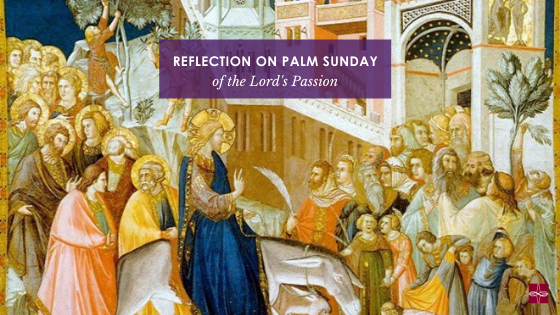 http://www.usccb.org/bible/readings/040520.cfm
When you hear “Lent,” or “Stations of the Cross,” what comes to mind? Is this just an annual season before the Easter festivities, or a must-follow ritual the Church demands of you? Or, is this a period you can truly focus and reflect on the mystery of God’s love for mankind – and the mystery of one man’s sacrifice and passion for all (including those He was yet to meet, like you and I)? Some years ago, during a discussion among friends, one person asked, “what’s the point of going through Lent and the Stations of the Cross all over again when Jesus did that already?” and the response was, “if we put ourselves through the Stations of the Cross meaningfully, we are able (even just for a few days) to put our feet in Christ’s sandals so that we would also learn to love (even to death) all mankind; regardless of how often we are hurt in the process.” The Passion of Christ demonstrates how much we are loved and how far God will go to show love to us. Sometimes, I think Jesus may have wanted to change His mind while praying in Gethsemane, where he sought God in the midst of sorrow and distress. Sometimes, we also feel sorrow, anguish, and distress. If given the power, we would ‘run out’ of our lives. How often have we come to that point of not wanting to go any further? How often have we thought, “I’m not sure I can do this”? I know I have. Jesus turned to God for comfort and reassurance. Who do you turn to during the tough times? Focus on Spirituality: When everyone Jesus knew had either ‘sold Him off,’ denied Him, or run away for their own safety, it must have felt as though He had been abandoned by those he had thought loved Him so dearly. Even today, there are people all around us who feel abandoned and do not know where or who to turn to. Today, as we ask Jesus where He would like to celebrate Passover, His response is: “I would like to celebrate Passover in your heart.” Have you prepared your heart for the Passover feast? If we also ask Jesus, “who would you like to celebrate it with?” I am sure His response is: “the lonely, the broken, the anxious, the weary, the frightened, and the sick and with you.” As we prepare our own hearts for the Passover feast, let us extend Jesus’ invitation to those in need on His behalf. PRAYER LORD, thank You for choosing my heart to celebrate the Passover; teach me to prepare my heart so that You would have the best Passover feast. As I send out Your invitations, help me look out for the hearts that need You- help me look beyond the cover-up smiles; and as I give out these invitations of hugs, laughter, smiles, joy and comfort, may I remember to take my seat at the table to feast with You. Amen! Service Suggestion: Journey with Jesus through the Stations of the Cross - may it not be out of a sense of obligation but because You know that Jesus needs a friend who will walk with Him through His rise and falls on this journey. Do not look too far, there may be someone closest to you who needs a friend or a listening ear for a short journey. As you take this journey, allow Jesus to prepare your heart not just for the Passover but for all His celebrations and may the way you speak and live give you away (like Peter’s speech betrayed him). To learn more about faith-based service opportunities, please click here. Benita Amoako is a St. Joseph Worker Program NY Alumnae.  Can you believe we are already in the fifth week of Lent? Personally, this year’s Lenten season has flown by for me. While I have not always held fast to the Lenten observances I chose for myself, I can already see the fruits of the changes I have been able to maintain. This year for Lent, I have begun working my way through the Bible using a program which breaks the Scriptures into easily-digestible daily segments from both the Old and New Testaments. Most of what I’ve read from the Old Testament so far has been very familiar to me—stories from creation to the great flood and Abraham and his successors. But what has struck me, as I’ve slowly progressed through the books of Genesis and Exodus, is the lack of trust that has plagued the human race since its creation. Reading these Bible passages has often left me pondering why mankind struggles so much to trust God. Adam and Eve fell for the serpent’s lies about the forbidden fruit instead of trusting that God knew what was good and appropriate for them; Abraham tried to jumpstart his promised line of innumerable progeny by having a child with his wife’s servant because his wife was supposedly incapable of bearing any children. Today’s first reading, from the Book of Numbers, continues these themes of distrust. “With their patience worn out by the journey,” the Israelites complain that they were rescued from slavery only to be left to die in the miserable desert, and that even the food the Lord has provided them is disgusting and wretched. I have found these particular stories from the Old Testament striking because they ring true for my own life; when I find myself in a difficult situation over which I have no control, I don’t always maintain my trust in God. I feel helpless because there is nothing I can do to change things, or I cannot fathom why things are unraveling in the way that they are. And, like hundreds of generations of the human race before me, I turn to the world first for answers instead of coming immediately to God. I usually end up complaining, and often times I prefer to question why He is treating me this way and do not trust that there is some good to come out of it that I cannot yet, and may not ever, see. In fact, I think this may be the heart of mankind’s trust issues: one of the hardest things for us to do is to have faith in God when we cannot see the whole picture, or do not understand what is going on, or cannot understand what God could possibly mean by calling us in the way that He does. But we do not need to see the whole picture in order to be faithful followers of Christ. We do not need to control the situation in order to get what God promised us. We can use our times of suffering, or times of feeling excluded from God’s plan, to bring ourselves closer to God. Instead of asking God why He has not done more for us, like the Israelites did in the desert, we can ask Him to show us what good our suffering could bring. And instead of trying to put ourselves on a more equal footing with God, like Adam and Eve or Abraham and Sarah did, we can ask God how best we can serve Him. Today, as we continue to navigate the incredibly difficult situations around us caused by the coronavirus, let us place our trust in God once more and turn to him in our time of need. I pray that this may be a fruitful time of growth in your relationship with God and that we may emerge from this time stronger in our faith, hope, and love. For more resources to accompany you during this time, please visit our Coronavirus Resource page.
 On March 7, my husband threw a surprise party to celebrate my 30th birthday. That would be the last time I would physically spend with many dear friends for at least a month. It was at the beginning stages of the coronavirus pandemic when the United States seemed to just barely be grasping what was going on across the Atlantic. We were aware but unafraid. The virus was like the flu. It only affected the elderly and those with compromised immune systems. It wasn’t a big deal. We would be fine. But around that time, my family began to take the notions of staying home, social distancing, and self-quarantining seriously. Each day brought more news. So we spent time outside. We tried to stay 6 ft apart. We bought a few more groceries than usual. We began to lay low. Almost three weeks later, I write from home, having gone “out” less times than I can count on my fingers apart from family walks, romps to open fields, or our backyard. No grocery stores. No movie theaters. No social events. No playgrounds. No libraries. No stores. No Masses. I haven’t had to “try” to make Lent this year somber or serious. Every day is a fast from something I deemed important to my life: a fast from physical friendship; a fast from community in the way I’m used to living it; a fast from outings, from the sheer independence of being able to step out of my house and go where I want to go when I want to. This fasting has been humbling. Prayer is the rhythm to my day. It is the breath of my days. The heartbeat. I watch online daily Masses or reflections on the Scriptures. I pray the rosary by myself or with my husband and children. I sing the Divine Mercy chaplet. I continue a novena. I make a spiritual communion with tears in my eyes. I utter supplications for others throughout the day. I offer my fasts—both the voluntary and involuntary—for our world. At the beginning of this Lenten journey, I shared how I thirsted to emerge from spiritual mediocrity. Now I thirst for God himself. I yearn to join the Body of Christ once again in the sacraments and receive him at the Eucharistic table. I live Paul’s exhortation to pray without ceasing in a profound way. And yet God has been so good. And peace prevails in my heart. I have so much to be thankful for: continued jobs and paychecks, long days of sunshine and warm weather, our health, food on our plates, a roof over our heads, snuggles with my children, reading books in our indoor tent, video calls with friends and family all over the country. In spite of everything, we are together. In spite of everything, God is here. In spite of everything, there is always hope. Let us continue to “rend our hearts” this Lent by turning to God and giving him everything we are feeling right now: exhaustion, confusion, anxiety, disillusionment, anger, despair, or fear. We can approach the one who became a vulnerable child for us and give him our own insecurities and vulnerabilities. At the manger, we will be met with his never-ending love. In his homily for the fourth Sunday of Lent, Fr. Mike Schmitz noted that God did not make an unbreakable world. Though he created perfectly, he instilled in mankind the ability to have free will—the ability to break our relationship with God by introducing sin into the human condition. Death, pain, suffering, temptation—all is the result of sin. This pandemic is more evidence of this truth. What matters, however, in the midst of our suffering, is that God does not abandon us to it—nor has he ever. Scripture recounts the story of God’s unfailing love for humanity since the Fall—a story of salvation that continues personally with each of us today. God does not promise fulfillment on earth, perfect joy, blessing, and comfort. He promises the cross, daily. But he also promises us that he will be with us always—even to the end of time—that he came to give life in abundance, that we can be transfigured, and that there is resurrection. He invites us to complete satisfaction and joy with him in Heaven for eternity. And in the meantime, as we continue on our own personal journeys in this “vale of tears,” he remains waiting for us at the well. Inviting us on the shore. Looking for our return on the horizon. Feeding us at the table. He remains pouring out all for us on the Cross. He remains. As we continue to navigate this Lenten season, the coronavirus pandemic, and the approach of Easter, let us go to him with humble hearts. “Let us allow ourselves to be loved, so that we can give love in return. Let us allow ourselves to stand up and walk towards Easter. Then we will experience the joy of discovering how God raises us up from our ashes.” -Pope Francis (Ash Wednesday Homily, 2020)
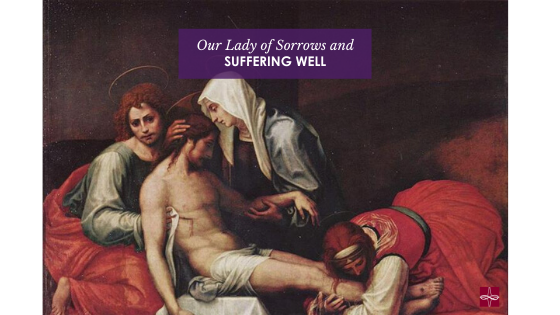 “And a sword will pierce through your own soul also.” -- Luke 2:35 I have a tradition of watching Mel Gibson’s The Passion of the Christ every year, usually on Good Friday. However, this year I decided to watch it on Ash Wednesday to prepare me for Lent. Every time I watch it, something new stands out to me. This year, I noticed with particular clarity how Mary follows Jesus throughout every step of His Passion and, more specifically, the effect it has on Our Lord. Whether it be His arrest, scourging, or His walk towards Calvary, every time He locked eyes with Mary, His energy was replenished and His courage renewed. Granted, this is from a film, but it isn’t that difficult to imagine. The love that Christ had for His mother is beyond anything we can conceptualize. I’ve always found this—and her—to be somewhat mysterious and always a little bit beyond my reach of understanding. But I think reflecting on her title of “Our Lady of Sorrows” can encourage us to suffer well, especially during this Lenten season. Mary, perfectly united with the will of her Son, was always completely open to His grace and His love. Along with this perfect unity, however, came the most intense and acute suffering ever suffered after Christ Himself. It is said by many saints, including St. Ephrem, St. Ambrose, St. Bridget of Sweden, and St. Alphonsus Liguori, that Mary suffered an interior, emotional crucifixion during the Passion of her son. Additionally, due to her sinless nature, the intensity of her suffering during Christ’s Passion was beyond anything we can imagine. St. Bernardine of Siena once said, “the grief of Mary was so great that, were it divided amongst all men, it would suffice to cause their immediate death.” This suffering of Our Lady of Sorrows, so beautifully depicted in the film, is ironically comforting. Mary is the ultimate example of not only how to suffer, but also how it can glorify God if fully embraced. She shows us that even through our suffering we can fulfill the will of God. One can argue that much of her life—beginning with the prophecy of Simeon and continuing through the laying of Christ in the tomb—was lived in some degree of suffering, especially knowing what would befall her Son. But because she was completely devoted to the fulfillment of the will of God, her suffering was redeemed in and through the glory of the resurrection of Christ. The film depiction of Christ looking to His mother is also something we can learn from this Lent. Mary can be a source of strength and encouragement as we continue to do works of prayer, fasting, and almsgiving throughout these forty days. Mary suffered quietly and faithfully. She stood with her Son at the cross until the end, knowing in faith that his Passion and death would fulfill God’s plan and bring salvation to mankind. What can we take from this? Our Lady of Sorrows shows us that suffering well--that is, directed in union with God’s will-- can glorify Him and help us along the path to our salvation. This Lent, as I meditate on her walk with Christ toward Calvary, I am refreshed in the knowledge that our suffering doesn’t need to have a bitter end. If unified with Christ it can, and will, be redeemed in and through Him in eternal life. How can we make our walk through the desert and toward Calvary this Lent look more like Mary’s?
|
Archives
April 2024
Categories
All
|











 RSS Feed
About |
Media |
© COPYRIGHT 2024 | ALL RIGHTS RESERVED