
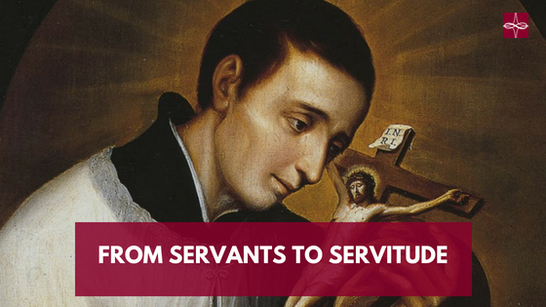
“GO, GONZAGA, G-O-N-Z-A-G-A!”
In recent memory, the basketball arena at Gonzaga University has been filled with that chant every season. Students and alumni alike gather together to celebrate their team, especially in March. People are excited—as they should be! Gonzaga is a Jesuit University in Spokane, Washington that is very well known for its basketball team. Every time they’ve made it to March Madness, there are always some commentators who ask, “Is it pronounced Gone-ZAY-ga, Gone-ZAH-ga, or gone-ZAG-uh” (it’s the latter, by the way). While Gonzaga is a great university and a great team, something that is often overlooked about the university is the great man for whom it is named. A man who, assuredly, would find it madness how many people are chanting his name every March. St. Aloysius Gonzaga, or “Luigi,” was born in Spain to an aristocratic family. As the first-born son, Luigi was raised to eventually inherit the entirety of his father’s fortune. Everything provided for him already, he was not required to work for a living. Instead, he was sent to the royal court at age ten to prepare for a life in the aristocracy. Yet, while serving the court, he saw the ways of nobility—filled with backstabbing, sex, and so many more things—and they seemed to him disgusting and vile. Exposed to and repulsed by these things, he vowed to God to never sin again. Little Luigi began to read in the family chapel at court about the lives of the saints. At the age of 11, he read a book about the Jesuits, who brought the Gospel to India. Luigi felt invigorated. He too wanted to bring the Good News to India or Africa with the Jesuits. Even with the aristocracy all attempting to convince him to stay, and his father threatening violence, Luigi left home at 17 to go to Rome and join the Society of Jesus. Six years later, he was dead. Luigi had been sent on mission—but not to India, or Africa, or even anywhere outside of Italy. He died after being sent to help the people, plague-ridden and dying, on the streets of Rome. While he was never ordained a priest, the epic journey of preaching the Gospel that Aloysius Gonzaga had dreamed about as a child did happen for him on the streets of his adopted home. Although young Luigi dreamed of serving the Lord in faraway, impoverish nations, the Lord showed him that even the people right outside of our windows need the Gospel. When we strive to live the Gospel, we must ask ourselves: have I shown the love of Christ to those around me? To my housemates and family members, to my neighbors a couple doors down? To those in my community? Not all missionary disciples are called to board a plane and serve abroad. Where ever our vocation takes us, we are called to be missionaries of Christ throughout our daily lives. Aloysius Gonzaga was beatified fourteen years after his death for his heroic virtue, which he demonstrated through his chosen life of simplicity and trust in the Lord. Maybe it is appropriate that we chant his name every year—and maybe we can all imitate the Gonzaga who gave up his servants to be one himself.
0 Comments
6/9/2018 An Interview with Fr. General Jacob Nampudakam SAC on the 40th Anniversary of his ConsecrationRead Now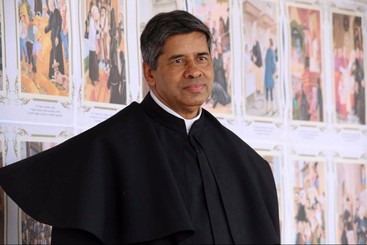 Fr. Jacob Nampudakam SAC is the Rector General of the Society of the Catholic Apostolate. He was elected in October 2010 and is the first non-European Rector General. This interviewed was conducted by Catholic Apostolate Center Program Associate Julianne Calzonetti in Rome, Italy.
1. Matthew 4:1-3a: Jesus spent 40 days in the dessert: What have been some of your greatest trials in 40 years? Two main trials: First, I am always in favour of life. Following Deuteronomy 30, 19-20, I had to make a choice between blessing or curse, life or death. God challenges us to choose life. In life we find hope; the ability to live in wonder, nurture in love, and not despair. Hence when members show a spirit of defeatism and negativity- without making efforts to create life- it is challenging. Nothing is achieved by being chronically negative. “Rather, the one who loves Christ is full of joy and radiates joy,” as Pope Francis reminds us. Second, when members become instruments of disunity rather than unity; allowing themselves to be guided by worldliness instead of the Spirit. This is the antithesis of Jesus Christ, who tells us that His Kingdom is not of this world. Following anything other than the Spirit will lead to confusion and destruction; a problem which then takes root in the afflicted person’s heart. Thus, internal problems become external situations, which are very difficult to handle. 2. Joshua 5:6 The Israelites walked 40 years in the desert: What has been your greatest moment of trusting the Lord? “Abandon yourself to God,” St. Vincent tells us, “with perfect confidence and do not fear.” In breathing these words, we are graced with the bravery God willingly gives to go forth and proclaim the Gospel to all creation. We can also use such words to explain two of our missions, Peru and Vietnam. If we lived in the world, we would say such ambitions were impossible, as they were taken up by entities with very few members. Yet instead they are flourishing; for in our steadfast courage and faith, the Lord blessed us in a hundredfold. The moral of the story is this: trust the Gospel. Take no purse, no haversack. He is with you. Another element of surprise was my election as Rector General. It’s not easy to break the frontiers and boundaries set by International Congregations, but when the fresh air of the Spirit blows through the windows, thy will be done. 3. Jesus remained on earth 40 days after his Resurrection: What is your hope and mission, father, for the remainder of your term as Rector General, as well as the remainder of your time as Jesus' anointed one on his earthly pilgrimage? First goal: Make our holy founder known and loved by as many as possible; to offer his charism of the Union of the Catholic Apostolate in service of the Church’s mission. Second goal: Give the compass to God, listen to the cries of His people, and “be led forth with peace” (Isaiah 55:12) to the peripheries. May we be the soul that God brings to their feet, so that they may have the life in abundance He has promised. In all my journeys, what my eyes have seen cannot leave me unaffected. But in each, the open wound of my heart remains the same: for the innocent children who are deprived of love, laughter, family, medicine, education… human dignities that no person on this earth should be denied. We all have equal rights for the blessings given to us by the Creator. To live in luxury disregarding the poor around us- like the parable of the rich man and Lazarus- would be the greatest sin of a Christian. We are all poor before God. 4. 40 is seen as a generation in the Bible. What has changed in the Society and Missions? What has been made better/worse? Everything changes. We try to discern and respond to the signs of the times. Yes, the Society has grown. We have reached out to as many as 56 countries around the world. There are about 2400 members in the Society, and then, of course, the entire Pallottine Family. The scenario in the Church and all the religious Congregations is changing; and it’s moving south. Though this makes no difference; I believe it matters little where we are growing or diminishing in any part of the world. The Church is one body of Christ. Through the consecration we make, we become members of the Society. As so often said by me on visitations, we may be Italians, Germans, Polish, Brazilians, Indians etc., but we are all Pallottines, and one family. I do not believe in lamenting over the decline in one part of the world or rejoicing too much about the growth elsewhere. Such things happened in the past and continue to happen today. Tomorrow has not yet come. The Spirit moves where it wills! Success or failure – let history judge us. 5. As this generation ends, God makes another anew, just as the papacy of Francis is evermore on target with the teachings of Pallotti in Gaudete. How will you lead us in following his papal mission? The greatness of any Christian must be measured by his or her fidelity to the life of Jesus as we encounter him in the Gospel. For me, Pope Francis is someone who lives the Gospel in its radicality. The will of God is our sanctification. There are 3 similarities between our holy founder and Francis: 1. The life of Jesus as the fundamental rule of life and apostolate; 2. A poor Church for the poor; 3. Go forth to the peripheries of human life. These three steps are only possible when the first is achieved: Encounter the person of Jesus in the Gospel on a daily basis. 6. India: You are the first non-European Rector General. What have been the changes over 40 years you have seen in your country? While India as a country is slowly coming of age, what strikes me is the tremendous contribution that the minority Church- 2% of the Catholic population- is making to the Universal Church. In our Society- and the Pallottine Family as a whole- the growth in India is tremendous. No doubt, we are not talking about a perfect situation in all areas, just as in any other part of the world. The unique contributions of the Indian Pallottines are most fruitful where we are able to be faithful to our rich, spiritual traditions and work zealously to be instruments of peace and communal harmony. The 58 schools run by the Pallottines, with thousands of teachers and students from all religions, could serve as the best instrument to promote unity and peace in a world divided by religious disharmony. The One Almighty and Loving God is the Creator of every human person created in His own image and likeness. The ability to respect and love every human being, regardless of his nationality, culture or creed, and be able to see the face of God on each person, will make us universal human beings. The future of the Society, the Church, and the world itself will depend much on this ability to go to the most profound ontological and existential level and be universal persons. Building walls is a sign of innate fear and insecurity. Having grown up in a multi-religious context in India, where we played and grew up with Hindu, Muslim and Sikh youngsters, it does not frighten me to deal with one of a different faith. Experiences mould us. Let’s open up as a Society and work for the common good. But firstly, let’s open up our hearts. That is exactly the work of the Holy Spirit; who opened up the newly founded Church on the day of Pentecost. 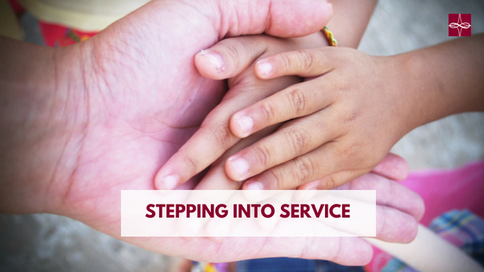 Dear future volunteer,
Each time I revisit the Ascension stories in the Gospels, I find numerous points that relate to mission and service. Throughout my own time on mission in Jamaica, I see similarities between these verses and my challenges and blessings in a daily life of service. I hope to offer encouragement to you, future volunteer, as you research and discern the many opportunities for service available to you. “He rebuked them for their unbelief and hardness of heart…” (Mark 16:14) My strongest prompt to mission came as I reflected on a painting of St. Francis gazing at the cross and being told to rebuild the church. The question written with the painting asked, “Am I willing to do God’s will?” For many years, I have read, heard, and tried to practice in small ways, the example of Jesus doing the “will of my Father,” and loving others as God loves me. Now I felt that God had put the nudge toward mission into my heart. Two years of overseas mission service seemed like a very big step into the unknown but I had the stories of Francis and many others as examples, and I felt that if I said “Yes,” God would enable me to shed my worries and, thus, soften my heart and make more room for his Grace! Future volunteer, God will do the same for you. Mission has taught me to expect the unexpected and to trust in God’s plan. Though I was open to other ministries, there was a pretty high expectation at my future mission site that I would be helping in schools, and that is exactly where I found myself. My first classroom was noisy, chaotic, cramped, and undersupplied, but I found that I had the most difficulty countering the common teaching approaches, which I perceived as overly physical and sometimes belligerent. During the first days and weeks, it was very easy for me to get caught up in the prevalent practice of shouting, derision, and physically putting someone into their chair or the corner. I didn’t like myself doing that. Continually, readings in the Franciscan prayer book kept telling me that Peace IS the path. One time, a student told me that he didn’t like me putting him into his seat. The next day, I got down to his eye level and apologized to him. He listened, we hugged, and I felt that I was on my way toward a better practice. Future volunteer, are you ready to be stretched and molded according to God’s will? “The eleven disciples went to Galilee, to the mountain to which Jesus had ordered them.” (Matthew 28:16) I always notice the number eleven here; it is a particular mention to the fact that someone is missing. Dear future volunteer, are you worried about leaving your loved ones to do service? There are times when I am missing someone familiar from my table. It is different people at different times and my heart misses them. The last phrase—”to which Jesus had ordered them”—strikes me as being particularly relevant to mission and service. What are Jesus’ orders? Feed the hungry, clothe the naked, go and make disciples of all nations. Mission is an opportunity to do just that. My heart believes that God does and will take care of me while on mission, and the Almighty and Universal God is also able to care for my loved ones even when they are on a different continent! “He led them out to Bethany...They did him homage and then returned to Jerusalem with great joy and they were continually in the temple praising God.” (Luke 24:50-53) Dear future volunteer, as you discern your service, there is great help to be found in being “continually in the temple praising God.” I couldn’t have made my decision for mission without some serious prayer and reflection. The question of “Is this really God’s will?” was a focus for my Lenten prayer before I began my time of service. Contemplative silence and guidance from trusted friends helped me to find peace in the answer to that prayer. This ending of Luke’s Gospel account shows the disciples returning to the Temple, and I have reflected on how this seems to be the strength they needed before departing to their ministries that are recounted in Acts. “Jesus came and stood in their midst and said, ‘Peace be with you.’” (John 20:19; 21:22) Ahhh, my prayers were voiced and answered; my heart found peace, and my decision for mission was made. In John’s Gospel, Jesus breathes the Holy Spirit upon the disciples. In the next chapter, I see another of my tendencies: my desire to get a quick summation of God’s plan. Peter wants to know about the future for the Beloved disciple…(nudge, nudge, wink, wink) and he is gently reminded by Jesus, “What concern is it of yours? You follow me.” The disciples encounter the resurrected Jesus in their everyday lives while fishing, walking, eating, and interacting with others. As my mission time unfolds, I also see Jesus in everyday life. I see him in the faith voiced in the locals that I meet and in new forms of singing and praise. I feel discouragement at the discrepancy of incomes and lack of faith just as Jesus felt while gazing at Jerusalem. I marvel to see God’s hand in creation as I walk by household gardens or explore the hills. And, like the disciples, I see Jesus working through me, giving me a stronger dependence on prayer as I realize that I will not be able to fix systemic problems, and a stronger sense of humility as I realize that I am an outsider here, but I truly have been sent by God. Jesus ascended and asked his disciples to go and teach all nations. Mission service makes us a viable part of that eternal and mystical plan. Jesus may have disappeared into the clouds, but we are able to make his presence real today. I really think that He was having a good chuckle as He ascended. He knew how much mission would change us! Dear future volunteer, are you ready to be changed? To learn more about service opportunities through Franciscan Mission Service, please click here. This reflection was originally published on the Catholic Volunteer Network Blog and was posted with permission. Janice Smullen is a recently returned missioner with Franciscan Mission Service. She most recently served in Kingston, Jamaica. 5/9/2018 Everyday Holiness (Part 2): 10 Quotes from Pope Francis' Apostolic Exhortation to Help You Be Holy in Today's WorldRead Now On April 9, the Solemnity of the Annunciation of the Lord, Pope Francis released his latest Apostolic Exhortation: Gaudete et Exsultate (Rejoice and Be Glad): On the Call to Holiness in Today’s World. This is the third Apostolic Exhortation of his papacy, following Evangelii Gaudium, the Apostolic Exhortation on the Proclamation of the Gospel in Today’s World and Amoris Laetitia, a post-synodal Apostolic Exhortation on Love in the Family. What was his goal? “To re-propose the call to holiness in a practical way for our own time, with all its risks, challenges and opportunities" (GE 2). Without delving too much into a theological or heady definition of holiness, Pope Francis invites us simply and straightforwardly to open ourselves to the specific and unique mission God has created us for. In this, he says, lies true joy and freedom. Our Holy Father takes us back to the Source of Holiness, Jesus Christ, and encourages us to look to the Beatitudes as guides for holiness. Below, I’ve compiled some of my favorite quotes and key take-aways from this approachable, yet profound, exhortation. 1.“A person’s perfection is measured not by the information or knowledge they possess, but by the depth of their charity.”-GE 37 It is tempting to leave the task of holiness to theologians, the clergy, or those who work for the institutional Church. Here, Pope Francis reminds us that holiness is not all about intellectual knowledge, our ability to quote the latest Church document, or the Catechism. While knowledge of the Faith certainly is important, our holiness is measured by the amount of love with which we infuse all of our actions. I can’t help but think of St. John of the Cross’s quote: “In the twilight of life, God will not judge us on our earthly possessions and human successes, but on how well we have loved. 2. “Jesus explained with great simplicity what it means to be holy when he gave us the Beatitudes (cf. Mt 5:3-12; Lk 6:20-23). The Beatitudes are like a Christian’s identity card…In the Beatitudes, we find a portrait of the Master, which we are called to reflect in our daily lives.” -GE 63 I love that Pope Francis ultimately leads us to Scripture and to Jesus Christ Himself as the model and teacher of holiness. It can get overwhelming trying to be holy and define holiness in our modern world. The Beatitudes, Pope Francis says, are like a “Christian’s identity card.” They point us directly to holiness and guide us along the way. Spending time reflecting on each of the Beatitudes will help us to better understand what it means and looks like to be holy. 3. “It is true that the primacy belongs to our relationship with God, but we cannot forget that the ultimate criterion on which our lives will be judged is what we have done for others. Prayer is most precious, for it nourishes a daily commitment to love. Our worship becomes pleasing to God when we devote ourselves to living generously, and allow God’s gift, granted in prayer, to be shown in our concern for our brothers and sisters.” –GE 104 Here, Pope Francis is reminding us that our prayer must lead to action. We cannot be holy in a vacuum, but are called to live out holiness amidst our brothers and sisters. Service to the world, as promoted by Catholic Social Teaching, is crucial if we are to be true followers of Christ. While our relationship with God always comes first, this relationship turns our gaze outward in order to foster and build relationships of love, service, and communion with our brothers and sisters. 4.“Far from being timid, morose, acerbic or melancholy, or putting on a dreary face, the saints are joyful and full of good humour. Though completely realistic, they radiate a positive and hopeful spirit.” -GE 122 Holiness leads to joy – this is the true fruit of our living a holy life. As Christians, we are called to exude the joy of the Resurrection and of the Gospel in the midst of a world plagued by sin, brokenness, and suffering. While holiness is joyful, is does not exist in an alternate reality, but embraces the truth of the world in which we live. Pope Francis says that this holiness is “realistic” and allows us to engage the world while still looking beyond it to the glory of eternal life. 5. “God is eternal newness. He impels us constantly to set out anew, to pass beyond what is familiar, to the fringes and beyond. He takes us to where humanity is most wounded... God is not afraid! He is fearless! He is always greater than our plans and schemes. Unafraid of the fringes, he himself became a fringe (cf. Phil 2:6-8; Jn 1:14). So if we dare to go to the fringes, we will find him there; indeed, he is already there.” –GE 135 The theme of going outside our comfort zone has been one Pope Francis has promoted since the beginning of his papacy. He calls us as Christians and as the Church to wake up, open our doors, and shake the dust off ourselves by imitating God who is “eternal newness.” Holiness, therefore, means being active, bold, and unafraid. It means meeting Christ in the fringes of society and finding him outside the confines of our Church walls. 6.“Let us allow the Lord to rouse us from our torpor, to free us from our inertia. Let us rethink our usual way of doing things; let us open our eyes and ears, and above all our hearts, so as not to be complacent about things as they are, but unsettled by the living and effective word of the risen Lord.” –GE 137 Here, Pope Francis continues to invite the Church to an examination of conscience. Are we doing things out of habit, because we’ve always done something a certain way, or are we open to the promptings and workings of the Holy Spirit as we approach our task of holiness and evangelization? The example and word of Jesus Christ should always “unsettle” us to some degree. We do not achieve perfect holiness at some point in our life and then rest on our haunches! The journey lasts throughout our lifetime. 7.“Are there moments when you place yourself quietly in the Lord’s presence, when you calmly spend time with him, when you bask in his gaze? Do you let his fire inflame your heart? Unless you let him warm you more and more with his love and tenderness, you will not catch fire. How will you then be able to set the hearts of others on fire by your words and witness? If, gazing on the face of Christ, you feel unable to let yourself be healed and transformed, then enter into the Lord’s heart, into his wounds, for that is the abode of divine mercy.” -GE 151 I love this passage from Gaudete et Exsultate. Pope Francis takes on a more reflective tone here and invites us to be prayerful along our journey to holiness. He gets to the heart of holiness by asking us some profound but unavoidable questions. Essentially, he’s asking if we have truly encountered Jesus Christ and his infinite love. This is fundamental to holiness, for our encounter with Christ’s love is what will carry us forward on our journey and sustain us. Take some time to pray with these questions and ask the Lord for a deeper encounter with his love. 8.“For this spiritual combat, we can count on the powerful weapons that the Lord has given us: faith-filled prayer, meditation on the word of God, the celebration of Mass, Eucharistic adoration, sacramental Reconciliation, works of charity, community life, missionary outreach. If we become careless, the false promises of evil will easily seduce us.” –GE 162 As with any journey, we will encounter setbacks and temptations as we strive for holiness. Pope Francis devotes a section of his exhortation to the reality of evil and our need to acknowledge it. Pursuing holiness also means engaging in spiritual combat. We not only face our own weaknesses or the sins of others, we also face an actual opponent: the devil. Here, Pope Francis encourages us to count on “the powerful weapons that the Lord has given us.” We are not alone as we face evil, but find our strength in the Church, the sacraments, our brothers and sisters, etc. 9. "Discernment is necessary not only at extraordinary times, when we need to resolve grave problems and make crucial decisions. It is a means of spiritual combat for helping us to follow the Lord more faithfully. We need it at all times, to help us recognize God’s timetable, lest we fail to heed the promptings of his grace and disregard his invitation to grow." –GE 169 Discernment is a way of life. It means inviting the Lord into our actions and decisions and asking for his guidance as we go about our day. Pope Francis reminds us that discernment is not reserved only for major life decisions such as a move, our vocation, a job opportunity, etc. Discernment should be engrained into our spiritual life and helps to ensure that we are living our lives according to God’s plan rather than our own. 10.“Mary is the saint among the saints, blessed above all others. She teaches us the way of holiness and she walks ever at our side. She does not let us remain fallen and at times she takes us into her arms without judging us. Our converse with her consoles, frees and sanctifies us.” -GE 176 We cannot pursue holiness without looking to the perfect model of human holiness: the Blessed Virgin Mary. Pope Francis concludes his exhortation by inviting us not only to look to Mary, but to go to her and build a relationship with her. She always guides us closer to her Son. Mary is a gift to us given by Christ himself to journey alongside us on the path to heaven, don’t forget to use her as a resource! **This is part two of a two-part series of quotes from Pope Francis’ latest Apostolic Exhortation: Gaudete et Exsultate. For more information and resources on Gaudete et Exsultate, please click here. Questions for Reflection: How does Pope Francis challenge your idea of holiness? Do you agree with the Holy Father’s definition? Where do you see holiness being lived out today?
5/1/2018 Everyday Holiness: Ten Quotes from Pope Francis’ Apostolic Exhortation to Help You Be Holy in Today’s WorldRead Now On April 9, the Solemnity of the Annunciation of the Lord, Pope Francis released his latest Apostolic Exhortation: Gaudete et Exsultate (Rejoice and Be Glad): On the Call to Holiness in Today’s World. This is the third Apostolic Exhortation of his papacy, following Evangelii Gaudium, the Apostolic Exhortation on the Proclamation of the Gospel in Today’s World and Amoris Laetitia, a post-synodal Apostolic Exhortation on Love in the Family. What was his goal? “To re-propose the call to holiness in a practical way for our own time, with all its risks, challenges and opportunities" (GE 2). Without delving too much into a theological or heady definition of holiness, Pope Francis invites us simply and straightforwardly to open ourselves to the specific and unique mission God has created us for. In this, he says, lies true joy and freedom. Our Holy Father takes us back to the Source of Holiness, Jesus Christ, and encourages us to look to the Beatitudes as guides for holiness. Below, I’ve compiled some of my favorite quotes and key take-aways from this approachable, yet profound, exhortation. 1.“The Lord asks everything of us, and in return he offers us true life, the happiness for which we were created. He wants us to be saints and not to settle for a bland and mediocre existence.” -GE 1 Pope Francis echoes his predecessors in reminding us that following Christ leads to an abundant, joyful, and exciting life. We often do not equate holiness to greatness, but that’s what it is. Though God expects a lot from us, he gives us so much more: true life and happiness. Our Holy Father is reminding us that holiness makes us truly happy by calling us to live abundantly. 2. Holiness is the most attractive face of the Church. -GE 9 Many of us might have grown up thinking that holiness is boring and that sanctity is impossible, so why is Pope Francis saying that holiness is the most attractive face of the Church? What does this mean? When we embrace holiness, we become who we were created to be; we become our most authentic selves. This authenticity, this freedom, is attractive. It makes the Church come alive through each of her members. When we are striving for holiness, we are becoming our best and most loving selves. This witness is what evangelizes – it invites others to pursue their own journey of holiness. 3.The important thing is that each believer discern his or her own path, that they bring out the very best of themselves, the most personal gifts that God has placed in their hearts (cf. 1 Cor 12:7), rather than hopelessly trying to imitate something not meant for them. We are all called to be witnesses, but there are many actual ways of bearing witness. -GE 11 Oftentimes, it’s easy to compare ourselves with others. It’s tempting to see the gifts and talents of others and ask ourselves why we do not have the same. The Body of Christ is made up of all different parts – each necessary for the functioning, health, and well-being of the body itself. Here, Pope Francis reminds us that there are as many paths to holiness as there are people. Each of us was designed specifically by God for a unique purpose. We do not have to become St. Francis, St. Vincent Pallotti, St. Mother Teresa, St. Joan of Arc, or St. Francis de Sales. We become saints by becoming most fully and authentically who God made us to be: ourselves. 4.To be holy does not require being a bishop, a priest or a religious. We are frequently tempted to think that holiness is only for those who can withdraw from ordinary affairs to spend much time in prayer. That is not the case. We are all called to be holy by living our lives with love and by bearing witness in everything we do, wherever we find ourselves. – GE 14 In this passage, Pope Francis reminds us of the universal call to holiness which has its inception in the Gospel and which the Church has explicitly reminded us since the closing of the Second Vatican Council. Holiness is not reserved for those with theology degrees, the ordained, monks, or religious. It is not reserved for those who work for the Church or volunteer with acts of service. It is for each and every one of us: the high school student studying for exams, the single parent, the politician developing laws for his or her constituents, the factory worker, the refugee far from home, the married couple starting or raising a family, the list goes on and on. Whatever vocation, profession, or place in life we find ourselves in, let us infuse it with love in order to become holier each and every day. 5.In the Church, holy yet made up of sinners, you will find everything you need to grow towards holiness. The Lord has bestowed on the Church the gifts of scripture, the sacraments, holy places, living communities, the witness of the saints and a multifaceted beauty that proceeds from God’s love, “like a bride bedecked with jewels” (Is 61:10). -GE 7 Sometimes the journey of holiness seems impossible. We can get tired and beaten down by our own weaknesses and failures, and by the multitude of temptations and trials that seem to present themselves at every step. Here, Pope Francis is reminding us that Jesus Christ gives us everything we need to be holy. Our growth in holiness cannot exist apart from Christ’s Church. Though the Church is not perfect, it is in the Body of Christ that we have access to Scripture, the sacraments, and community, so that we can have the help of others who are also striving for holiness. Do not forget to use these invaluable resources, to go back often and drink from the well of life, in order to get the strength you need to continue your journey of holiness. 6. This holiness to which the Lord calls you will grow through small gestures. -GE 16 This quote reminds me of the often-referred to statement of St. Mother Teresa: “…do small things with great love.” Holiness does not happen overnight. It involves millions of decisions and actions – each one leading us closer to or further away from our goal. Pope Francis reminds us that we are called to grow in holiness in a way that may seem small and ordinary. Cleaning a dish can become an act of holiness—so can changing a diaper, writing a paper, tending a garden, submitting a work report, or sitting in traffic. Greatness, then, lies in the little things. This is the little way St. Therese of Lisieux shared with the Church. It can lead to great sanctity. 7.Each saint is a mission, planned by the Father to reflect and embody, at a specific moment in history, a certain aspect of the Gospel…Every saint is a message which the Holy Spirit takes from the riches of Jesus Christ and gives to his people. -GE 19, 21 Each of us are a product of our times. We were born at a specific time and place in order to live out a specific mission. We don’t often think ourselves as “a mission,” as Pope Francis says, or as “a message,” but these are beautiful ways to think about our lives and the weight and dignity of each one. By thinking about our lives in this way, we see that each of us is planned by the Father at this exact moment in time and that our lives, actions, and interactions with others are invaluable. If we do not share the message God created us to impart, no one else will. 8.Just as you cannot understand Christ apart from the kingdom he came to bring, so too your personal mission is inseparable from the building of that kingdom…Your identification with Christ and his will involves a commitment to build with him that kingdom of love, justice and universal peace. -GE 25 After Christ’s Resurrection and before his Ascension into heaven, he gave his disciples a clear command: “Go, therefore, and make disciples of all nations, baptizing them in the name of the Father, and of the Son, and of the holy Spirit.” The same commission resounds for us today. Jesus came not only to overcome sin and death, but to build his kingdom on earth. For this reason, Pope Francis reminds us that we “cannot understand Christ apart from [his] kingdom.” Before joining Christ in Heaven, we’ve got work to do. We join Christ in his mission by working to create a world of “love, justice and universal peace.” Holiness, therefore, is not for us alone, but for society, for others, and for the world. 9.The presence of constantly new gadgets, the excitement of travel and an endless array of consumer goods at times leave no room for God’s voice to be heard…Sooner or later, we have to face our true selves and let the Lord enter. -GE 29 The world today is an incredibly noisy place. Our access to technology enables us to be plugged in at almost every moment of the day. We see screens on our computers, smartphones, and televisions; we are bombarded by advertisements; we spend hours on social media. Without demonizing technology or refuting its benefits, Pope Francis reminds us of the temptation to drown out the voice of God with noise. If we are unable to hear the voice of God, then we will be unable to attain the holiness to which we are called. How can we carve out more time for God today in silence and in prayer? 10.Do not be afraid of holiness. It will take away none of your energy, vitality or joy. On the contrary, you will become what the Father had in mind when he created you, and you will be faithful to your deepest self. To depend on God sets us free from every form of enslavement and leads us to recognize our great dignity. -GE 32 Our world often views holiness as boring, enslaving, or downright impossible. Here, Pope Francis beautifully reminds us that holiness leads to true authenticity and freedom. Rather than limit our lives or diminish them with rules, regulations, and boredom, holiness leads to joy and vitality. Embracing who we were made to be leads to true happiness and satisfaction, rather than chasing the empty things of this world or trying to be who we are not. Let us not fear holiness, but strive for it wholeheartedly! **This is part one of a two-part series of quotes from Pope Francis’ latest Apostolic Exhortation: Gaudete et Exsultate. For more information and resources on Gaudete et Exsultate, please click here. Questions for Reflection: Do these quotes from the Holy Father surprise or excite you? How has your perspective of holiness changed after reading some of these words from Pope Francis?
 Today we celebrate the fifth anniversary of Pope Francis’ pontificate. In these short years, Pope Francis has done much to continue the work of his predecessors in building a culture of evangelization and inviting each member of the Church to live out their baptismal call as missionary disciples. Several important Church documents have been released throughout his papacy, including Evangelii Gaudium, the Apostolic Exhortation on the Proclamation of the Gospel in Today’s World, Laudato Si’, the encyclical on Care for our Common Home, and Amoris Laetitia, a post-synodal Apostolic Exhortation on Love in the Family. Pope Francis has participated in two World Youth Days, made roughly 22 international apostolic visits, and has canonized 885 saints. He called for the Jubilee Year of Mercy from 2015-2016. I would like to celebrate the fifth anniversary of his election by sharing some quotes that characterize his papacy and capture its tone. 1. A Church on Mission "I prefer a Church which is bruised, hurting and dirty because it has been out on the streets, rather than a Church which is unhealthy from being confined and from clinging to its own security… More than by fear of going astray, my hope is that we will be moved by the fear of remaining shut up within structures which give us a false sense of security, within rules which make us harsh judges, within habits which make us feel safe, while at our door people are starving. -Evangelii Gaudium, 49 Pope Francis envisions a missionary church—one with open doors to welcome people in, but also for each of us to step out and bring the Good News of Jesus Christ to the world. As Christians, it can be tempting to remain within the safety of our parish and Church community. However, Jesus calls us to “go out to the nations” and encounter the hurting world. Pope Francis reminds us of this evangelizing spirit entrusted to us by Jesus Christ and challenges us to be a Church on mission. 2. The Inherent Dignity of Mankind and Creation “Our insistence that each human being is an image of God should not make us overlook the fact that each creature has its own purpose. None is superfluous. The entire material universe speaks of God’s love, his boundless affection for us. Soil, water, mountains: everything is, as it were, a caress of God.” -Laudato Si, 84 About two years into his papacy, Pope Francis released his encyclical Laudato Si’, focusing on our responsibility as stewards of creation. No other pope has dedicated an entire encyclical to the care of creation. In doing so, Pope Francis reminds us that all of the created world helps us to glimpse and better know God Himself. Mankind is the pinnacle of creation, made in God’s image and likeness. In Laudato Si’, Pope Francis reminds us of each person’s inherent dignity, made with his or her own purpose, gifts, and mission. 3. The Transformative Power of Christ’s Love “Jesus’ love goes before us, his look anticipates our needs. He can see beyond appearances, beyond sin, beyond failures and unworthiness…He sees beyond this, to our dignity as sons and daughters, a dignity at times sullied by sin, but one which endures in the depth of our soul. He came precisely to seek out all those who feel unworthy of God, unworthy of others.” – Homily at Plaza de la Revolución during his Apostolic Journey to Cuba At the heart of the Christian life is an encounter with Jesus Christ. His love is transformative, life-changing. We encounter Christ in prayer, the sacraments, the parish, in one another. However, we cannot overestimate the importance of our prayer life—of moments throughout each day in which we enter into dialogue with God, offer up our work and sacrifices, remember the needs of others, or give God praise. When we carve out time each day for prayer, we are better able to know the look of Christ that goes beyond the worldly way of seeing things into our dignity as sons and daughters of God. 4. The Role of the Church in the Christian Life "We cannot understand Christ without his Church, just as we cannot understand the Church without her spouse, Christ Jesus, who gave his life out of love, and who makes us see that it is worth the price.” -Prayer Vigil for the Festival of Families in Philadelphia I love this quote because it sums up the relationship between Christ and His Church. We cannot know Christ apart from the Church, just as the Church cannot exist without Christ. Christ founded the Church in order to be a place of encounter with Him through the sacraments and through one another. We come to more fully know the love of God in the life of each parish. How can we create communities of encounter in our various parishes? Is the light of Christ truly shining forth in our communities? 5. The Messiness and Joy of Family Life “I thank God that many families, which are far from considering themselves perfect, live in love, fulfill their calling and keep moving forward, even if they fall many times along the way. The Synod’s reflections show us that there is no stereotype of the ideal family, but rather a challenging mosaic made up of many different realities, with all their joys, hopes and problems.” -Amoris Laetitia, 57 Pope Francis speaks realistically of human life and love. The family, the domestic church, is not perfect. We are called to learn and grow in love throughout our entire lives, just as we are called to learn and grow in holiness. The family is the place where love is mastered and refined. It is the foundation of society and of the Church. Pope Francis calls families to journey joyfully on the path of love. He invites us not to fear our imperfection, but to keep moving forward in hope and joy. 6. Not Letting Fear Impact Vocational Discernment “The work of discernment identifies our fears and can then help us to overcome them, opening us to life and helping us to calmly face the challenges that come our way. For us Christians in particular, fear must never have the last word but rather should be an occasion to make an act of faith in God… and in life!” -Message for World Youth Day Panama In preparation for the 2018 Synod on Young People, the Faith and Vocational Discernment and World Youth Day 2019 in Panama, Pope Francis spoke of the process of discernment, especially for young people today. Fear is often at the heart of our actions—or inaction. Christians, however, have no cause for fear. As we discern God’s call for our life each day, let us place our trust in Him and act with courage and boldness. God has created us for a unique mission that only we can fulfill in His Church. Let us discern his will for us, as Pope Francis encourages, “trusting that he will lead us to a good end.” 7. The Importance of Contemplating and Encountering God’s Mercy “We need constantly to contemplate the mystery of mercy. It is a wellspring of joy, serenity, and peace. Our salvation depends on it.” -Misericordiae Vultus, Bull of Indiction for the Extraordinary Jubilee of Mercy Starting in 2015, Pope Francis instituted the first Jubilee Year of Mercy in the Catholic Church. Throughout this time, he invited the Church to contemplate once more the merciful gaze of the Father and experience God’s mercy in our lives. We cannot be merciful without first having personally experienced the mercy of God. I loved that as a Church, we dedicated a year to contemplating this great mystery. We know God as Father, Savior, Creator, Just Judge, and many other titles. But how often to experience His mercy, as evidenced in the parable of the Prodigal Son and in the story of Jesus meeting the Woman at the Well? 8. Our True Identity “That is our real ‘stature,’ our spiritual identity: we are God’s beloved children, always. So you can see that not to accept ourselves, to live glumly, to be negative, means not to recognize our deepest identity…God loves us the way we are, and no sin, fault or mistake of ours makes him change his mind…God counts on you for what you are, not for what you possess…In his eyes, you are precious, and your value is inestimable.” -Homily at World Youth Day Mass in Krakow At World Youth Day in Krakow back in 2016, Pope Francis reminded youth and young adults of an incredible universal truth : that our identity lies in being God’s children. In a world so often focused on our careers, material possessions, prestige, or online presence, Pope Francis gets to the heart of our identity as being completely loved by God. It’s easy to forget that we are loved simply because we exist. We all hold a valuable and irreplaceable space in God’s heart. By being most authentically ourselves, we are better able to fulfill our mission within His kingdom and become the saints He wants us to be. 9. Using Technology and Social Media Wisely “Communication has the power to build bridges, to enable encounter and inclusion, and thus to enrich society…Words can build bridges between individuals and within families, social groups and peoples. This is possible both in the material world and the digital world.” -World Day of Communication 2016 We live in a world saturated by social media, technology, and widespread communication. Used irresponsibly, these can isolate and distract mankind. Pope Francis encourages people today to use technology and social media in order to promote a culture of encounter and accompaniment. He challenges us to be “digital citizens” who are not afraid to use technology to spread the Gospel. 10. Being People “For Others” “Love has no alibi. Whenever we set out to love as Jesus loved, we have to take the Lord as our example; especially when it comes to loving the poor.” -Message for the First World Day of the Poor In 2017, Pope Francis called for the first World Day of the Poor—a day in which we act not only in word, but in deed in order to alleviate poverty and accompany those on the margins of society. Pope Francis encourages the world to give and not to count the cost, to love as God first loved us. In a culture of consumerism, we can easily forget to think about our neighbor or those less fortunate than ourselves. Pope Francis reminds us of the importance of giving freely, drawing near to the poor, embracing them, and being transformed through that process. Click here for free resources on Catholic Social Teaching. Question for Reflection: Do you have a favorite quote from Pope Francis’ papacy that’s not listed above? Share it in the comment section below and let us know why it’s powerful for you.
 “But this I will call to mind; therefore I will hope: The Lord’s acts of mercy are not exhausted, his compassion is not spent; They are renewed each morning—great is your faithfulness!” -Lamentations 3:21-24 Reflecting on the theme for this year’s Mid-Atlantic Congress—"Hope”—I feel as though the idea of hope seems a radical one to even consider today. Every morning, we’re confronted with more bad news: refugees, war, political espionage, starvation, violent crime, and even mass shootings in our own communities. It’s enough to make you throw up your hands and cry out, “Just make it stop!” And that’s exactly why we need hope. With the current state of the world, focusing on the theme of hope is one of the most important things we can do as a community of faith. We often hear that things are in crisis: the family, the Church, our nation, our whole world. But what we encountered at MAC this year looked nothing like crisis. In fact, it looked very much like hope. In our conversations with participants, the Catholic Apostolate Center staff witnessed a fire that, in charity and love, seeks to transform the world with the good news of the Gospel. And while it’s easy to get caught up in the excitement of being surrounded by passionate and hard-working people, there are ways we can carry that hope and momentum forward into our parishes and communities. The Catholic Apostolate Center participated in four presentations this year at the Mid-Atlantic Congress. In our presentation discussing Living as Missionary Disciples, the U.S. Bishops’ guide for pastoral planning, we were able to provide basic principles of missionary discipleship and evangelization. We talked about where the Church in the United States is heading with its evangelization and pastoral planning efforts and together brainstormed practical ways to implement these ideas in our own parishes and dioceses. By collaborating with other members of the Church, and helping to form missionary disciples, our work can change the narrative of hopelessness we often see in the world. The Center also engaged in fruitful conversation about how to equip young adults to enter into the mission the Church calls us to: becoming missionary disciples, or everyday evangelizers. The session highlighted work being done in several archdiocesan and post-collegiate formation programs, such as Apostles on Mission. We also reflected on the importance of fostering a greater sense of vocational discernment among young adults—a theme on which the Church will continue to reflect in the upcoming Synod on Young People, the Faith, and Vocational Discernment. Regarding our schools, the Center had the opportunity to reflect on the complexities of the role of principals as Lay Ecclesial Ministers. Acting as part-administrator, teacher, janitor, crying shoulder, cheerleader, and lunch monitor, a principal is also a school’s connection to the local parish and diocese. They take on a complex role in today’s world and, from the discussion in our session, are eager to renew their commitment to helping form the next generation of missionary disciples. Finally, the Center unpacked the idea of collaboration from the beginning as it can apply to pastoral planning. With so many new (rather, renewed) ideas being proposed by Pope Francis and the bishops, wrapping one’s head around the various buzz words, new terminology, or different pastoral methodologies can seem overwhelming. Our conversation touched on co-responsibility, missionary discipleship, and entering into pastoral planning with a spirit of discernment and collaboration. It was encouraging to see pastoral leaders rising to the challenge of being co-responsible missionary disciples ready to share the hope of Jesus Christ. At MAC this year, we experienced hope: hope in the Lord, hope that will not disappoint, and hope that sends us forth. We saw the excitement and fire that comes from hope, which will be taken home to our parishes, schools, and dioceses to transform the world. We thank all who engaged in conversation with us at MAC and challenge you to proclaim the hope of the Gospel to the world. To listen to our presentations from this year’s Mid-Atlantic Congress, please click here.
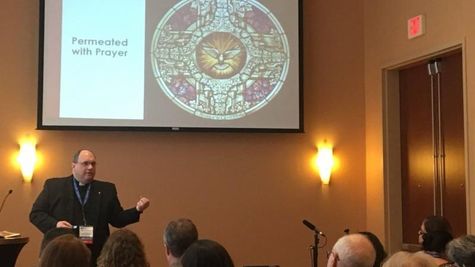 Reviving faith and rekindling charity through forming apostles is at the core of the mission of the Catholic Apostolate Center. It reflects the charism of St. Vincent Pallotti , our patron. We strive to rekindle the fire of the Holy Spirit in the hearts and minds of all the baptized, grow that fire in our communities, and spread it throughout the world. In his Lenten Message for this year, Pope Francis talks about why there is need for rekindling charity among the People of God: "Love can also grow cold in our own communities. In the Apostolic Exhortation Evangelii Gaudium , I sought to describe the most evident signs of this lack of love: selfishness and spiritual sloth, sterile pessimism, the temptation to self-absorption, constant warring among ourselves, and the worldly mentality that makes us concerned only for appearances, and thus lessens our missionary zeal." Through our many and varied resources available on our website to our consultancy services, the Catholic Apostolate Center wants to assist you in your own formation as an apostle or missionary disciple , but also in the formation of others. At the recent Mid-Atlantic Congress for Catholic Leaders in Baltimore, which we co-sponsored, our Center team shared ways that all can be on fire with missionary zeal. I invite you to listen to the podcasts of those presentations which can be found by clicking here. The Catholic Apostolate Center unites with Pope Francis in his call to not let charity "turn cold within us." May the Charity of Christ urge us on! To read the full newsletter which this article was taken from, please click here.
 During college, I had a professor with a reputation for being extremely challenging. Upperclassman students would warn us as freshman: “whatever you do, don’t take him! You will work more in his class than you ever have before!” I vividly recall one chilly, December afternoon walking by this professor’s office and watching students storm out from it, visibly angry. “Not good,” I thought to myself. It would certainly be easier to continue to breeze by in my classes than to be challenged. My senior year, against all advice, I decided to enroll in this professor’s class. The warnings from the upperclassmen were correct. He was difficult and challenged me to grow in my craft like no educator before had ever challenged me. And for that, I am forever thankful. How can you grow without being challenged? I am only the professional I am today because my professor was dissatisfied with the status-quo. He knew his curriculum would be difficult, but he believed that each of his students could achieve more, even though it was uncomfortable and challenging. He wanted us to excel rather than simply get by. As I reflect on Pope Francis’ upcoming 81st birthday and give thanks to God for his ministry, I see some similarities between him and my professor. One of our Holy Father’s greatest gifts to the people of God is that he challenges us to be uncomfortable with the status-quo, with “maintenance mode.” In Evangelii Gaudium, Pope Francis exclaims: “In our day Jesus’ command to ‘go and make disciples’ echoes in the changing scenarios and ever new challenges to the Church’s mission of evangelization, and all of us are called to take part in this new missionary ‘going forth’. Each Christian and every community must discern the path that the Lord points out, but all of us are asked to obey his call to go forth from our own comfort zone in order to reach all the ‘peripheries’ in need of the light of the Gospel.” Pope Francis, much like my professor in college, presents us with a challenge because he knows that the Church’s potential is incredible, even if this shift to mission mode is not easy. Convincing our colleagues and community to move from maintenance mode to mission mode, however, can be difficult. Some parish leaders I have encountered argue that their parish has always done something in a certain way and that if they changed it half of their parishioners would leave the parish. Nevertheless, in Evangelii Gaudium, Pope Francis reminds us that: “Pastoral ministry in a missionary key seeks to abandon the complacent attitude that says: ‘We have always done it this way’” (EG, no. 33). The only way that parishes will become missionary communities that are focused on going forth to form missionary disciples is by shedding their contentedness with the status-quo and aversion to conflict at all costs. Pope Francis continues, “the word of God constantly shows us how God challenges those who believe in him ‘to go forth.’” Let us then turn to God and his Word in order to have the courage to go forth! Moving from maintenance to mission will be uncomfortable, but, as Pope Francis prophetically reminds us, is our calling as followers of Jesus Christ. Please join me and the Catholic Apostolate Center team in wishing Pope Francis a very happy and blessed 81st birthday, which he will celebrate on December 17th! For more resources on Missionary Discipleship, please click here.
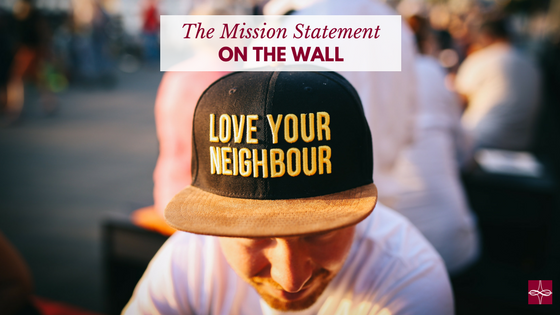 Go, therefore, and make disciples of all nations, baptizing them in the name of the Father, and of the Son, and of the holy Spirit, teaching them to observe all that I have commanded you. –Matthew 28:19 How do you think the “mission statement posted on the wall” compares to the lived experience of the community following it? A dear friend of mine asked me this question after I shared about my long and tiring week. I was challenged by how people I was working with were approaching a situation. A mission statement that is written or spoken about, and the mission lived among a group, are expected to be the same. Yet I was conflicted by a recent experience of the opposite–my community was following something else. The Catholic Church is echoing mission-based language more and more in recent years. Phrases like “Go, therefore, and make disciples of all nations,” or “missionary discipleship” based on the call of Pope Francis in Evangelii Gaudium permeate our ministries and parishes. This is not something new; we have always been called to live out our baptismal promises and evangelize all nations. Now our approaches are being adapted to accommodate an ever-changing secular culture. As Matthew’s Gospel proclaims, we are “co-missioned,” working with the Father, Son, and Holy Spirit in sharing the Christian identity. From the personal to the global level, every Christian is invited, asked, urged, encouraged, and challenged to encounter someone who does not know about Christ’s life, death, and Resurrection. This Christian message had been overlooked in my recent experience within my mission-based community. What I valued in “the mission statement on the wall” was important in writing, words, and actions, but not everyone who I engaged with operated with the same spirit in mind. It struck me how different the culture was from what it promoted. Like the renewed movement in the Church for a new evangelization, I could see the need to “re-member” the reason and context behind our mission. Since then, I’ve taken time to reflect on how I engage with others and the communities I participate in. Am I living out the mission Christ called me to, or do I follow my own way? Pope St. John Paul II wrote in Redemptoris Missio about the trend in the modern world to function based on personal perspective without considering God, saying, “There is a tendency to reduce man to his horizontal dimension alone. But without an openness to the Absolute, what does man become? The answer to this question is found in the experience of every individual, but it is also written in the history of humanity with the blood shed in the name of ideologies, or by political regimes which have sought to build a ‘new humanity’ without God” (RM 1, 8). This is a very real human temptation that I discovered within my own community. I could see how individual preferences were valued over guidance and openness to the Spirit. The formed mission of the community was posted but not followed, spoken about but not acted upon. We had forgotten the story behind the mission. As we enter a new liturgical year, much like a new calendar year, there is an opportunity to reflect on the purpose behind our actions within our ministries, organizations, parishes, families, and communities. We can sit with God and ask challenging questions while holding ourselves accountable to the answers. My friend’s question led me to a collective examination of conscience that can take place right alongside my personal examination of conscience. Why are we here? What is it that we’re being asked to do? How do we share our gifts with one another and those we serve? What is the goal of our work? Who or what do we serve by following this mission? Am I and are we following these goals to the best of our ability? If ever there is an area of weakness, we can work to remedy it within the community. Followers of Jesus prepare their hearts to accept “The Great Commission” by participating in the works of mercy, the sacraments, prayer, liturgy, and fellowship. I am going to use this special time of Advent to recommit myself to my personal mission and communal mission. The ultimate “mission statement on the wall” is the one God has written on our hearts in baptism, “to go and make disciples,” through our witness and evangelization. In humility I must continue to ask myself, am I living this mission? Reflection Questions: At the beginning of Advent, take time to consider the communities you are a part of and their various mission statements. How do you contribute? How can you grow in faith and dedication to the ultimate mission of Christ and the Church? Click here to visit our Living As Missionary Disciples Resource Page.
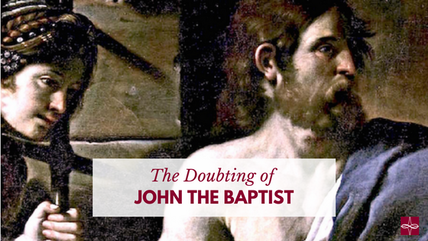 On this day we memorialize the death of John the Baptist, the man who introduced Jesus’s ministry to the world and whom Jesus said was the greatest man born among women (Matt 11:11). Yet, despite this accolade from the Son of Man himself, the Gospels tell us that John the Baptist also seems to have wrestled with something that many of us are still wrestling with today: doubt. Yes, even the Baptist, the camel-shirt-wearing, desert dwelling, locust-crunching prophet who calls the crowds that come to him a “brood of vipers,” sat in prison and wondered about whether the “nobody” carpenter from Nazareth was who he said he was. The Gospels suggest that part of John’s doubt seems to have come from his expectations for Jesus. When John is called by God out of the desert, he announces the coming of the Messiah with metaphors of destruction: “Even now the ax lies at the root of the trees. Therefore every tree that does not bear good fruit will be cut down and thrown into the fire. I am baptizing you with water, for repentance, but the one who is coming after me is mightier than I. I am not worthy to carry his sandals. He will baptize you with the holy Spirit and fire. His winnowing fan is in his hand. He will clear his threshing floor and gather his wheat into his barn, but the chaff he will burn with unquenchable fire.” (Matt 3:10-12) John’s expectation for the Messiah is that he will cleanse through destruction; that he will rid the world of sin, but in a grandiose, violent way. His metaphors and proclamations are laced with references to fire and culling, suggesting that John envisions Jesus the way we tend to envision John—full of passion, intensity, even a little frightening. When Christ comes to John for baptism, Christ does not condemn John’s vision, but rather Jesus’ ministry adds to the story. Rather than cutting the root from the tree, Jesus invites sinners to dine with him. Rather than shaking his fists from the river, Jesus sits on the mountain top and declares the poor blessed. Later, when John is imprisoned for publicly condemning the unlawful marriage of Herod, he receives word of Jesus’ latest miracles: the healing of a Centurion’s slave and raising of a widow’s dead son. The Gospels paint an interesting portrait of John’s response. When John heard in prison of the works of the Messiah, he sent his disciples to him with this question, “Are you the one who is to come, or should we look for another?” (Matt 11:2-3) I can imagine John sitting in the corner of his cell, hearing of these miracles and wondering whether everything he thought about the Carpenter had been wrong. In the darkness of his cell, alone, surely knowing he would soon die, John doubts whether this man who heals is actually the ax he had been expecting. There are two things that stand out about John’s moment of doubt: First, John’s response to his doubt is to go to the source himself. John does not sit frustrated and angry, allowing his doubt to grow into resentment or apathy like so many of us do today. He sends his disciples to Jesus directly. John’s response should serve as a model for our own inquiries. Prayer, direct communication with Christ, is necessary to knowing the truth about his identity. Imagine it in terms of a marriage. What if a husband and wife never communicated with one another when they were concerned with the actions of the other? Not only does a potentially problematic action go unaddressed, but the spouse who desires to know the mind of her lover cannot. She risks constructing a faulty image in her head, one that further drives a wedge between herself and her husband. So too do we drive a wedge between ourselves and the Lord when we doubt and leave those doubts untethered by prayer. When we question Christ, when we question our faith, when we question what is right or how to respond to injustice with charity, we should take those questions to prayer and ask for understanding. We should ask to see God as he truly is, not as we want him to be. The second important thing to note about John’s moment of doubt is Jesus’ response. Matthew reports it this way: Jesus said to them in reply, “Go and tell John what you hear and see: the blind regain their sight, the lame walk, lepers are cleansed, the deaf hear, the dead are raised, and the poor have the good news proclaimed to them. And blessed is the one who takes no offense at me.” As they were going off, Jesus began to speak to the crowds about John, “What did you go out to the desert to see? A reed swayed by the wind? Then what did you go out to see? Someone dressed in fine clothing? Those who wear fine clothing are in royal palaces. Then why did you go out? To see a prophet? Yes, I tell you, and more than a prophet. This is the one about whom it is written: ‘Behold, I am sending my messenger ahead of you; he will prepare your way before you.’ Amen, I say to you, among those born of women there has been none greater than John the Baptist; yet the least in the kingdom of heaven is greater than he. (Matt 11:7-10). In his response to John and the crowds, Jesus first reaffirms his own actions, for these are the actions foretold in Scripture of the coming of the Messiah. He does not answer with words, but with deeds, highlighting the truth that “by their fruit will you know them.” Jesus then also seems to chastise the crowd for their judgment of John. “What did you go out to the desert to see? A reed swayed by the wind?” Jesus says that John’s vision of Christ is admirable, as it comes from place of virtue and strength. Although John initially sees Jesus only through his own eyes, Jesus recognizes that those eyes earnestly desire the truth and have been well formed. Jesus rewards John for his faith, even if it is imperfect. He does not allow John to remain misguided, but he recognizes John’s effort to know Christ as well as he can and rewards him with the accolade “no greater than.” On the memorial of his death, let us try to be a little more like John the Baptist. Let us yearn for the Lord. Let us know him in prayer and the sacraments. Let us have the humility to open ourselves and our expectations to revision. Let us place our doubts before the Cross and allow John’s words to guide our prayers: “He must increase; I must decrease.” Questions for Reflection: How can moments of doubt make your faith stronger? Is Jesus inviting you to “go to the source” – to come to him in prayer?
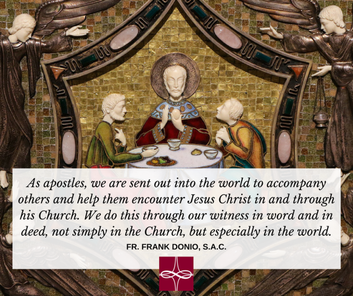 This past week, 48 members of the Society of the Catholic Apostolate (Pallottine Fathers and Brothers) serving in North America gathered for a biennial week of reflection and study. We considered our response to God, Infinite Love and Mercy, through our social-charitable work in light of the charism of St. Vincent Pallotti. We were also inspired by and reflected on the call of Pope Francis, in his teaching and action, to care for those on the peripheries. Pallotti believed that we Pallottines together with all those who follow his charism as part of his association, the Union of Catholic Apostolate , are called to revive faith, rekindle charity, and form apostles. The connection between faith and charity in response to our experience of the love of Christ was a central one in the teachings of St. Vincent Pallotti. This same connection between faith and charity (inclusive of the care, protection, and advocacy for the life and dignity of the human person) is summarized by Pope Francis in his apostolic exhortation, Evangelii Gaudium (The Joy of the Gospel). This connection was a central focus of the unprecedented USCCB Convocation of Catholic Leaders: The Joy of the Gospel in America. It is also found in a new document of the U.S. Bishops on evangelization, Living as Missionary Disciples: A Resource for Evangelization. As missionary disciples (apostles), we are sent out into the world to accompany others and help them encounter Jesus Christ in and through his Church. We do this through our witness in word and in deed, not simply in the Church, but especially in the world. There is much work to be done as Pope Francis reminds us: "Even if many are now involved in lay ministries, this involvement is not reflected in a greater penetration of Christian values in the social, political and economic sectors. It often remains tied to tasks within the Church, without a real commitment to applying the Gospel to the transformation of society. The formation of the laity and the evangelization of professional and intellectual life represent a significant pastoral challenge" ( Evangelii Gaudium, 102). Let us take up this challenge even more fully! The Catholic Apostolate Center offers all many resources to help us live as missionary disciples. May the charity of Christ urge us on!
 In 1964, the Second Vatican Council affirmed in the document Lumen Gentium, “that all the faithful of Christ of whatever rank or status, are called to the fullness of the Christian life and to the perfection of charity.” The Catholic Apostolate Center continues to promote this truth in the 21st century by providing active Catholics the tools and resources to share Christ’s loving message of salvation. In this way, the Center’s mission focuses on reviving faith, rekindling charity, and forming apostles who give witness to this fullness of the Christian life by embracing their baptismal call. Father Frank S. Donio, S.A.C., Director of the Center, explains, “The Catholic Apostolate Center is rooted in the spirituality of St. Vincent Pallotti, who believed that all are called to be apostles and to be co-responsible for the mission of Christ and his Church.” Founded in 2011 as a ministry of the Society of the Catholic Apostolate (Pallottines),Immaculate Conception Province, the Catholic Apostolate Center develops resources that the faithful, particularly those in ministry, can use to aid in their own evangelization efforts. The Center responds to the current needs of the Church through developing, in collaboration with dioceses and other institutions and organizations, formation programs for the New Evangelization. It assists pastoral leaders in deepening collaboration with one another and provides formation opportunities for members and collaborators of the Union of Catholic Apostolate. The Center accomplishes this bold mission through online resource pages, webinars, podcasts, and blogs, as well as through the partnerships with organizations like the United States Conference of Catholic Bishops (USCCB), the Archdiocese of Washington, Catholic Volunteer Network, and St. Joseph’s College of Maine, among others. Furthermore, they host seminars, webinars, and presentations as well as providing consulting services. “While we do produce our own material, and have a large amount of no-cost digital resources, the Center collaborates with many national and international Catholic organizations, dioceses, and the USCCB on a variety of projects to assist active Catholics in living as missionary disciples,” Donio said. In the spirit of St. Vincent Pallotti, the Center equips Catholics to “go out” empowered with the resources and knowledge to propagate the faith for the New Evangelization. St. Vincent Pallotti founded the Union of Catholic Apostolate, an association to revive faith and rekindle charity among Catholics and propagate the faith to all. St. Vincent Pallotti encouraged collaboration among the clergy, religious, and the laity in the 1800s at time in history when many thought the work of the Church should be left to priests and religious. The Catholic Apostolate Center looks to the life of St. Vincent Pallotti for inspiration as it strives to form collaborative relationships with more organizations, further develop its formation resources, and ultimately, empower all the faithful - clergy and lay - to live out their baptismal call. The Catholic Apostolate Center specifically entrusts its work of forming apostles to Mary, “Queen of Apostles” because of her invaluable role in building the early church and encouraging the first apostles. The Center looks to the Blessed Mother as the perfect model of discipleship, apostolic work, and charity as we strive to lead Christ’s followers closer to her Son. Formation leads to action - this is a core belief that influences the work of the Center. Throughout his papacy, Pope Francis has reminded us to be comprised of both action and word, to encourage a spirit of accompaniment and encounter. “Go out,” he says. “Go out and share your testimony, go out and interact with your brothers, go out and share, go out and ask.” By forming the laity to “go out,” the Catholic Apostolate Center hopes to empower the Body of Christ to collaboratively carry out the mission entrusted to the Church by Jesus Christ. This article was originally published at CruxNow.com and can be viewed here. Kate Fowler is the Blog Editor for the Catholic Apostolate Center.
Chris Pierno is the Advancement and Marketing Manager for the Catholic Apostolate Center. 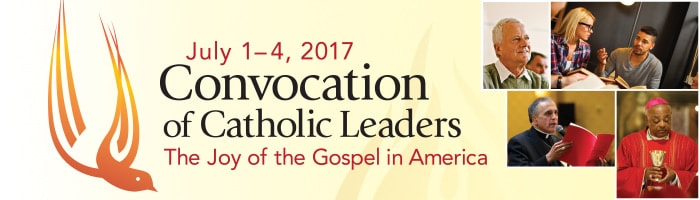 On July 1-4, 2017, Catholic dioceses and organizations reflecting the diversity of the Catholic Church in the United States will convene for a Convocation of Catholic Leaders in Orlando, FL. Approximately 3,000 people representing over 155 dioceses and numerous church organizations will meet to discuss methods and ideas for making Pope Francis’ vision of a “missionary option” for Church ministries and activities a reality in the United States. This unprecedented event is being called and organized by the US bishops, signifying the importance of such an event as a necessary step for Catholics in the Church today to live as missionary disciples filled with the “Joy of the Gospel.” While those who are attending the Convocation are already Church leaders, they look to the guidance of the bishops in order to help them tackle their particular pastoral challenges and foster opportunities for growth. The Catholic Apostolate Center has been invited by the United States Conference of Catholic Bishops (USCCB) to collaborate on the planning of the Convocation, as well as to attend as a sponsor and exhibitor in order to share our ministry and promote our work of fostering evangelization. Center Director, Fr. Frank Donio, S.A.C. will be speaking at the Convocation to help guide and foster dialogue among the participants. The Center is also collaborating with the USCCB to develop and distribute the Participant Guidebook and Journal and collaborate with them on pre-Convocation webinars. One webinar provides the theological basis of the Convocation. Another webinar discusses the practical layout and methodology of the event. The mission of the Catholic Apostolate Center is to revive faith, rekindle charity, and form apostles through the lens of Pallottine spirituality. Our patron, St. Vincent Pallotti, believed that all the members of the Church are called to collaborate in spreading the Gospel. “The Catholic Apostolate, that is, the universal apostolate, which is common to all classes of people, consists in doing all that one must and can do for the great glory of God and for one’s own salvation and that of one’s neighbor,” St. Vincent Pallotti said. The Catholic Apostolate Center further hopes to help dioceses, organizations, and ministries better collaborate with each other and find ways to share the resources we have as a Church. The Convocation of Catholic Leaders will be a monumental event for the Church in the United States which we hope will bear much fruit. For those attending, I invite you to read, reflect, and pray for the openness of the Holy Spirit in guiding your participation during the Convocation. We also invite attendees to visit our exhibit to learn more about our resources and work. At the Catholic Apostolate Center, we are always interested in collaborating and working together to form apostles for our Church. For those that will not be able to attend, please pray for the participants and organizers of the Convocation, that they may be open to the Holy Spirit to guide their efforts. May he help us become missionary disciples, or as our Patron St. Vincent Pallotti would say, apostles, in the United States. To learn more about the Convocation for Catholic Leaders, please visit the USCCB website by clicking here. For additional information and resources, we invite you to visit our website by clicking here.
 “When Jesus touches a young person’s heart, he or she becomes capable of truly great things.” – Pope Francis The quote above from Pope Francis’s introductory remarks to the pilgrims of World Youth Day 2016 in Krakow, Poland, spoke to over 2 million young adults traveling around the globe to worship together. Pope Francis’ words were heard by people already impacted by the message of Christ, many of whom, I would guess were informed of and formed by the love of God thanks to their Catholic educations. Today we celebrate in the United States the feast of St. John Neumann, Bishop of Philadelphia and founder of the first diocesan school system in the United States. Per the request of many families in his diocese, Bishop Neumann established a diocesan school system so that the children of the diocese could receive Catholic instruction and grow in their faith in a classroom setting. When the school system was established, the diocese of Philadelphia was strapped for resources, so Bishop Neumann invited many different religious communities to the fledgling schools to tend to the rapidly growing immigrant population in the city. His efforts both established the school system and increased the education of the city’s Catholic youth by more than twenty-fold. His diocesan system later served as the model for parochial Catholic education for much of the United States. St. John Neumann understood in the 19th Century - much like Pope Francis does now -that learning about the love of Christ through educational experiences can be an important part of our evangelical mission in this world. If we are all called to share in the evangelizing mission of the Gospel, then we must consider in what ways those gifts and talents can be utilized for the purpose of that mission. For St. John Neumann, Catholic education provided the youth a designated place to come and learn about the Lord and how to live as a Catholic alongside of their other studies. For many youth, their formal catechesis ends with sacramental preparation. Families often don’t understand the importance of continual catechesis throughout a person’s life. So, what can we do to help the youth and young adults in our parishes and communities become more engaged in the faith outside of Catholic schools? How can we support education in non-traditional ways? The answer is particular to your individual situation and universal to the faith we all believe in. Pope Francis has some advice and good examples of experiences that I cannot better summarize myself: “Knowing your enthusiasm for mission, I repeat: mercy always has a youthful face! Because a merciful heart is motivated to move beyond its comfort zone. A merciful heart can go out and meet others; it is ready to embrace everyone. A merciful heart can be a place of refuge for those who are without a home or have lost their home; it can build a home and a family for those forced to emigrate; it knows the meaning of tenderness and compassion. A merciful heart can share its bread with the hungry and welcome refugees and migrants. To say the word ‘mercy’ along with you is to speak of opportunity, future, commitment, trust, openness, hospitality, compassion and dreams.” Is your parish environment one of mercy? Does it foster openness and compassion? Is it willing to embrace people where they are with mercy and hospitality? Is your parish one that is moving outside of its parish borders and going to where it’s a bit uncomfortable and meeting people where they are both physically and spiritually? This is part of the continuing education that we as Catholics must undertake if we are to carry the mission of God to the world. We must constantly learn and relearn the message of Christ as espoused in the Gospels and find ways to practice it in our daily lives. We must learn to love and serve God and to love and serve our neighbor, not just from behind a desk, but in every step we take.
|
Archives
April 2024
Categories
All
|





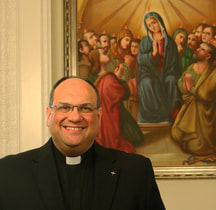





 RSS Feed
About |
Media |
© COPYRIGHT 2024 | ALL RIGHTS RESERVED