
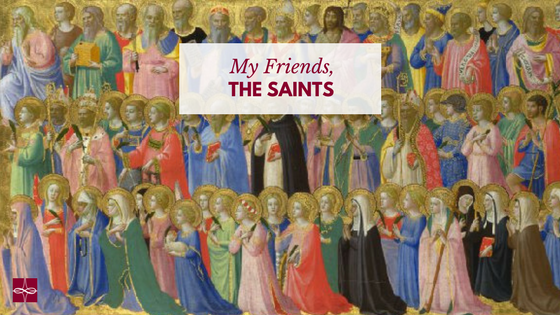
 Besides receiving and visiting Our Lord in the Blessed Sacrament at Mass and Adoration, I find that the most nourishing aspect of my spiritual life is friendship with the saints. The Church holds celebrating the saints and asking for their intercession in high regard, as the Solemnity of All Saints, which falls on November 1st each year, is a holy day of obligation. The Vigil of All Saints, then, falls on October 31st each year. One goal of the Christian is to engage in prayer with God, and prayer, simply put, is conversing with God. Each day, we can offer our work to God and talk to Him frequently. This is not always easy, though, and I have found that friendship with the saints helps immensely. A friendship, which is the mutual willing of the good between people, is cultivated with communication and time spent together. Aristotle and Shakespeare, in their genius commentaries on friendship, always return to the simplicity of authentic friendship. Developing a friendship with the saints does not need to be overly-complex. It can also be founded upon communication and time spent together, ultimately bringing us closer to God and strengthening our communication with Him. Communicating daily with the saints further orients our minds to the supernatural, to the existence of the “things…invisible” that we recite in the Creed, and it also strengthens us in the fight for our souls. By communicating with the saints, we will become more like the saints, who in their devotion to Christ became like Christ. Thus, the saints will help us to become more Christ-like. The poet Gerard Manley Hopkins gets at this point in one of his poems: I say móre: the just man justices; Keeps grace: thát keeps all his goings graces; Acts in God's eye what in God's eye he is -- Chríst — for Christ plays in ten thousand places, Lovely in limbs, and lovely in eyes not his To the Father through the features of men's faces. The “just man” is the saint, and the saint’s Christ-like actions help him to become like Christ. As I mentioned in my last blog, stories of the saints are dramas of the highest caliber. Each saint had a unique personality and found their way to heaven in their own special, grace-filled way. There are so many saints that everyone can find someone they relate to or want to emulate. Below, I have listed just a few of my friends, and I pray that they will intercede for you! Sts. Peter and Paul, St. Edmund Campion, St. Ignatius, St. John the Beloved Disciple, St. Luke, St. Catherine of Sienna, St. John Paul II, Bl. Pier Giorgio Frassati, Bl. John Henry Newman, Sts. Thomas More and John Fisher, St. Robert Southwell, St. Henry Walpole, St. Aloysius Gonzaga, St. Robert Bellarmine, St. John Berchmans, St. Francis Xavier, St. Leo the Great, St. Augustine, St. Vincent Pallotti, St. Thomas Aquinas, St. Therese of Lisieux, St. Teresa of Avila, St. Josemaria Escriva, St. John Vianney, St. Joseph, Guardian Angels, Our Lady… Ora pro nobis!
0 Comments
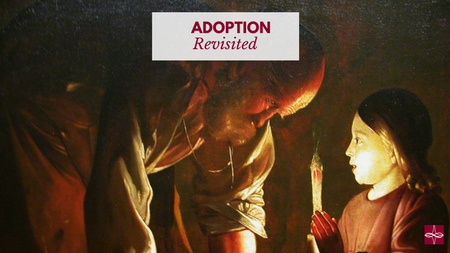 When was the last time you thought about St. Joseph? For many, he is a shadowy figure. And yet, he is recognized as the "protector" of the Church. His feast day is March 19th. What's your image of Joseph? Is he young or old? Is he working or sleeping? Is he rich or poor? Is he strong or weak? We invite you to clear away all those images in order to see him for the first time. Let's meet Joseph as he is presented to us in the Gospel of Matthew at the birth of Jesus. Of course, the best thing to do is to pray with Matthew 1:18-25. Here’s the abbreviated version: Mary and Joseph are engaged. She is expecting. He intends to divorce her quietly but learns, in a dream, that she is carrying a son who will "save his people from their sins" (Matthew 1:21). Joseph is told to accept Mary as his wife and name the child Jesus. In this passage, we see four qualities in Joseph—compassion, righteousness, fidelity, and decisiveness—that make him a saintly man and a role model for us today. Imagine how Joseph felt about Mary's pregnancy. The marriage customs of his day were much different than ours. Were they "in love" or was the engagement arranged? Perhaps Joseph felt more hurt than angry—or perhaps disappointed, given Mary's natural innocence. In any case, he responded with compassion; He did, however, want to do what is right. While he never says a word in the Gospel narrative, Joseph's actions continually say "yes" to God's will. He takes Mary into his home as his wife. He honors Mary's special relationship with God by not having "relations with her until she bore a son" (Matthew 1:25). He claims Jesus as his son by naming him. Joseph lived a quiet fidelity expressed in action rather than words. A kind-hearted man who accepted the mystery of salvation entrusted to him, Joseph adopted Jesus and raised him as his own. He protected him, taught him, and loved him. In the Gospels, Jesus is known as "the carpenter's son." Joseph's love for Mary and Jesus sharpened his awareness of the forces around them. When Herod threatened the life of Jesus, Joseph leapt into action, leaving that night for Egypt. When the threat was gone, he brings Jesus back to his people. When he realized some threat remained, he settled in Nazareth, thus fulfilling a prophecy. His actions were always for the good of Jesus and Mary, and ultimately a part of God's plan for salvation. As we get closer to Joseph, we meet a kind-hearted man, walking humbly with his God, as he accepts, protects, and raises Jesus so that Jesus can "save his people from their sins." St. Joseph can shed considerable light on what it means to be a missionary disciple in an increasingly secular age—with implications for the economy, family, and mission. He plays a quiet, but essential, role in salvation history. Perhaps we, too, have a quiet role to play in salvation history. Perhaps Jesus is relying on us just as he relied on Joseph. Compassion, righteousness, fidelity, and decisiveness can help us live out our role just as they served Joseph. What does the word adoption mean to you? Joseph's vocation began with a dream—a message from God. He is commanded to "rise, take the child" as his own. When we engage the world, do we possess it or does the world possess us? Do we adopt friends, jobs, things—even children, seeing them through the eyes of God? Adoption is a way of being in the world. We are adopted children of the Father in Christ Jesus. We are claimed by God and so we, too, can claim others and make them our own - being possessed in the best sense of the word. Joseph adopted—Jesus, Mary, and his life as a carpenter in fidelity to God who, with and through Jesus, was saving the world. St. Joseph, pray for us.
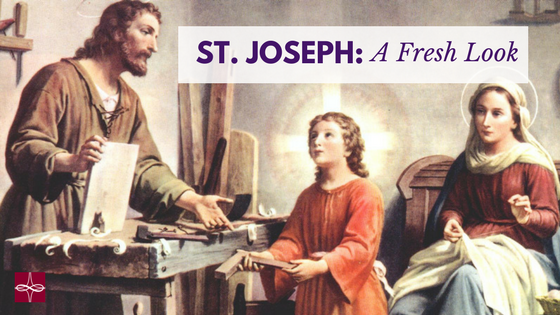 When was the last time you thought about St. Joseph? For many, he is a shadowy figure. And yet, he is recognized as the "protector" of the Church. His feast day is March 19th. However, we celebrate it this year on the 20th because the 19th lands on a Sunday. What's your image of Joseph? Is he young or old? Is he alone or with someone? Is he working or sleeping? Is he rich or poor? Is he strong or weak? We invite you now to clear away all those images in order to see him for the first time. Let's meet Joseph anew, as he is presented to us in the Gospel of Matthew at the birth of Jesus. Of course, the best thing to do is to pray with Matthew 1: 18-25. Here’s the cliff note version: Mary and Joseph are engaged. She is expecting. He intends to divorce her quietly but learns, in a dream, that she is carrying a son who will "save his people from their sins" (Matthew 1:21). Joseph is told to accept Mary as his wife and name the child Jesus. In this passage, we see four qualities in Joseph - compassion, righteousness, fidelity, and decisiveness - that make him a saintly man and a role model for us today. Imagine how Joseph felt about Mary's pregnancy. The marriage customs of his day were much different than ours. Were they "in love" or was the engagement arranged? Perhaps Joseph felt more hurt than angry; or disappointed given Mary's natural innocence. In any case, he responded with compassion; he did not want to see her hurt. He did, however, want to do what is right. While he never says a word, Joseph's actions continually said "yes" to God's will. He takes Mary into his home as his wife. He honors Mary's special relationship with God by not having "relations with her until she bore a son" (Matthew 1:25). He claims Jesus as his son by naming him. Joseph lived a quiet fidelity - expressed in action rather than words. A kind-hearted man, accepting the mystery of salvation entrusted to him as his God-given purpose, his vocation, Joseph adopts Jesus and raises him as his own. He protects him, teaches him, and loves him. Joseph's love for Mary and Jesus sharpened his awareness of the forces around them. When Herod threatens the life of Jesus, Joseph leaps into action leaving that night for Egypt. When the threat is gone, he brings Jesus back to his people. When he realizes some threat remains, he settles in Nazareth thus fulfilling a prophecy. His decisive action was always for the good of Jesus and Mary. As we get close to Joseph, we meet a kind-hearted man, walking humbly with his God, as he accepts, protects, and raises Jesus so he can "save his people from their sins." He plays a quiet, but essential, role in salvation history. Perhaps we, too, have a quiet role to play in salvation history. Perhaps Jesus is relying on us just as he relied on Joseph. Compassion, righteousness, fidelity, and decisiveness can help us live out our role just as they served Joseph. St. Joseph, pray for us.
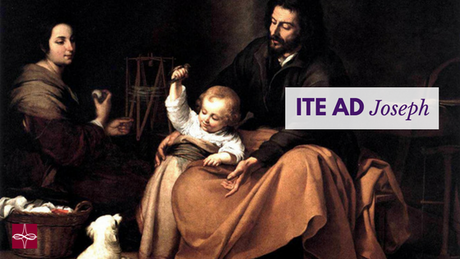 “Blessed be St. Joseph, her most chaste spouse” — these words, taken from the Divine Praises of our Church (a prayer that is often used at the end of Eucharistic Adoration), remind us of the important role that St. Joseph plays as the patron of the Universal Church. St. Joseph is the foster father of Jesus, “most chaste spouse” of Mary, but he is also our guide. There are exactly zero words of St. Joseph recorded in all of scripture, yet the role that he plays is not to be underestimated. He teaches us how to live in obedience, persevere in holiness and chastity, and love well. The obedience that this holy patron showed to the will of God is nothing short of extraordinary. He did this first by accepting the message of the angel to take Mary as his wife, then by protecting his family as he fled with them to Egypt, but most importantly, in those quiet, unlogged hours at home with Mary and Jesus in Nazareth. Although his life did not unfold as he would have anticipated, his obedience and docility to God’s will allowed him to play a crucial role in the life of Christ and ultimately in the story of our salvation. St. Joseph’s perseverance in holiness and chastity sets a very clear example before us. His life is a compelling reminder for us that to do the will of God, we need only be obedient to the present moment and faithful to the higher calling that is ours by nature of our baptism. In a world that sees chastity as outdated and nearly impossible, he reminds us that pursuing it is not only important for our own lives of virtue, but salvific for others. St. Joseph also teaches us how to love well. The gentle striving of St. Joseph, both as he led Mary and Jesus, and now as he leads our Church, can be summed up by these words of St. Josemaria Escriva, “God always asks more: His ways are not the ways of men. St. Joseph, more than anyone else before or since, learned from Jesus to be alert to recognize God’s wonders, to have his mind and heart awake.” Several years ago, a spiritual director suggested that I start to pray every day to St. Joseph for my future husband. With the following prayer, I beg his intercession to not only allow me to persevere in obedience and chastity, but also with the sure knowledge that he will protect my future husband and family. Guardian of virgins and father, St. Joseph, to whose faithful custody Innocents itself, Christ Jesus, and Mary, Virgin of virgins was committed; I pray and beseech thee by each of these dear pledges, Jesus and Mary, that, being preserved from all uncleanness, I may with spotless mind, pure heart, and a chaste body, ever serve Jesus and Mary most chastely all the days of my life. Amen. May the intercession of St. Joseph allow us to persevere in obedience, chastity, and love! *Ite ad Joseph is Latin for “Go to Joseph” and admonishes us to turn to St. Joseph’s intercession and guidance. Question for Reflection: Following the example of St. Joseph, how might you grow in your ability to be obedient to the present moment?
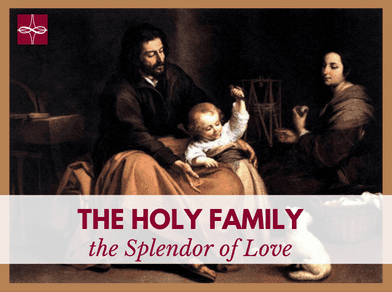 In Pope Francis’ recent exhortation, Amoris Laetitia, he concludes with a prayer to the Holy Family. The first part of the prayer reads, “Jesus, Mary and Joseph, in you we contemplate the splendor of true love; to you we turn with trust.” In just those few words, we are reminded of the importance of the Holy Family; they are the perfect reflection of true love. They exemplify to us what it means to love God and one another.
Of course, it might be wise to first ask ourselves, “What is true love?” The dictionary defines it as a “strong affection for another” (Merriam-Webster). The author Victor Hugo once equated love to joy when he said, “The greatest happiness of life is the conviction that we are loved” (Les Miserables). For our purposes, let us take the definition straight out of the Gospels, that “no one has greater love than this, to lay down one’s life for one’s friends” (John 15:18). True love, then, is self-sacrificial. Having true love does not mean that we live to seek the best for ourselves. Rather, it means that we actively seek the best for others. Using this understanding of true love, it becomes clearer how each member of the Holy Family exemplifies those qualities. St. Joseph is commonly known as the silent man of the Gospels in that he is never quoted. Yet, we see episodes that testify to his goodness. Matthew’s Gospel tells us that when Mary became pregnant, Joseph wanted to divorce her quietly to spare her from any shame. Nevertheless, he ended up taking Mary into his home at the urging of the angel (Matthew 1:18-24). During this period of time, Mary as a pregnant and unwed mother was extremely scandalous. Joseph would have had every right to publicly humiliate her and cast her aside; in fact, accepting her in her state would have brought notoriety to himself. Yet, he took her into his home. He was willing to sacrifice his own reputation to show his devotion to Mary and to her son, an act of true love. Mary, similarly, shows sacrificial love at the message of an angel. Luke’s Gospel tells us that the angel of the Lord appeared to her and announced that she would bear the “Son of the Most High” (Luke 1: 32). Mary was a teenager, just betrothed to Joseph. Before the arrival of the angel, she was assured a quiet life, a peaceful life. Accepting this message would change everything; Mary’s life ahead would be a vast unknown. Nevertheless, she simply replied, “I am the handmaid of the Lord. May it be done to me according to your word” (Luke 1: 38). Mary showed true love by sacrificing herself in order for the Son of God to enter the world. And, of course, it does not take much effort to think of a moment when Jesus displayed true love. In dying on the cross, he destroyed death itself; as the tomb was closed, he opened the gates of Heaven. His willful sacrifice is the ultimate example of “laying down one’s life.” Thus, each member of the Holy Family demonstrates to us, what it means to truly love. In Deus Caritas Est, Pope Benedict reminds us that “Love is the light – and in the end, the only light – that can always illuminate a world grown dim” (Deus Caritas Est, 39). As we move forward into the New Year, let us use the example of the Holy Family as our inspiration and bring a bit of light to our world. By being willing to sacrifice some of ourselves each day for the sake of others, we too can become models of true love. Victor David is a collaborator with the Catholic Apostolate Center and a staff member at The Catholic University of America in Washington, DC. 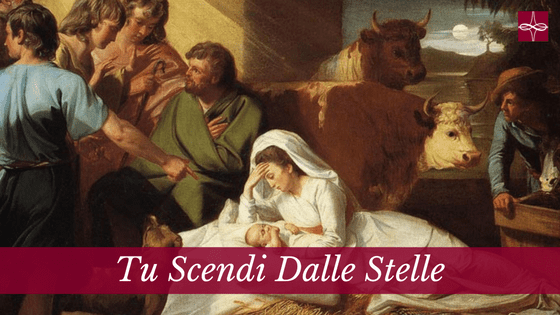 "From starry skies descending, Thou comest, glorious King, A manger low Thy bed, In winter's icy sting;" ~St. Alfonso Liguori 1732 In a few short days, millions of children will wake up excited to see what is under the Christmas tree. Many will be eager to wake up their families so they can unwrap these gifts. There is a sense of pure joy and excitement that radiates from these children. I have a young Goddaughter, who was explaining to me over Thanksgiving about all the different things she hopes to receive. Her eyes lit up at just the mere thought of Christmas morning. It made me stop and wonder about my own excitement and joy for Christmas. I get caught up in all of the trappings of the season and not the very reason it exists. I started to question if I had that childlike excitement for the birth of our Lord and Savior, Jesus Christ. The more and more I thought about it, the more I realized that I have lost part of that joy. Advent and Christmas provides one the time to stop and think about how the Prince of Peace, the King of Kings, the Messiah, did not come in some powerful show of force or splendor. Rather, God chose quite the opposite. He came to us as a child, born in a manger. The human embodiment of love and mercy came to us in the form of a helpless baby. In the middle of the holiday season, you rarely take the time to stop and think about how perfect that is. Being a godfather has taught me about the amazing ability of a child's capacity to love and forgive. Many a family function, I will walk in and my goddaughter drops what she is doing and runs over to give me a big hug. Her face lights up with joy and excitement. One can only imagine a young Jesus showing the same sort of love to Mary and Joseph. The beauty of this simplicity has inspired the Church for two thousand years. A wonderful example of this is the Christmas Eve Mass at the Vatican. At the end of Mass, the pope carries a small statue of Jesus to be placed in nativity scene as the choir sings the carol "Tu Scendi Dalle Stelle". This carol was written by Saint Alphonso Liguori in 1732 and translated from Neapolitan into Italian by Pope Pius IX. This hymn is about Christ as a child who descends from heaven out of love for us. "Dearest, fairest, sweetest Infant, Dire this state of poverty. The more I care for Thee, Since Thou, O Love Divine, Will'st now so poor to be." I think it is the perfect hymn for these last few days of Advent. For these next few days, I invite you to join me in a quest to be like a child. A quest to seek the joy of Christ's birth of in a pure, whole hearted, and simple way. Pope Francis tweeted about a year ago "to be friends with God means to pray with simplicity, like children talking to parents." For the next few days, as prepare to celebrate the birth of Jesus, let us embrace peace, love, joy, and mercy just like a child who runs to greet you with open arms and an open heart. For more information on Advent, check out our resources and devotional material here.
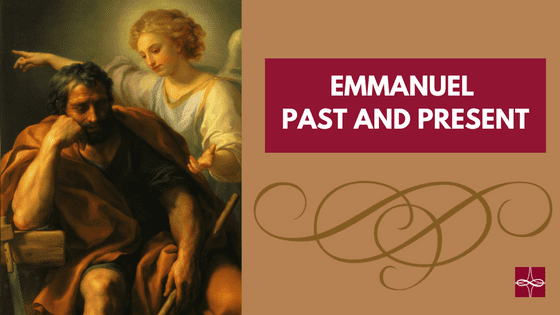 My Catholic grade school began everyday with students lining up in the gym for attendance and then filing out to class. One morning after Thanksgiving break, our usual routine was interrupted when the principal, a Sister of St. Joseph, came up to me.
She asked, “Would you like to be Mary for an Advent Mass?” I immediately blurted out an emphatic, “No!” The other fourth graders shot me shocked stares. It would have been a dream for many of my classmates to receive such an invitation, especially a personal one from the principal! And then, of course, they were astounded that I would dare to say no to the principal herself. “Are you sure?” she asked me again. “Well, umm, I just really don’t want to. I’m sorry,” I said. The disappointment spread across her face and I knew then that she was not expecting that answer either. An awkward pause came and went as teachers and students began marching to their rooms. Finally, I said, “Well, I mean, I guess I could do that for you.” The principal beamed and listed off a number of details, like who would be St. Joseph, and when we were to arrive to change into costume. I often think back to that encounter during Advent when I reflect on Mary’s “yes” and Joseph’s sacrifice. Why did I refuse to help with such certainty? It was out of character for my usual fourth grade self.. Maybe that day my stubborn will and insecurities showed their true colors! There is an irony to saying “no” to playing the part of Mary when her “yes” was prophesied by Isaiah and echoed in the message of the psalmists. The lives of St. Joseph, St. Paul, and the gospel writers were forever changed by that answer. Now, I’m grateful for changing my answer to yes for something simple. Like Mary, I received special graces to live out the big and small yeses to God in my adult life. The readings for this Fourth Sunday of Advent focus on the message of Emmanuel.They do a good job of showing how even in our wavering human nature, God is with us. Consider the gospel from this week, where a shocked St. Joseph allows God to turn his “no” to a “yes.” I like to imagine St. Joseph’s shock after hearing about Mary’s pregnancy. He responds to the news with a dignified “no,” hoping to protect both himself and his young fiancee, until an Angel shows him the workings of the Holy Spirit in his and Mary’s lives. His sacrifice and hiddenness guides us in family life, work, ministry, and sharing the the gospel message in a noisy world. His “yes” wavered and then seemed to move to a place of confidence and trust. “Joseph, son of David, do not be afraid to take Mary your wife into your home.” (Mt 1:20) What reassurance! God was with him as he transitioned to being the head of the Holy Family, he became the ultimate protector of holiness. After the Marian story from my fourth grade year to the touch points of this weekend’s Gospel the message of Emmanuel lives. We prepare for Christmas this week with the demands of a commercial culture, family time, the healing of relationships, and the stress of “keeping up”. God is with us, waiting as he did through Isaiah and St. Paul, and the call of St. Joseph. What will we say “yes” to this week? How will God be with us in our moments of “no.”? When your fear or pride brings the word “no” to your lips, remember that God is still with you. As we await our Lord this Advent remember that he too awaits us and our emphatic “yes”. May your final week of Advent be blessed! Sophie Lorenzo works in social media marketing for a Catholic publisher in Chicago. An alum of the Echo Program at the University of Notre Dame, she enjoys bridging her background in theology with online ministry. 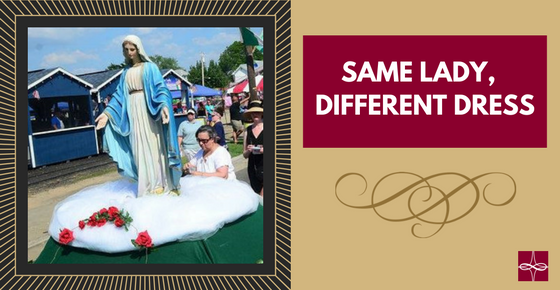 For the past 141 years on the Feast of Our Lady of Mt. Carmel (16th of July) in my hometown of Hammonton, New Jersey, there is a procession through the streets of the statues of various saints that usually reside inside the local parish church. The faithful who are devoted to each saint distribute prayer cards of their patron as they process with the statues through the streets – St. Joseph, St. Anne, St. Anthony, St. Rita, St. Jude, St. Rocco, St. Lucy, St. Vincent Pallotti, and so forth. The Blessed Mother, while at the end under the title of Our Lady of Mt. Carmel, appears also in the procession under various names – Milagrosa, Nuestra Señora de Guadalupe, Our Lady of the Assumption, and the Immaculate Conception, whose Solemnity we celebrate today. Sometimes, these various titles and ways of representing the Blessed Mother can be confusing for some of those who line the streets of the procession route. My mother, Angela, who has been part of the procession for over 50 years, makes a float with a large Rosary and a statue of the Blessed Mother under the title of the Immaculate Conception on it, although some would call the statue “Our Lady of Grace.” The statue, which is over 100 years old, is patterned after the image on the “Miraculous Medal,” around which is inscribed the words, “O Mary, conceived without sin, pray for us who have recourse to thee.” Since many who come to the procession are not necessarily practicing Catholics, my mother always offers a form of “street evangelization” to those who come to her float to receive a prayer folder that provides instructions on how to say the Rosary. Since the statue of the Immaculate Conception is on a special float, many will come and ask if it is of Our Lady of Mt. Carmel. Sometimes, my mother is asked what the difference is between the Immaculate Conception and Our Lady of Mt. Carmel. She responds cheerfully, “Same Lady, different dress.” My mother then goes on to explain why the Blessed Mother has so many titles. She also assists these curious onlookers in understanding how Mary offers us the greatest example of how to follow Jesus as his disciple. She helps them learn that Mary was prepared from the time of her conception in the womb of her mother, St. Anne, to receive Jesus and did so throughout her life. We, too, are meant to be prepared to receive Jesus into our lives in an ongoing way, especially during the Advent season. We have not been conceived without sin, but we have been washed clean of Original Sin at Baptism (and all prior sin, if one was baptized as an adult). While we have all sinned since that time, our Baptism offers us a share in the mission of Jesus Christ as Priest, Prophet, and King. Though followers or disciples, he also sends us as apostles, or as missionary disciples, out into our challenging world to witness to him by what we say and do. The Blessed Virgin Mary offers us the best example of how to follow Jesus Christ. No matter what title of hers might appeal to us spiritually, she is always “same Lady, different dress.” She was the same in her following of Jesus during her life and continues from her heavenly home to invite us to follow her Son, Jesus Christ, Our Savior and Lord. O Mary, conceived without sin, pray for us who have recourse to thee! The Catholic Apostolate Center is a ministry of the Immaculate Conception Province of the Society of the Catholic Apostolate (Pallottine Fathers and Brothers). The Pallottines and the Center staff will remember you in special prayer on this Solemnity of the Immaculate Conception.
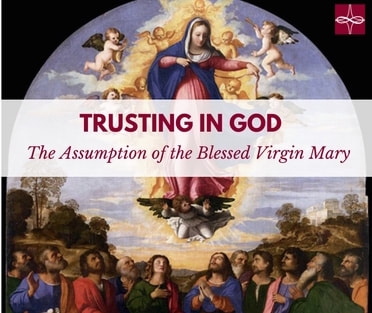 Each year on August 15, we celebrate the Assumption of the Blessed Virgin Mary, a Feast Day commemorating when she was taken body and soul into heaven after her earthly life was completed (CCC 974). By wholly trusting the Lord and following his will, Mary is the most exemplary model we have in living out our faith and trusting in God. We have several instances of the kind of trust Mary displayed toward God: saying “yes” to miraculously giving birth to our Savior, trusting in God’s care of her family when giving birth in Bethlehem, completely trusting in Joseph’s warning from a dream to flee Herod’s lands for Egypt, and placing her trust in God to overcome hardships—especially watching her own son being beaten and dying on a cross. St. Faustina frequently referred to Mary as the model of her life. In her diary, St. Faustina said, “[Mary] believes the words of God’s messenger and is confirmed in trust” (Diary, 1746). St. Faustina would often ask Mary to teach her to continue to trust God even in sorrow, not wanting suffering to break her faith. Trust goes both ways. One of the many reasons God chose Mary to care for his son was because he could trust her as well – in the good times and the bad. We are called to learn from Mary’s example and trust in the Lord, just as he trusts in us. God has a plan for every person, and it is up to us to show our trustworthiness in him and for him. Trust isn’t just about a one-time event. Philippians 1:6 says, “…the one who has begun a good work in you will continue to complete it until the day of Jesus Christ.” Trust lasts our entire lifetime. Trusting in the Lord can certainly be easier said than done. With trust comes obedience to God. This kind of submission takes risk, but God promises us that everything will work out for the good in the end. Trust is the foundation in any relationship. What would happen in our lives if we followed Mary’s example every day, willingly offering ourselves without hesitation to God and his plan for each of us?
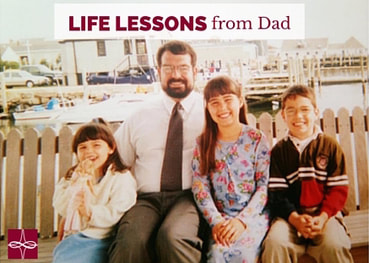 On Sunday, we celebrate fathers. When I was young, my three siblings and I would use this day to thank our dad by giving him a few things he loved. We would let him sleep-in, make a full breakfast (sometimes corn muffins with icing writing) with a new “#1 Dad” mug each year, give him the cards we had made, go to Church as a family, pray the Memorare prayer to St. Joseph, and then leave him to fall asleep watching the NASCAR race on the couch (and not even change the channel while he was sleeping). It was a great day to make my dad feel appreciated. Since I moved away from home, I still try to celebrate Father’s Day by sending a card or two, giving my dad a phone call, and keeping in touch. Most importantly, I have realized that my dad has taught me three important lessons about life: to always keep your head up, that family will always be there for you, and that a Catholic should live in service to the community and with faith in God. In thinking about my dad’s example, I can’t help but feel that his life also modeled that of St. Joseph, the foster father of Jesus. I’m pretty optimistic, and I get it from my dad. He has a thing about quoting movies. Some of his favorite lines are Dory’s “Just keep swimming, Just keep swimming” from Finding Nemo and The Lion King’s “Hakuna Matata.” During challenging times in my family, silly reminders like these helped teach my siblings and me about perseverance and keeping a smile on our faces. Even now, I use these phrases as mottos and words to live by, and have been able to pass along a similar optimism to the students I teach and my own friends. My dad also taught me about love and support with family. He was the one to encourage my siblings and me to be nice to each other, reminding us, “You’re going to want to keep in touch with each other, because one day you might actually be able to stand one another.” Turns out, he was right. Three of the four of us live in Washington, D.C. and appreciate each others’ company more than ever. St. Joseph also modeled a steadfast commitment to family, even in the midst of hardship. He remained loyal to Mary in their betrothal after finding out she was with child; he guided the expectant Mary into Bethlehem and took care of her despite not finding room at an inn; and Joseph led the Holy Family into Egypt for safety as a result of the persecution implemented by King Herod. The final lesson to consider is my dad’s faith and devotion to the Gospel. When I was young, he would start the day by praying with the family through a passage in either the New Testament or the Psalms and say an “Our Father” together before leaving to teach for the day. My dad has always been big on service and helping others, too. He was the one to initiate the Kirby’s into parish hospitality and we began to run a monthly “coffee hour” where we would serve coffee and doughnuts to our fellow parishioners. Around this same time, he also became a city councilor to further help the community. Through his faith and commitment to service, my dad reminds me of St. Joseph. My dad’s continued positivity, the prioritization of our family in his life, and his life of faith and service model the life of the foster father of Jesus. The Memorare of St Joseph was prayed on Father’s Day in my house growing up: “Remember, O most pure spouse of the Virgin Mary, my beloved Patron, that never it has been heard that anyone invoked your patronage and sought our aid without being comforted. Inspired by this confidence I come to you and fervently commend myself to you. Despise not my petition, O dearest foster father of our redeemer, but accept it graciously. Amen.” St. Joseph, patron of fathers and workers, was a humble man who said “yes” to God. After finding out that his betrothed was pregnant with God’s son, St. Joseph continued to protect and care for his family, knowing that there would be hardships and danger in the future. Although not much is written about St. Joseph besides what is in the Gospels, he is remembered for his commitment to Mary and Jesus and his simply-humble nature. As we celebrate Father’s Day this Sunday, we can remember St. Joseph in prayer and thank him for his respectful obedience in service to God’s plan in our lives though faith, service, and focus on the family.
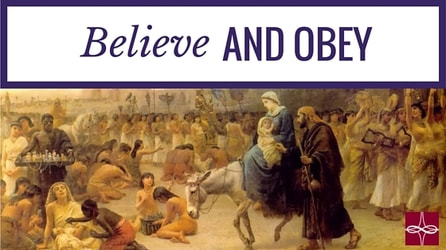 Usually at this point during Lent I am looking forward to the Feast of St. Joseph as a brief respite from my Lenten sacrifices. However, this year his Feast Day is on Palm Sunday weekend. With this early timing, it is easy for us to forget about his Feast Day. While more than a week away, I wanted to take some time to reflect on Joseph and remind ourselves of the example he serves for us each and every day. Today’s Gospel (Jn 5:1-16) describes one of Jesus’ miracles in which he commands a man to “Rise, take up your mat, and walk.” Without question the man stands up, picks up his mat, and walks away telling others of the good news. This man had no reason to trust Jesus or even think that he could ever walk again, but he believed and he obeyed. This reminds me of St. Joseph who, without question, listened to God’s call. Without question, Joseph stood by Mary and Jesus as husband, father, and protector. God asks nothing less of us in our own lives and Lent is a perfect time to reflect on whether we are listening to God’s call to “believe and obey.” We can start by going to confession. An examination of conscience can help us to see where we are not believing and obeying, while confession also gives us that clean slate that we so desperately need in order to hear God’s voice in our lives. Once we have prepared ourselves to receive God’s word, we are able to more fully align our hearts to Christ and follow in his footsteps. But this is not an easy thing to do. We will go to confession many times over the course of our lives so that we can once again learn to “believe and obey.” But this is not something that we have to do alone. Not only do we have Christ and the entire Catholic Church on our side, we also have the saints. In particular, St. Joseph is a beautiful example of living a life of faith and obedience to the will of God, as evidenced by his willingness to follow God’s plan even when he didn’t know the outcome. If we learn to live our lives as he did, then I guarantee we will continue to move closer to Christ. As I mentioned before, the Feast of St. Joseph is two weekends from now. I encourage you to look to him for guidance and strength during your Lenten journey. His silent faith, his dedication to the Holy Family, and his role in forming and raising the Son of God gives us a wonderful example by which to form ourselves to Christ and to believe and obey without question. As we approach his Feast Day, I also invite you to join me in praying a novena to St. Joseph that we may learn to silence our hearts and listen to the Word of God during this Lenten season. This nine-day series of prayers helps us to focus our minds and hearts on specific intentions and invites St. Joseph in a special way to intercede for us. Click here to join me in praying the novena to St. Joseph. “Let us allow ourselves to be filled with St. Joseph’s silence!” -Pope Emeritus Benedict, Angelus, December 2005 Nicholas Shields is a Young Professional in Washington, D.C
 I have a confession to make - I have not always understood nor appreciated Mary’s vital role within my own life. Growing up as a Catholic, I heard people speak about Mary’s role in the Church, yet I never had an encounter with her. Throughout high school, I knew of a few different Marian devotions, but I never connected with them as a young male. I always saw Marian devotions as something my female classmates did, while my male classmates and I looked to St. Joseph as our role model. Yet, when I arrived at college, I met young men of faith who were devoted to our Blessed Mother and some who had even consecrated themselves to Mary. These were normal guys, who had a deep love for Mary, one I had never encountered before. When they started to talk about the impact she had in their lives, their faces beamed with delight. Their love for Mary was palpable. I was intrigued by their witness, yet it was not until this past summer that I had an encounter with Mary, an experience that changed my spiritual life. This past summer I was introduced to the devotion of Mary, Undoer of Knots. When I prayed with this devotion, the Holy Spirit truly touched my heart. It made sense now why I asked for Mary’s intercession, instead of just always praying directly to the Father. Day by day, as my devotion to Mary intensified, I noticed a change in my own spiritual life. The more deeply I fell in love with Mary, the greater sense of peace I felt and the closer I became to her Son. St. Vincent Pallotti wrote how each of us should “place [ourselves] in the hand of the Madonna… and do not let anything worry you.” St. Vincent understood that when we are devoted to Mary, we should be at peace, trusting that our Mother will care for us and guide us closer to her Son. Therefore, he urged his followers to always strive to cultivate a deeper relationship with Mary, knowing nobody can love Mary as much as her Son loves her. One way in which St. Vincent’s devotion to Mary manifested itself was that he wore a Marian icon around his wrist, so whenever people would attempt to kiss his hand, a common practice of St. Vincent’s day, they would instead venerate an image of Mary, Mother of Divine Love. While this is a beautiful witness, this is not the only way in which to cultivate a deeper relationship with Mary. During this Extraordinary Jubilee Year of Mercy, now is the perfect time to take stock of your own relationship with Mary. Maybe take a couple minutes out of each day to encounter Mary. Your prayer asking for Mary’s intercession does not need to be complex or long. You may wish to meditate on an image of Mary and pray: Mary, I look to you as my guide, as my help. Help me to become more merciful to all people I encounter. Help me to become merciful like Your Son. Amen.
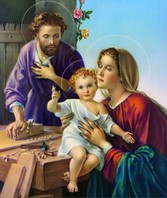 Christmas is on Friday. Wait, really?! Have we bought all of our presents? Are we ready for a Christmas feast? Is work ever going to end? These are the thoughts that plague us right now, but what we really should be asking is: are we ready for the birth of Christ? Advent is almost over - was there really enough time to prepare for the birth of the Son of God? The short is answer is 'no,' and the long answer is still 'no.’ But we know that as we prepare each liturgical year we take another step on the long journey toward Christ. Each celebration gives us the chance to refocus on that journey and draws us back into living out our faith wholly and fully. Who better to help us refocus our sight on Christ than the Holy Family? The Holy Family is the PERFECT example for us as we share in similar struggles. Through the Incarnation, Jesus became man and we believe him to be both fully human and fully divine. In a beautiful way his humanity is formed by Mary and Joseph. Who better to relate to then Mary and Joseph themselves? They were there when they thought Jesus was lost in the temple and there throughout his adolescence. Mary was there to inspire him to begin his ministry at Cana and was there as her son gave up his life for us. During Advent and Christmas we are watching Mary, Joseph, and Jesus grow and become a family. We should take this opportunity to allow ourselves to walk in their footsteps and live a life wholly committed to Christ. We should take this opportunity to ask for their intercession and assistance on our journey to God. Please do not think that their example only applies to families! Their example applies to each and every Catholic, Christian, non-Christian, and human being. The virtues that they live in the Bible are virtues that we should all be living. Look to how Mary and Joseph interact and form Jesus and open yourself up to them. No matter where we are in life we can learn from their unwavering commitment and their steadfast love. I challenge you to think about someone in your life who embodies these qualities: “unwavering commitment” and “steadfast love.” I only have to think back to last week at my father-in-law’s funeral. My wife was delivering the eulogy and said, “[he] reminded me of the importance of the ‘virtue of selfishness,’ as he so called it. This means that you can take control of how you feel, and you must take care of yourself so that you can take care of others. If you have nothing to give, what then are you authentically giving?” He got it. He understood that God is calling us to form ourselves in our faith, to root ourselves in him because we cannot lead others to God without first opening ourselves to his grace. How do we do this? We commit ourselves to Christ with steadfast love. This Advent, as we are preparing for the birth of Christ, let us remember to ground ourselves in his love so that as the new year comes we can go out and evangelize the world. Let us also remember Saint Pope John Paul II’s words on the Holy Family: “I wish to invoke the protection of the Holy Family of Nazareth…it is therefore the prototype and example for all Christian families…St. Joseph was a “just man”…may he always guard, protect and enlighten families. May the Virgin Mary, who is the Mother of the Church, also be the Mother of “the Church of the home”…May Christ the Lord, the Universal King, the King of Families, be present in every Christian home as He was at Cana, bestowing light, joy, serenity, and strength”. Nicholas Shields is a young professional working in Washington, DC.
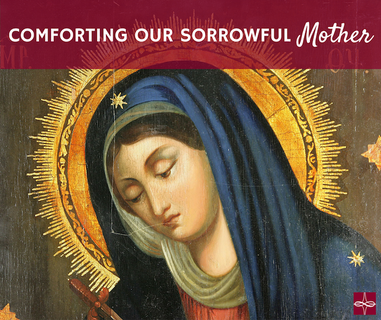 What do you do when you are feeling sad, scared, or anxious? Where do you turn for a source of comfort?
The Blessed Mother knows all about sorrow. She is always ready to comfort any one of her children who come to her in prayer. But, have you ever thought about offering comfort to her? The Feast of Our Lady of Sorrows is today, September 15, 2015. Perhaps you might be able to find a little bit of time to spend with her. Much less familiar than the Rosary is the Chaplet of the Seven Sorrows. The chaplet is made up of seven groups of seven beads. Each group is separated by a single bead. In praying the chaplet, you would meditate on each of the seven sorrows while reciting one Our Father and seven Hail Mary’s. If you would like to pray the chaplet, this webpage can be of help. The Seven Sorrows of the Blessed Virgin Mary: The Prophecy of Simeon The Flight into Egypt The Child Jesus Lost in the Temple Mary Meets Jesus Carrying His Cross Mary at the Foot of the Cross Mary Receives the Body of Jesus Mary Witnesses the Burial of Jesus The seven sorrows span from the earliest days of Jesus’ life to His final hours. All of the Blessed Mother’s sorrows tie back to her Son. For a mother, very few things compare to watching the child she loves hurting. Although the Blessed Mother certainly put her entire trust in God, she still would have known terror when the Holy Family fled to Egypt to escape the threat of King Herod to save their precious newborn Son. Not only was the Holy Family far from home, but they had no idea when it might be safe to return to Nazareth. Any parent can tell you how scary it is when their child is lost. No words would be adequate to describe how scared Mary must have felt as she and Saint Joseph spent three full days searching for Jesus before finding Him teaching the elders in the temple. The next time you ask the Blessed Mother for her intercession before God, remember that she understands sorrow and anxiety. During her own life, the Blessed Mother understood suffering; just like all of us today understand the experience of suffering in our own lives. She is always there, more than happy to pray for us. Perhaps you might return the favor, and find a bit of time to spend with her. Our Lady of Sorrows, pray for us! Jennifer Beckmann is an Administrative Secretary for the United States Conference of Catholic Bishops. 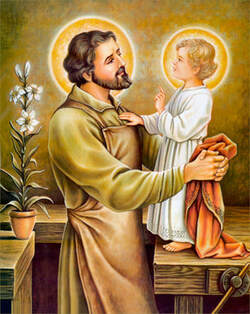 “There is nothing more holy, more eminently perfect, than resignation to the will of God.” ~ St. Vincent de Paul When we hear these words we often think of Mary declaring herself the handmaid of the Lord or Jesus crying out on the cross, “Into your hands Lord, I commend my spirit.” And yet, there is another example of complete sacrifice to God that often slips by us, that of Joseph, the silent and steadfast husband and father, who cared for Mary as the Lord commanded and raised Jesus as his own flesh and blood. “There is nothing more holy, more eminently perfect, than resignation to the will of God.” These are truly words to live by, but not easy words to live by. And yet they give us a powerful image of Joseph, a simple man, a carpenter, a husband, a father, giving himself completely to the Lord. He is a perfect example of someone who wanted to live a simple life, but found more than he could ever imagine when he placed his life in the hands of God. If I had been in Joseph's shoes I would have been afraid, and I am sure that Joseph was afraid, but we know that fear did not guide him. No, “he did as the angel of the Lord had commanded him and took his wife into his home” (Mt 1:24). This image of Joseph is a powerful image. As Saint Pope John Paul II tells us in Redemptoris Custos, Joseph was called by God to be the protector of Mary and the foster-father of Jesus. In some ways we can think of him as the ultimate human protector. He gave up his life and dedicated it to his family, to protect Mary and Jesus so that one day his own son might die a criminal’s death on the cross and save the world. He is a beautiful example of what it means to be a father and a husband, giving all of himself so that his family could live out their own call to serve the Lord. St. Joseph, though often portrayed as a silent figure in the Gospels, remains a beautiful example of fatherhood. Fathers serve in one of the most important and formative roles a child can have. They help us to grow in faith and in love, they teach us the things their fathers taught them, and we look to them for support and guidance, for strength and surety. My own father is one of the greatest men I know. During the last 33 years of marriage he has been a devoted husband and father striving to uphold our faith and me and my three brothers as Catholic gentlemen. He has given his life for his family and God, and I couldn't ask for more. On this feast of St. Joseph the Husband of Mary, it is important for us to remember our own fathers and what they have done for us. It is important to see the sacrifices they have made and how they have guided us to place complete trust in the Lord. As I continue to prepare for marriage this summer I pray and hope that I can live up to the example of St. Joseph and my father, that I can be the husband and father that God is calling me to be. This path is not easy, but I know that if all of us pursuing marriage and those who are already there give ourselves to Christ through the example of St. Joseph that we will live as God has called us to live, in the example of St. Joseph and the Holy Family. This Lenten season I invite you to pursue St. Joseph because in his silence, in his steadfast faith and loyalty to God, and in his devotion and love of his family, he calls us even closer to Christ. Sometimes we need Mary our Mother whose embrace is always loving and warm, like a Mother holding her child. But other times we need the strength of Joseph, a father’s steadfast hand guiding us on the path to Christ, a silent witness to those who have given themselves completely to serving the Lord. Nicholas Shields is a young professional in Washington, D.C.
|
Archives
April 2024
Categories
All
|






 RSS Feed
About |
Media |
© COPYRIGHT 2024 | ALL RIGHTS RESERVED