|
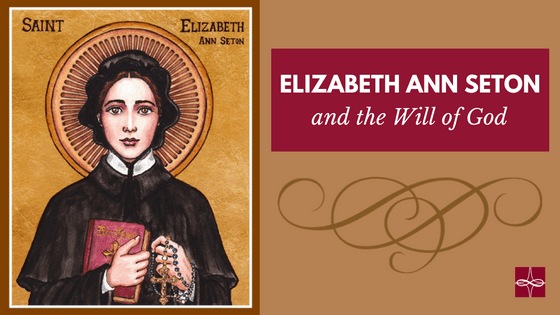
“The first end I propose in our daily work is to do the will of God; secondly, to do it in the manner he wills it; and thirdly to do it because it is his will.” – St. Elizabeth Ann Seton St. Elizabeth Ann Seton (1774-1821), whom we celebrate on January 4, holds the distinction of being the first native-born American saint. Looking back over her great achievements (which include planting the seeds of Catholic education in America and founding a religious order, the Daughters of Charity), what is so special and relevant about Mother Seton is how ordinary her holiness was. From Wall Street to Italy, from Baltimore to rural Emmitsburg, MD, Elizabeth initially lead a privileged life, but always remained humble and grounded. After becoming a widow with five children at only 28 years old, she eventually moved her young family to Emmitsburg and founded a religious order and Catholic school. After the death of her husband, her life was difficult, filled with personal trials and hardships. Yet, through all of it, she demonstrated constant dedication to discerning and pursuing the will of God, or, as she simply called it, “The Will.” In fact, it is through looking at how Elizabeth sought God’s will in the toughest moments of life that we stand to learn the most from her remarkable, yet ordinary life. Embracing Change “God, forgive what I have been, correct what I am, and direct what I shall be.” Humans are creatures of habit, which makes change a scary thing. God certainly called St. Elizabeth to change directions many times over the course of her life, even change her vocation! Elizabeth remained faithful and constant in the moment, while exercising abandonment to the will of God to respond freely as her circumstances changed. Elizabeth demonstrates how we do not become saints overnight, but grow through a day-by-day process of seeking forgiveness and correction every step of the way. Faithfulness in Failure “We know certainly that our God calls us to a holy life. We know that he gives us every grace, every abundant grace; and though we are so weak of ourselves, this grace is able to carry us through every obstacle and difficulty.” Growing up in a prosperous family, Elizabeth enjoyed a happy and fruitful marriage, blessing her with five children. Together with her husband William, to whom she was very much in love, they inherited a successful business on Wall Street. But in a short period of time, all that changed. William’s business failed and went bankrupt. Elizabeth knew success very early on, but learned firsthand the difference between success and faithfulness. As an American saint, Elizabeth powerfully challenges the American tendency to view outward success as an indisputable sign of God’s grace. The experience awakened in Elizabeth a newfound love of the poor, as well as a deeper understanding of the will of God in the midst of many obstacles and difficulties on the path to a holy life. Trust During Tragedy “The accidents of life separate us from our dearest friends, but let us not despair. God is like a looking glass in which souls see each other. The more we are united to Him by love, the nearer we are to those who belong to Him.” Not long after her family went bankrupt, Elizabeth and her husband William moved to Italy, where he became sick and died of Tuberculosis. Elizabeth had already lost her mother and sister early in life. Following her husband’s death, Elizabeth found consolation and hope in visiting and praying in various churches throughout Italy, and felt especially drawn to the Eucharist and the Blessed Virgin Mary even though she was still Episcopalian. Her experience planted seeds for her entrance into the Catholic Church. Many of us, myself included, have experienced tragedy strike at the heart of a family. Elizabeth demonstrates that tragedy, though profoundly shaking, need not lead to despair, but an invitation to rely even more on the will of God. Rejoice Despite Rejection “Afflictions are the steps to heaven.” When news of Elizabeth’s conversion in 1805 became public, many parents removed their children from the school where Elizabeth taught in Baltimore (after returning from Italy) and other friends no longer associated with her. Used to being a well-liked socialite, this experience must have been painful. Despite feelings of rejection, Elizabeth did not become bitter, defensive, or lose her natural joy and generosity. Instead, Elizabeth teaches us that following the will of God opens us to greater love and acceptance of others, not enmity with them. The tragedies and setbacks in Elizabeth’s life were not enough to keep her from trusting the will of God. In her own words, “God has given me a great deal to do, and I have always and hope always to prefer his will to every wish of my own.” Let us approach this new year as St. Elizabeth Ann Seton would have, eager to both desire and do the will of God. Consider starting off 2017 with this novena to St. Elizabeth Ann Seton starting tomorrow, January 4th. Pray in a special way to desire, know, and follow the will of God as St. Elizabeth Ann Seton did. St. Elizabeth Ann Seton, pray for us! *This blog is reposted and was originally published January 3, 2017.* AuthorEvan Ponton works at Church of the Nativity in Timonium, MD and actively writes and serves in ministry with the Archdiocese of Baltimore.
0 Comments
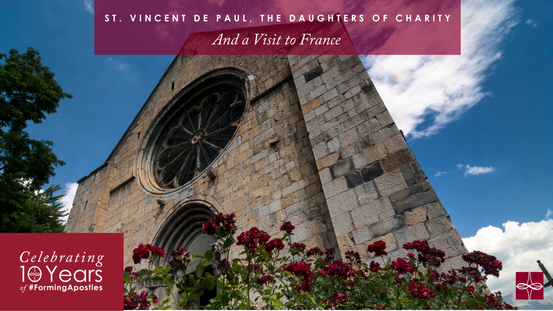
Earlier this year, I had the profound experience of traveling to France, specifically the cities of Paris and Avignon. This was my first time in the country, and in my quest to find places of historic Catholic significance, I discovered St. Vincent de Paul’s tomb along with St. Catherine Laboure’s incorrupt body, both of which were located in Paris.
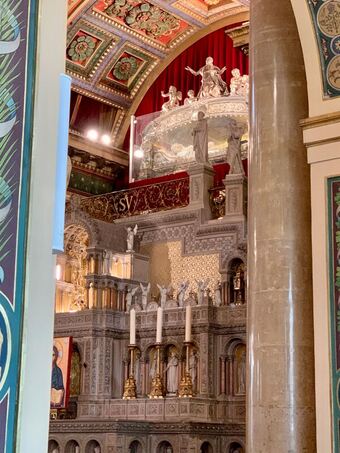
Figure 1: Bones of St. Vincent de Paul encased in a wax figure of the saint. His heart is incorrupt and housed in the chapel of the motherhouse of the Daughters of Charity in Paris. Photo by Dana Edwards Szigeti.
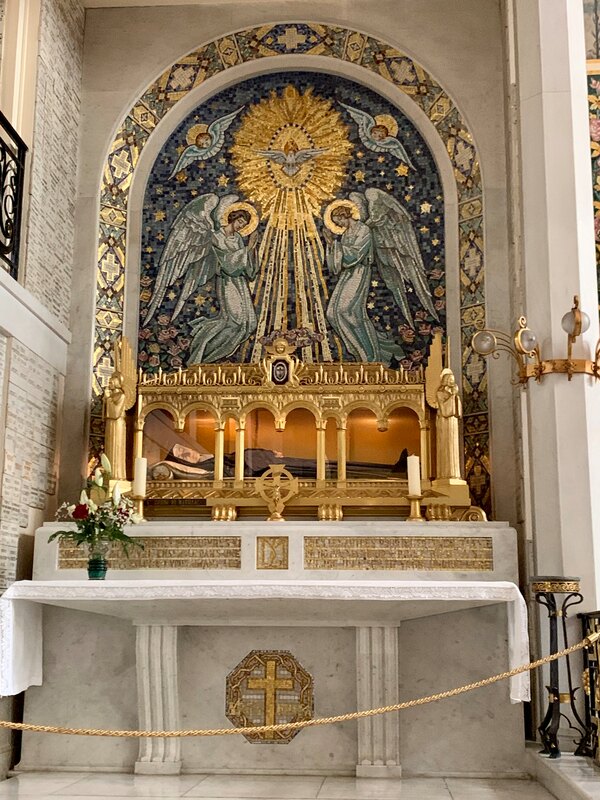
I had heard of these saints before, but I wanted to learn more about their lives. I knew the Society of St. Vincent de Paul was dedicated to serving the poor and that our family had made local donations to this organization. For a retreat, I had visited the seminary in Florida (my home state) which is named after St. Vincent, but I didn’t know the history behind the saint. Born into a poor French peasant family, St. Vincent was educated by Franciscans and entered the priesthood. Just five years after his ordination in 1600, St. Vincent was captured and sold as a slave in Tunis. During his imprisonment, he vowed to God that he would devote his life to serving the poor if he escaped. Two years later, he escaped and led a life of establishing hospitals for the poor, ministering to convicts, reforming the clergy during a time when there weren’t many priests in France, and instructing and preparing young men for the priesthood. “Go to the poor,” St. Vincent said. “You will find God.” In discovering more about this industrious saint, I was struck by how many more saints he formed and inspired. As St. Louise de Marillac’s spiritual guide, St. Vincent encouraged her to pursue charitable works. Together with St. Louise, St. Vincent de Paul founded the Daughters of Charity in 1633. Their religious institution was the first non-cloistered religious order of women devoted to active works of charity. St. Louise trained young women not only in the spiritual life but also in the corporal works of mercy.
Figure 2: Remains of St. Louise de Marillac encased in her wax figure at the chapel of the motherhouse of the Daughters of Charity in Paris. Photo by Dana Edwards Szigeti.
The order established soup kitchens, organized hospitals for the needy, set up schools and homes for orphans, offered job training, taught young children, and even sought to improve prison conditions. From the very beginning of the order’s founding, St. Louise dedicated it to the Blessed Mother. In 1830, Our Lady appeared to St. Catherine Laboure, a member of the Daughters of Charity, and entrusted her with developing the Miraculous Medal.
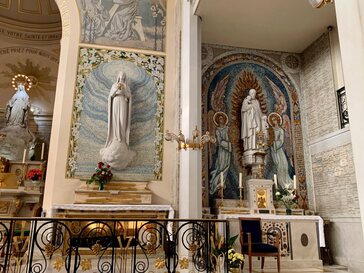
Figure 3: Incorrupt body of St. Catherine Laboure pictured to the bottom left; the blue chair on the right is the one in which the Blessed Mother appeared to St. Catherine. Photo by Dana Edwards Szigeti.
In 1833, St. Vincent de Paul admirer Blessed Frederic Ozanam founded the Society of St. Vincent de Paul in France. And during the nineteenth century, St. Elizabeth Ann Seton founded a community of sisters in the United States who then joined the Daughters of Charity in France, becoming the first community of the Daughters of Charity in America. As we celebrate St. Vincent de Paul’s feast day on September 27, let us consider how our actions inspire those around us like St. Vincent’s did for future saints to follow. Let us pray and listen to the Holy Spirit and see his movement in both our lives and the lives of others. How might the Holy Spirit be calling us to model the patron saint of charitable societies? How might we be called to encourage others around us to be saints? “Grace strengthens you in order to sanctify you and sanctifies you so that you might encourage others in the way of salvation.” – St. Vincent de Paul, III; 258
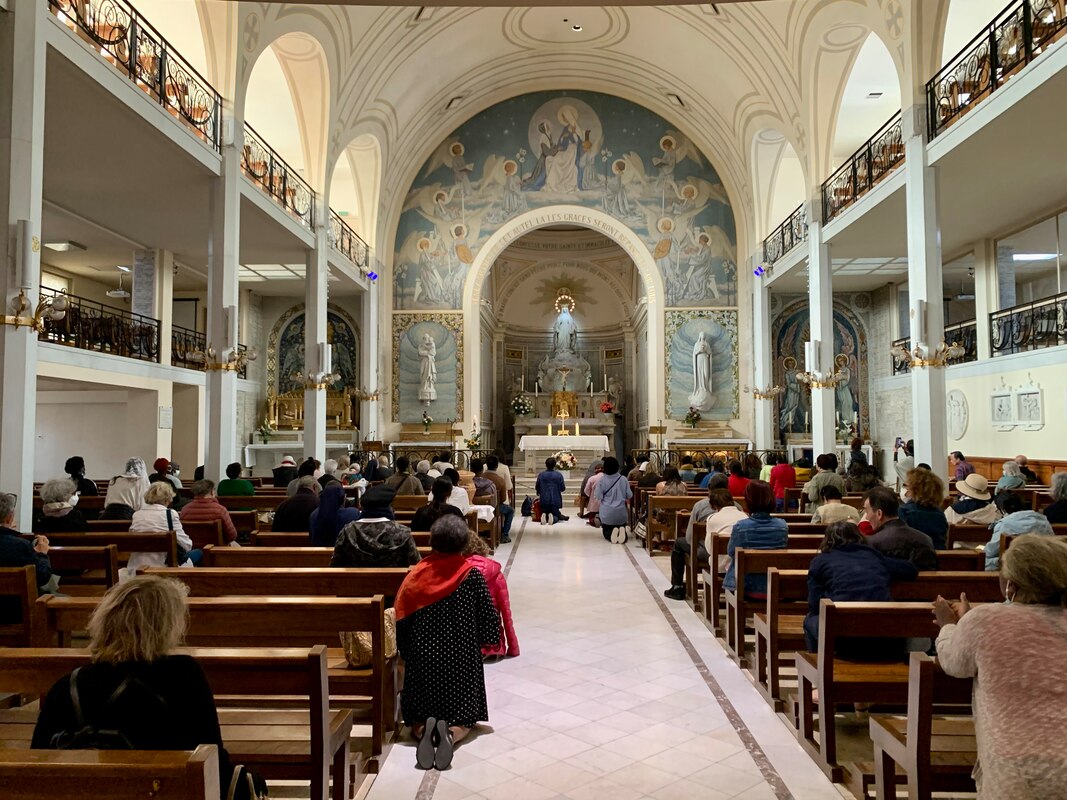
Figure 4: Eucharistic adoration in the chapel at the motherhouse of the Daughters of Charity. Photo by Dana Edwards Szigeti.
Resources:
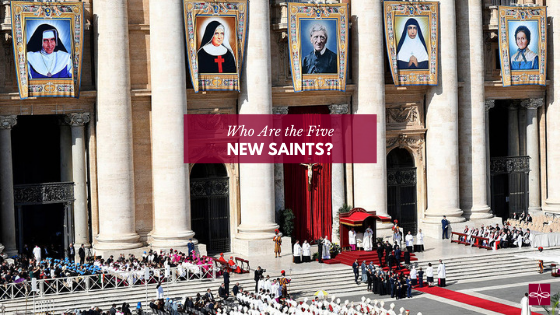
In October, Pope Francis canonized five “Blessed” men and women of the Church, including Cardinal John Henry Newman, the Anglican convert “widely recognized as one of the greatest theologians of the 19th century.” Along with Cardinal Newman, four women were made saints, including three religious women and one laywoman. When I first heard the news on the car radio, the name “Cardinal Newman” sounded familiar, but I couldn’t remember why. I was also curious about who the women were – and why I hadn’t heard their names reported also! My passing interest grew into a promise to learn: 1. Where have I heard of John Henry Newman? and 2. Who were the four women canonized with him? The first question was easiest to answer. In addition to his famous conversion and subsequent tenure as the vicar of St. Mary the Virgin Church at Oxford University, John Henry Newman was a prolific writer. Newman’s essays and sermons even influenced the White Rose student group in Munich, which included Sophie and Hans Scholl, who were tried and executed after speaking out against the Nazi regime. These clues helped – but when I stumbled upon Cardinal Newman’s Wikipedia page, the answer hit home. If you have ever visited a secular college campus in the United States, Canada, or the United Kingdom with a Catholic Student Center – the odds are good that the center will be called a “Newman Center,” “Newman Club,” or “Newman House.” Newman Centers “get their name and their role from the cardinal who died in 1890 and emphasized that Catholic students who attend public universities must be given a place to gather to support and encourage one another in their faith.” This “Newman Connection” helped me understand why this saint is beloved in many English-speaking parts of the world – especially among students, young adults, and those of other Christian denominations. One mystery solved – four to go! At first, I was totally unfamiliar with the four newest women saints. My lack of familiarity may owe partially to the fact that these women are from four very different, non-English speaking parts of the world: Brazil, India, Italy, and Switzerland. The three religious women were Blessed Dulce Lopes Pontes, Mariam Thresia Chiramel Mankidiyan, and Blessed Josephine Vannini. The laywoman canonized was Blessed Marguerite Bays. In the Holy Mass homily, Pope Francis said “[These three religious women]… show us that the consecrated life is a journey of love at the existential peripheries of the world. Saint Marguerite Bays, on the other hand, was a seamstress; she speaks to us of the power of simple prayer, enduring patience and silent self-giving.” St. Marguerite Bays was a lay member of the Secular Franciscan Order in 19th Century Switzerland. Early in her life she dedicated herself to helping others, especially her parish, her family, and unemployed Swiss peasant farmers who were adversely affected by the mechanization of the of agricultural industry. Fittingly, one of the miracles attributed to Marguerite involved the case of a two-year-old who fell under the moving wheels of a tractor. “Her grandfather witnessed the accident unfolding and prayed to Marguerite... and the girl got up unharmed.” Marguerite experienced a miraculous healing in her own life from bowel cancer and lived to age 63. St. John Paul II beatified her in 1995. St. Giuseppina Vannini is the first Roman woman to be canonized in over 400 years. Raised an orphan in the shadow of St. Peter’s Basilica, she went on to found the Daughters of St. Camillus, after being rejected from the Daughters of Charity for poor health. She faced rejection and bureaucratic roadblocks to establishing her order, which now has 800 sisters working in 22 countries. Giuseppina was beatified by St. John Paul II in 1994. St. Mariam Thresia Chiramel Mankidiyan also founded a religious order, the Congregation of the Holy Family, with the mission of caring for poor families in India. A mystic, she was born Thresia Chiramel Mankidiyan (“Theria” for Teresa of Avila). Pope John Paul II named Mariam as Venerable in 1999. St. Dulce Lopes Pontes is well known in the Western Hemisphere, often referred to as “Brazil’s Mother Theresa,” due to her birth into an upper-middle class family and her subsequent devotion to the poor. She founded the first Catholic workers’ organization in the state of Bahia, and she also “launched several initiatives including a health clinic for impoverished workers, a school for working families, a hospital, an orphanage and numerous care centers for the elderly and disabled.” At the time of her death in 1992, Sister Dulce had been nominated for the Nobel Peace Prize. In Pope Francis’ Holy Mass homily, he discussed the journey of faith as the way of those who cry out, walk and give thanks. This is a dynamic challenge, taken up by all five of our new saints – many who paired their rich mystic experiences with bold, resourceful action to affect change. St. Dulce Lopes Pontes, St. Mariam Thresia Chiramel Mankidiyan, St. Josephine Vannini, St. Marguerite Bays, and St. John Henry Newman certainly inspire me to do likewise. “The first end I propose in our daily work is to do the will of God; secondly, to do it in the manner he wills it; and thirdly to do it because it is his will.” – St. Elizabeth Ann Seton St. Elizabeth Ann Seton (1774-1821), whom we celebrate on January 4, holds the distinction of being the first native-born American saint. Looking back over her great achievements (which include planting the seeds of Catholic education in America and founding a religious order, the Daughters of Charity), what is so special and relevant about Mother Seton is how ordinary her holiness was. From Wall Street to Italy, from Baltimore to rural Emmitsburg, MD, Elizabeth initially lead a privileged life, but always remained humble and grounded. After becoming a widow with five children at only 28 years old, she eventually moved her young family to Emmitsburg and founded a religious order and Catholic school. After the death of her husband, her life was difficult, filled with personal trials and hardships. Yet, through all of it, she demonstrated constant dedication to discerning and pursuing the will of God, or, as she simply called it, “The Will.” In fact, it is through looking at how Elizabeth sought God’s will in the toughest moments of life that we stand to learn the most from her remarkable, yet ordinary life. Embracing Change “God, forgive what I have been, correct what I am, and direct what I shall be.” Humans are creatures of habit, which makes change a scary thing. God certainly called St. Elizabeth to change directions many times over the course of her life, even change her vocation! Elizabeth remained faithful and constant in the moment, while exercising abandonment to the will of God to respond freely as her circumstances changed. Elizabeth demonstrates how we do not become saints overnight, but grow through a day-by-day process of seeking forgiveness and correction every step of the way. Faithfulness in Failure “We know certainly that our God calls us to a holy life. We know that he gives us every grace, every abundant grace; and though we are so weak of ourselves, this grace is able to carry us through every obstacle and difficulty.” Growing up in a prosperous family, Elizabeth enjoyed a happy and fruitful marriage, blessing her with five children. Together with her husband William, to whom she was very much in love, they inherited a successful business on Wall Street. But in a short period of time, all that changed. William’s business failed and went bankrupt. Elizabeth knew success very early on, but learned firsthand the difference between success and faithfulness. As an American saint, Elizabeth powerfully challenges the American tendency to view outward success as an indisputable sign of God’s grace. The experience awakened in Elizabeth a newfound love of the poor, as well as a deeper understanding of the will of God in the midst of many obstacles and difficulties on the path to a holy life. Trust During Tragedy “The accidents of life separate us from our dearest friends, but let us not despair. God is like a looking glass in which souls see each other. The more we are united to Him by love, the nearer we are to those who belong to Him.” Not long after her family went bankrupt, Elizabeth and her husband William moved to Italy, where he became sick and died of Tuberculosis. Elizabeth had already lost her mother and sister early in life. Following her husband’s death, Elizabeth found consolation and hope in visiting and praying in various churches throughout Italy, and felt especially drawn to the Eucharist and the Blessed Virgin Mary even though she was still Episcopalian. Her experience planted seeds for her entrance into the Catholic Church. Many of us, myself included, have experienced tragedy strike at the heart of a family. Elizabeth demonstrates that tragedy, though profoundly shaking, need not lead to despair, but an invitation to rely even more on the will of God. Rejoice Despite Rejection “Afflictions are the steps to heaven.” When news of Elizabeth’s conversion in 1805 became public, many parents removed their children from the school where Elizabeth taught in Baltimore (after returning from Italy) and other friends no longer associated with her. Used to being a well-liked socialite, this experience must have been painful. Despite feelings of rejection, Elizabeth did not become bitter, defensive, or lose her natural joy and generosity. Instead, Elizabeth teaches us that following the will of God opens us to greater love and acceptance of others, not enmity with them. The tragedies and setbacks in Elizabeth’s life were not enough to keep her from trusting the will of God. In her own words, “God has given me a great deal to do, and I have always and hope always to prefer his will to every wish of my own.” Let us approach this new year as St. Elizabeth Ann Seton would have, eager to both desire and do the will of God. Consider starting off 2017 with this novena to St. Elizabeth Ann Seton starting tomorrow, January 4th. Pray in a special way to desire, know, and follow the will of God as St. Elizabeth Ann Seton did. St. Elizabeth Ann Seton, pray for us! |
Details
Archives
March 2026
Categories
All
|


RSS Feed