|
Prepare a full account of your stewardship. (Luke 16:2) We recently celebrated the Solemnity of Our Lord Jesus Christ, King of the Universe with the arresting story of St. Dismas, “the good thief.” Saint Luke portrays Jesus crucified between two criminals, “one on his right, the other on his left.” (Luke 23:33) The civil and religious leaders of the day tortured to death the King of the Universe. As Jesus hung on the cross, fighting for every breath, the leaders sneered at him, the soldiers jeered, and even the other criminal reviled him, “Are you not the Messiah? Save yourself and us.” It was then that St. Dismas spoke his conscience and rebuked the other criminal, “Have you no fear of God, for you are subject to the same condemnation? And indeed, we have been condemned justly, for the sentence we received corresponds to our crimes, but this man has done nothing criminal.” Now, turning to Jesus, he asks, “Jesus, remember me when you come into your kingdom.” St. Dismas demonstrates the essentials of conscience. He is self aware, recognizes the evil he has done, and accepts his punishment as just. Jesus, however, was innocent. His crucifixion by the civil and religious leaders was wrong. Even to question him, to revile him, is an affront to God. The stark clarity of St. Dismas’ conscience is in sharp contrast to the onslaught of moral decisions we face every day. Is it right or wrong to discriminate against a person based solely on his or her sex? Is it right or wrong to give a smart phone to a 13 year old who is “the only one” in her class without one? Is it right or wrong for the soldier to disobey a direct order from his superior if it violates the Constitution of the United States of America? The Church recognizes the challenges of conscience. (Catechism 1792). Three of these are following the bad example of others, being caught up in our own passions, and a disordered understanding of autonomy. We are bombarded with so many messages from others telling us to value one thing or believe another. It is heroic to be authentic - to be your true self. St. Dismas could have “gone along with the crowd,” and mocked Jesus too. He did not. He was self aware and acknowledged his own truth - however ugly it was. We also have passions. Some of them are good, but we can get so caught up in them that we lose perspective. Our love for football deafens us to the creeping depression of our teenager. Like the priest and the scribe in the parable of the Good Samaritan, we are blind to those suffering along the road, or worse, we ignore the starving and wounded Lazarus at our door. The culture of individualism in which we swim, like fish in water, distorts our understanding of autonomy. We strongly believe in our right to “life, liberty, and the pursuit of happiness,” but fail to accept the responsibility to provide those same rights to others. Our autonomy creates and sustains our society which then provides and protects it. Pope Leo XIV, on the Solemnity of the Assumption of the Blessed Virgin Mary, preached, “Sometimes, unfortunately, where human self-reliance prevails, where material comfort and a certain complacency dull the conscience, this faith can grow old. Then death enters in the form of resignation and complaint, of nostalgia and fear. Instead of letting the old world pass away, one clings to it still, seeking the help of the rich and powerful, which often comes with contempt for the poor and lowly.” (August 15, 2025) Conscience is deeply personal but it is not private. Our moral decisions have public ramifications. A well formed conscience serves the common good. The common good is “the sum total of the social conditions which allow people, either as groups or as individuals, to reach their fulfillment more fully and more easily.” (Catechism, 1906) The catechism summarizes: “The dignity of the human person requires the pursuit of the common good. Everyone should be concerned to create and support institutions that improve the conditions of human life.” (Catechism, 1926) We live in an increasingly interconnected world. The globalization of the economy unleashed an abundance of inexpensive goods for many and robbed jobs from generations of workers. The 2020 pandemic clearly taught us that nature - pollution, climate change, and viruses - knows no border. Even today, an economic policy to “punish” one country for unfair business practices ends up hurting soybean farmers in Iowa. We, the baptized disciples of Jesus, are the Church. We, as a communion of faith, must strengthen our conscience in service to the common good. When I started this series of articles on conscience, I thought we needed to reclaim conscience. Today, I believe it is more urgent than ever. We need to remember, regain, and reclaim conscience. On November 12, 2025 the United States Conference of Catholic Bishops issued a Special Message addressing their concern for the “evolving situation impacting immigrants.” The bishops are echoing Saint Dismas. The current administration, regardless of its good intentions, crossed a line. We may “never do evil so that good may result from it” (Catechism, 1789). We, as a Church in our country, must decide when our leaders cross the line. The bishops identified points on that line in their Special Message; profiling, vilification of immigrants, loss of legal status, and the indiscriminate mass deportation of people. It is fitting to give the last word to our brothers, the Bishops of the United States of America. “Catholic teaching exhorts nations to recognize the fundamental dignity of all persons, including immigrants. We bishops advocate for a meaningful reform of our nation’s immigration laws and procedures. Human dignity and national security are not in conflict. Both are possible if people of good will work together.” (Special Message)
0 Comments
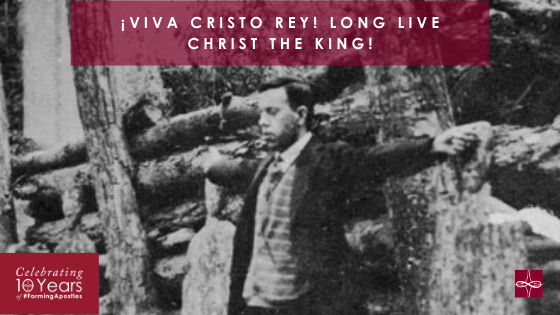
Today we celebrate Blessed Miguel Agustín Pro, a Jesuit priest who ministered to the Church in Mexico in the 1920s during a time of violent government-led anti-Catholicism. At his beatification Mass on September 25, 1988, Pope Saint John Paul II described Blessed Miguel’s virtue and apostolic zeal:
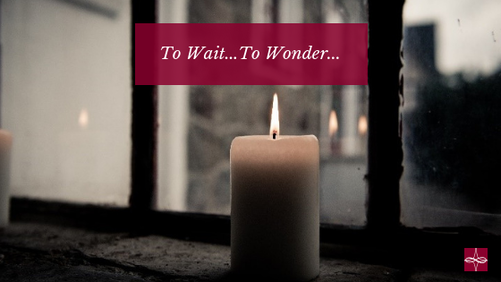
“Neither suffering nor serious illness, nor the exhausting ministerial activity, frequently carried out in difficult and dangerous circumstances, could stifle the radiating and contagious joy which he brought to his life for Christ and which nothing could take away (cf Jn 16:22). Indeed, the deepest root of his dedication to others was his passionate love for Jesus Christ and his ardent desire to identify with Him, even in his death. He expressed this love especially in Eucharistic worship. The daily celebration of Holy Mass was the center of his life, as well as a source of strength and fervor for the faithful. Father Pro had organized the so-called ‘Eucharistic stations’ in particular homes, where the body of the Lord could be secretly received every day during the years of persecution.” Before the firing squad, Blessed Miguel Pro stretched out his arms in the form of a cross and used his last breath to declare, “¡Viva Cristo Rey!” meaning “Long live Christ the King!” It is fitting that having just celebrated the Solemnity of Our Lord Jesus Christ, King of the Universe, the feast of Blessed Miguel Pro offers us yet another opportunity to reflect on what it means to declare Christ as our king and to live our lives as Christ’s faithful subjects. To profess Christ’s sovereignty is to set aside every other loyalty and to surrender all that we have and all that we are to the Lord. It is to acknowledge that we are living for something greater than ourselves and greater than whatever allegiance we may have to any country, political party, sports team, or anything else. Allowing ourselves to be entrenched in such earthly things often keeps us from true communion with our brothers and sisters, especially the suffering and the marginalized. Yet, acknowledging Christ’s rightful authority over each and every one of us means living in radical unity and solidarity with one another, knowing that “There is neither Jew nor Greek, there is neither slave nor free person, there is not male and female; for you are all one in Christ Jesus” (Galatians 3:28). While the kings of this world seek out self-gain and self-preservation, often forcefully asserting their power, Christ’s kingship of self-sacrifice, self-gift, and rightful authority brings healing and unity to the divisions we have created for ourselves. If we wish to follow Jesus, whose kingdom “does not belong to this world” (John 18:36), we, like Blessed Miguel, must answer the call to take up our cross daily and lay down our lives for him. Though we may not suffer religious persecution like Blessed Miguel Pro, each of us can learn from his imitation of Christ, his life of generous service, and his love of the Eucharist. Blessed Miguel’s willingness to celebrate the Mass, even at great personal risk, invites us to a greater devotion to the Body of Christ, to detachment from every earthly entanglement, and to foster true communion by making a gift of our very selves in service of others. As we gather around the Eucharistic table, may we too be strengthened and committed all the more to building up the Kingdom of God in which justice and peace will prevail. May Blessed Miguel Agustín Pro—and indeed all the holy men and women who have given their lives for the sake of the kingdom—intercede for us that we may welcome Christ’s reign by glorifying the Lord by our lives. Happy New Year! We have officially brought the Church year to a close and have entered into a new liturgical year with the first week of Advent. It is a time of new beginnings and yet a profound time of waiting and preparation as we anticipate the joy of the birth of a tiny babe in a manger. I find it interesting that this time of waiting comes right at the beginning of the new liturgical year. In the secular world, New Year’s celebrations are immediate and urgent. We count down to the strike of midnight, kiss our loved ones, announce our resolutions, and toast the entrance of the next phase. Some of us celebrate the end of another passing year with relief. Some feel a deep hope and longing that the year to come will bring with it some rest and release from the trials and tribulations of the previous year. Others celebrate the successes of the year and look forward to hopeful continued success. No matter which category you fall into, the secular New Year brings with it some sense of urgency, of immediate change. In the Church’s liturgical year, we celebrate our “New Year’s Eve” with the celebration of Christ the King on the last Sunday before Advent. In Pope Francis’s 2013 homily he reminded us, “Jesus is the center of creation; and so the attitude demanded of us as true believers is that of recognizing and accepting in our lives the centrality of Jesus Christ, in our thoughts, in our words and in our works.” Pope Pius XI instituted this celebration in 1925 to help remind us that, “while governments and philosophies come and go, Christ reigns as King forever.” Can you feel it? Can you feel the excitement, hope, and assuredness infiltrating you as a believer of Christ, King of the Universe? And then we wait… This stark contrast brings with it the perfect time for reflection and re-evaluation. In thinking and reflecting on the Advent season at the beginning of this new liturgical year, I’m struck by the images that come to mind. The slow burn of a candle in the window, darkness in anticipation of the light of morning. We are searching, seeking, wanting, waiting. “Not all who wander are lost,” J.R.R. Tolkien wrote. Over the years it has become a fairly well known quote. How does this quote speak to you this Advent season? At times we may wander through the ebb and flow of our daily lives and this quote seems to reach out to us in an attempt to comfort us when we find ourselves in this place. But let’s take a deeper look at this particular quote. What does it mean to wander? To wander is to walk or move in a leisurely, casual, or aimless way. In what areas of your life have you been wandering? More importantly, do you know where you are going? Advent is the perfect time for reflection and re-evaluation. “Not all who wander are lost.” Is it true? Sometimes we need the casual and the leisurely. It can be good to have a moment to take a breath. This time of Advent at the beginning of our new liturgical year, though, is a time to challenge ourselves. Are we still wandering? Have we lost sight of our aim? Perhaps Advent is calling us out of our time of wandering and into a time of wondering. To wonder is to desire or be curious about something; to feel amazement, to marvel. What is your heart longing for this Advent season? Where in your life are you being called into a deeper relationship with Christ, King of the Universe? He is coming and His desire to know and love us is so great that He is coming as a vulnerable and dependent baby in a manger. “They name him Wonder-Counselor, God-Hero, Faith-Forever, Prince of Peace.” (Isaiah 9:5) He is coming. Are you ready? This season, let us remember, all that WONDER as they behold the Christ child will never be lost. Question for Reflection: What is your heart longing for this Advent season? For resources to prepare you for the Advent season, please click here. November 9th is a worldwide feast day celebrating the Dedication of the Lateran Basilica. It may seem silly to have a feast day devoted to a church; after all, we are used to commemorating great saints, like Cecilia (November 22nd) or Andrew the Apostle (November 30th), or an aspect of Christ’s life, like the Solemnity of Christ the King (this year, November 25th). So why celebrate a building? Sure, it is a church, Mass is held there, the Eucharist is housed there – but that can be said of any other Catholic church. What makes the Lateran Basilica so special?
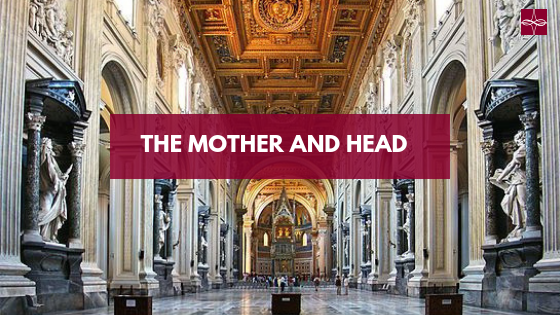
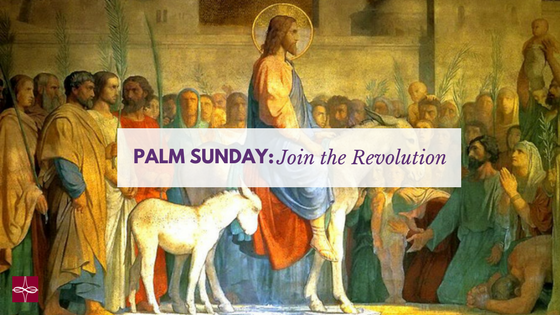
The full name of this particular church is the Archbasilica of the Most Holy Savior and Saints John the Baptist and John the Evangelist at the Lateran. What a mouthful! The Lateran Basilica is one of the “major or papal basilicas,” the four highest-ranking churches in Roman Catholicism, due to their historical significance. The other three are St. Peter’s in the Vatican, St. Paul Outside the Walls, and St. Mary Major. St. John Lateran (as it is commonly known) is the oldest of the four, the oldest public church in Rome, and houses the cathedra (seat) of the pope in his capacity as the Bishop of Rome. Because it houses the cathedra, the basilica is the cathedral of the Diocese of Rome. It is also the sole holder of the title “archbasilica,” demonstrating its ranking above every other church in the world. An inscription on the façade of the building says, “Sacrosancta Lateranensis ecclesia omnium urbis et orbis ecclesiarum mater et caput.” Translated, it means, “The Most Holy Lateran Church, mother and head of all the churches in the city and the world.” Today’s feast day celebrates not only the physical structure itself, but also what it symbolizes. As the seat of the Holy Father, it reminds our hearts and minds of the fidelity we show to the successor of St. Peter, an expression of unity that binds together all the faithful. Moreover, the physical edifice of the church calls to mind what the Catechism states, “The Church is the Body of Christ” (CCC 805). While the Lateran Basilica itself is a magnificent building, housing priceless works of art, in the end it is just a hollow shell. The faithful who enter it, pray in it, and celebrate the Eucharist inside it are what truly bring it to life and bring its purpose to fulfillment. On this feast day, let us pray. Let us pray for the Holy Father, that he may continue to lead the faithful entrusted to his care. And let us pray for the Church, that her members may always work in unity to bring about Christ’s kingdom on earth. Victor David is a collaborator with the Catholic Apostolate Center and a staff member at The Catholic University of America in Washington, DC. For some, Palm Sunday was a political event surrounding a political person that led to the greatest, most unexpected revolution the world has ever seen happen. Historically, the week leading up to Jesus’ Passion would have been the time of preparation for Passover, when many Jews from all the surrounding villages were in Jerusalem together. The gospels (Mt 21: 1-11) describe Jesus’ triumphant entrance into Jerusalem to the swaying of palm fronds and shouts of “Hosanna!” These were unmistakable prophetic signs of the Messiah-king, the one many Jews expected would finally overthrow their Roman overlords and re-establish Israel’s reign on earth, perhaps even violently—as a group called the “Zealots” expected. Yet there is a further symbol to this story: Jesus riding on a colt or ass, the sign of a humble and meek king. Jesus did not become the king they expected, but instead, the one God wanted. As Pope Francis said in his 2016 homily on the Feast of Christ the King, “The Gospel in fact presents the kingship of Jesus as the culmination of his saving work, and it does so in a surprising way. ‘The Christ of God, the Chosen One, the King’ (Lk 23:35,37) appears without power or glory: he is on the cross, where he seems more to be conquered than conqueror.” Like Jesus’ followers then, today we are susceptible to temptations of limited expectations. It is possible to see Jesus merely as a political and ethical teacher who died a martyr’s death and nothing else. On the other hand, we might project Jesus’ kingdom to a purely “other-worldly” realm. Since Jesus apparently wasn’t setting up his kingdom on earth (so we assume), we are tempted to sanitize Jesus of any “worldly” political or practical implications, and simply assume political engagement has limited place, or even runs counter to our task of evangelization. As Pope Pius XI wrote in his establishment of the Feast of Christ the King, “It would be a grave error…to say that Christ has no authority whatever in civil affairs, since, by virtue of the absolute empire over all creatures committed to him by the Father, all things are in his power…although he himself disdained to possess or to care for earthly goods, he did not, nor does he today, interfere with those who possess them.” Both interpretations—that Jesus was strictly political or that his work was merely “not of this world”—fail to take seriously not only Jesus’ public ministry and preaching, but the truly earth-shattering consequences of Jesus’ kingship won at the cross. The Catechism of the Catholic Church states that Christ, “exercises his kingship by drawing all men to himself through his death and Resurrection.” Jesus’ death and Resurrection are, simply, God’s victory over the world’s powers of sin and death so as to bring about the restoration of God’s people. To say yes to Jesus’ Resurrection is to say yes to life as part of a new creation and kingdom that starts now. Paschal faith involves the risk of making mistakes, being misunderstood or ridiculed, of not conforming to the expectations of the surrounding culture in order to expect something greater. It involves joining in the kingship of Christ in serving others, something we are able to share in as a result of our baptism. As powers of sin and death today loom heavy on our hearts, it is not enough to “have faith” but to do nothing. Following Christ calls us to witness to our faith in practical ways with full conviction because of Christ’s own experience of suffering, death, and Resurrection that has transformed our fundamental orientation to the world. As Christians, we desire peace, healing, reconciliation, and restoration. We serve our King by building up his kingdom on earth. Pope Francis challenges us, “A people who are holy…who have Jesus as their King, are called to follow his way of tangible love; they are called to ask themselves, each one each day: “What does love ask of me, where is it urging me to go? What answer am I giving Jesus with my life?” For more Lenten and Easter resources, please click here. |
Details
Archives
January 2026
Categories
All
|
RSS Feed