|
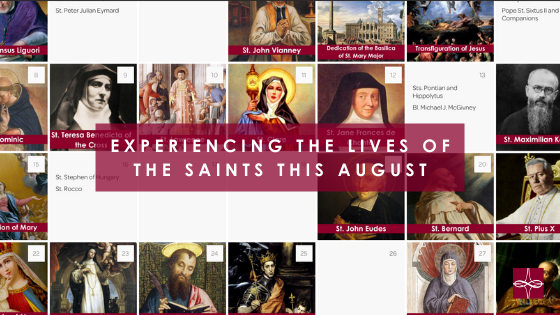
As we begin this month of August, we trudge into another month of Ordinary Time in the liturgical calendar. That doesn’t mean, however, that we don’t have much to look forward to with feast days this month. August is filled with feast days from saints who lived less than a century ago, all the way to saints from the early Church—from religious to laity, from saints I’ve learned about my whole life, to saints I had never heard of before. Let us take time throughout this month of August to learn about the Christ-filled lives of these powerful saints. Saints who Founded Religious Communities: There are many saints this month who founded religious communities—all of which have had a great impact on the Church. St. Dominic founded the Dominicans, also known as the Order of Preachers, which is a religious order known for their preaching and rich intellectual history. St. Clare of Assisi worked with St. Francis of Assisi and helped found the Poor Clares, a group of contemplative nuns and the second branch of the Franciscans to be founded, just after the Order of Friars Minor. Back in the time of the early church, St. Augustine wrote the Rule of St. Augustine, which became the foundation for the Augustinians. In the 12th century, St. Bernard of Clairvaux helped spread the Cistercian Order, an order of monks and nuns that branched off from the Benedictines and remains strong today. St. Cajetan helped found the Theatines which became a religious order with many bishops and intellectuals in the Church. With the help of St. Francis de Sales, St. Jane Frances de Chantal founded the Visitation Order which was a religious order open to women who had been turned down from other orders for poor health or similar reasons. The French mystic St. John Eudes founded two religious orders in the 1600s, both following St. John Eudes’ special devotion to the Sacred Hearts of Jesus and Mary. More recently, in the 18th century, St. Alphonsus Liguori founded the Redemptorists, a religious community with a special devotion to Our Lady of Perpetual Help. In the 19th century, French priest St. Peter Julian Eymard helped found two religious orders, both with a special devotion to the Blessed Sacrament. At first, I found this list quite overwhelming. These saints founded and/or helped spread their religious orders, something I can’t even fathom, especially in our pandemic-affected world today. But then I recognized the beauty that comes to the Church as a result of this wide range of religious communities. Each community is called to follow their own unique charism, all while growing closer to Christ and bringing Him to others. After sitting with this, I realized that there is beauty in the lives of each of these saints and in how the Church works in many ways, through many charisms, to help lead everyone to a life of holiness. Martyrs in the Month: In a six day stretch next week, we will celebrate three well-known martyrs in the Church. Back in the early Church, St. Lawrence was killed and is famous for his quips as he was being grilled to his death—showing his faith in Christ to the end. Much more recently, St. Teresa Benedicta of the Cross was a Discalced Carmelite nun who was killed at the Auschwitz concentration camp during World War II because of her Jewish heritage. Similarly, St. Maximillian Kolbe was martyred at Auschwitz, giving his life in place of another prisoner, and was thus bestowed the title “martyr of charity”. While we may not face martyrdom like these saints, we can learn from how they trusted Christ and pray for their intercession in our lives. Saints and Their Country: Later this month, we will celebrate the feast days of three saints who are known by their primary locations: St. Stephen of Hungary, St. Louis of France, and St. Rose of Lima. These saints all lived incredible lives, all very authentic to the community in which they lived. As we progress through this month, these saints can serve as role models for us in how we can follow Christ and bring others to Him in whatever region we find ourselves. As we walk through this August, let us look to the lives of the saints to learn to be saints right where God has called us to be through whatever charism He calls us to. To learn more about the saints, visit our Catholic Feast Days Website by clicking here. To view a calendar of the feast days in August, and each month, click here. *This blog is reposted and was originally published on August 3, 2021.* Author
0 Comments
As we begin this month of August, we trudge into another month of Ordinary Time in the liturgical calendar. That doesn’t mean, however, that we don’t have much to look forward to with feast days this month. August is filled with feast days from saints who lived less than a century ago, all the way to saints from the early Church—from religious to laity, from saints I’ve learned about my whole life, to saints I had never heard of before. Let us take time throughout this month of August to learn about the Christ-filled lives of these powerful saints. Saints who Founded Religious Communities: There are many saints this month who founded religious communities—all of which have had a great impact on the Church. St. Dominic founded the Dominicans, also known as the Order of Preachers, which is a religious order known for their preaching and rich intellectual history. St. Clare of Assisi worked with St. Francis of Assisi and helped found the Poor Clares, a group of contemplative nuns and the second branch of the Franciscans to be founded, just after the Order of Friars Minor. Back in the time of the early church, St. Augustine wrote the Rule of St. Augustine, which became the foundation for the Augustinians. In the 12th century, St. Bernard of Clairvaux helped spread the Cistercian Order, an order of monks and nuns that branched off from the Benedictines and remains strong today. St. Cajetan helped found the Theatines which became a religious order with many bishops and intellectuals in the Church. With the help of St. Francis de Sales, St. Jane Frances de Chantal founded the Visitation Order which was a religious order open to women who had been turned down from other orders for poor health or similar reasons. The French mystic St. John Eudes founded two religious orders in the 1600s, both following St. John Eudes’ special devotion to the Sacred Hearts of Jesus and Mary. More recently, in the 18th century, St. Alphonsus Liguori founded the Redemptorists, a religious community with a special devotion to Our Lady of Perpetual Help. In the 19th century, French priest St. Peter Julian Eymard helped found two religious orders, both with a special devotion to the Blessed Sacrament. At first, I found this list quite overwhelming. These saints founded and/or helped spread their religious orders, something I can’t even fathom, especially in our pandemic-affected world today. But then I recognized the beauty that comes to the Church as a result of this wide range of religious communities. Each community is called to follow their own unique charism, all while growing closer to Christ and bringing Him to others. After sitting with this, I realized that there is beauty in the lives of each of these saints and in how the Church works in many ways, through many charisms, to help lead everyone to a life of holiness. Martyrs in the Month: In a six day stretch next week, we will celebrate three well-known martyrs in the Church. Back in the early Church, St. Lawrence was killed and is famous for his quips as he was being grilled to his death—showing his faith in Christ to the end. Much more recently, St. Teresa Benedicta of the Cross was a Discalced Carmelite nun who was killed at the Auschwitz concentration camp during World War II because of her Jewish heritage. Similarly, St. Maximillian Kolbe was martyred at Auschwitz, giving his life in place of another prisoner, and was thus bestowed the title “martyr of charity”. While we may not face martyrdom like these saints, we can learn from how they trusted Christ and pray for their intercession in our lives. Saints and Their Country: Later this month, we will celebrate the feast days of three saints who are known by their primary locations: St. Stephen of Hungary, St. Louis of France, and St. Rose of Lima. These saints all lived incredible lives, all very authentic to the community in which they lived. As we progress through this month, these saints can serve as role models for us in how we can follow Christ and bring others to Him in whatever region we find ourselves. As we walk through this August, let us look to the lives of the saints to learn to be saints right where God has called us to be through whatever charism He calls us to. To learn more about the saints, visit our Catholic Feast Days Website by clicking here. To view a calendar of the feast days in August, and each month, click here.
Imagine four graduate students passionate about ministry and ready for new experiences. We pulled up to a ranch house in New Hampshire in August 2012 and unloaded our packed cars. Our next two years were devoted to serving in local parishes while earning our degrees in theology through the Echo Graduate Service Program. Our first community prayer took place on the Feast of St. Bernard of Clairvaux, whose feast day we celebrate on Thursday. The translation for “Clairvaux” is “Valley of Light”; we didn’t know a great deal about Bernard, but the theme of light clicked. We were accumulating candles as welcome gifts from our parishes, so of course, it was a sign! We pieced together his biography and reflected on his dynamic writings. We asked St. Bernard to be the patron of our house and bless our time together. St. Bernard was a monk who lived in 11th century France and became a Doctor of the Church. From an early age, he was considered devout and well-educated. The third of seven children, Bernard took a particular interest in poetry and had a special devotion to Mary. He notably authored the Memorare prayer. He became a respected abbot of what are now the Cistercians in the Diocese of Langres. Bernard is credited with naming the monastery he began Claire Vallée, in an area originally named Vallée d'Absinthe, or Valley of Bitterness. He was known for his influence among clergy and political leaders. St. Bernard died in 1153 and was canonized in 1174. Now imagine a young family. My husband, one-year-old son, and I prepared to “hunker down” for quarantine in March 2020 in Indiana. Five months later, we are still amid a global pandemic that can feel overwhelming, oppressive, disheartening, and confusing all at once. The virus has also revealed some of the most beautiful elements of community and compassion. While I can’t compare the virus to the challenges Bernard faced as a young adult starting a monastery with a “band of monks,” I appreciate how he held fast to the deeper purpose of Benedictine life. He cultivated habits of work, leisure, and rest while counseling his fellow monks, clergy, and politicians. COVID-19 forced me to recognize how I create space to listen and be with God both inside and outside my home, much like Bernard’s contemplative life. Eight years ago, the patron of candlemakers introduced what it means to practice a type of “spirituality of home” where home is not only a place for living, but also one of brightness, hope, and intentionality. I can see hope daily in our little boy, doing the hokey pokey many times over, reading books, and playing chase. We intentionally set up a prayer table in our living room where we say morning and evening prayers as a family and filled walls with icons and pictures to remember who it is we say thank you to! These habits took time, but they have been a source of security in such a time of uncertainty. I’m grateful to St. Bernard for bringing light to all the “unknowns” in our little ranch house in New England and my first home in the Midwest. He is a guide who shows us how to cultivate habits that lead to a deeper relationship with God, our true home! Reflection Questions: How might we practice a “spirituality of home”? Where is the light in our individual “valleys of bitterness,” i.e. isolation, loss, anxiety, or despair? Inspiration for this article came from the book Theology of Home. If you enjoyed this post, we invite you to read Creating an Inner Monastery During the Coronavirus Pandemic.
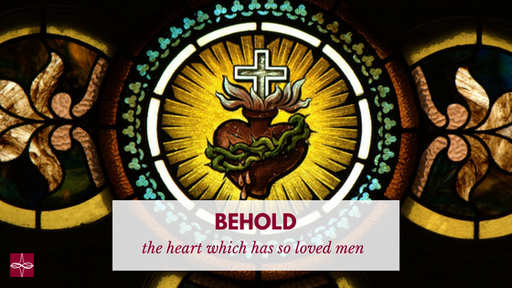
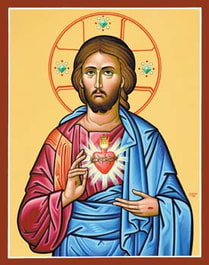
Whenever you think of Christianity, it is next to impossible to overlook the role and importance of love in the story of salvation. God’s love for us is one that is infinitely more enduring than any infatuation or passing attraction. It is one that gives and purifies, sacrifices and yields for the good of another -- again and again and again. God’s love is one that extends through, before, and beyond eternity and is ultimately expressed from Calvary to each and every person, fully, freely, and forever. The Church has dedicated the month of June to a reminder of the depth of God’s love: the devotion to the Sacred Heart of Jesus. In His Most Sacred Heart, we see how absolutely consumed with love God is for us — so much so that He was willing to bear those heinous wounds, false accusations and derisions, and even His death in order to grant salvation for all. Artistic depictions of the Sacred Heart remind us of the torment Christ endured on our behalf: the heart is wrapped in a crown of thorns, pierced, bleeding, and aflame with a cross rising from the tongues of fire. The visible wounds of Christ’s heart reveal His invisible love. Thus, devotion to the Sacred Heart is described as “devotion to the love of Jesus Christ in so far as this love is recalled and symbolically represented to us by His Heart of Flesh.” As creatures that have both soul and body, bodily representations of Christ’s love sometimes touch us in ways that words do not. The Sacred Heart teaches us that authentic love incurs great costs, but it also always gives life. Historically, devotion to the Sacred Heart is believed to have grown from another devotion to Jesus’ body: the Sacred Wounds of Christ from His Passion. Saint Bernard of Clairvaux said that the piercing of Christ’s side revealed His goodness and the charity of His heart for us: “How good and pleasant it is to dwell in the Heart of Jesus! Who is there who does not love a Heart so wounded? Who can refuse a return of love to a Heart so loving?” Other religious and saints, such as Francis of Assisi, have themselves exemplified closeness to the love poured out by Christ’s Five Wounds and Sacred Heart. The devotion as it is most commonly known today is said to have begun with the 1673 appearance of our Lord to St. Margaret Mary Alacoque, a French nun of the Order of the Visitation of Holy Mary. Over a series of visits, Our Lord revealed to St. Margaret Mary the importance of devotion to His Sacred Heart: "Behold the Heart which has so loved men that it has spared nothing, even to exhausting and consuming Itself, in order to testify Its love … But what I feel most keenly is that it is hearts which are consecrated to Me, that treat Me thus. Therefore, I ask of you that the Friday after the Octave of Corpus Christi be set apart for a special Feast to honor My Heart, by communicating on that day, and making reparation to It by a solemn act, in order to make amends for the indignities which It has received during the time It has been exposed on the altars. I promise you that My Heart shall expand Itself to shed in abundance the influence of Its Divine Love upon those who shall thus honor It, and cause It to be honored." In 1856, the Solemnity of the Sacred Heart was officially added to the liturgical calendar — the day before the Memorial of the Immaculate Heart of the Blessed Virgin Mary. The faithful have several options for honoring the Sacred Heart as requested by our Lord:
The Love that Christ continually showers on us should totally consume us. Christ’s death is an infinitely huge debt that we can never repay—but in His infinitely huge capacity to love and be merciful, all our Lord asks in return is our love. As we are invited to share in His Divine Love, we are called to let that love change us to become better disciples and better witnesses. Most of all, let us strive to become authors of great love stories, never ceasing to wonder at the incredible truth that the God of the Universe loves us! The Solemnity of the Most Sacred Heart is also the World Day of Prayer for the Sanctification of Priests. Please pray for the priests in your parish and any other priests who have touched your life! |
Details
Archives
September 2026
Categories
All
|

RSS Feed