|
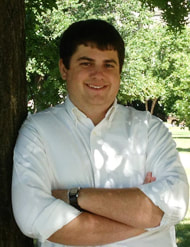
During my fifth year with D.C. United, the team brought in a nutrition specialist. The specialist gave his presentation and then looked toward a table in the middle of the locker room that held about 40 pill bottles of vitamins, supplements, mild pain relievers, gels, powders, and who knows what else. The nutritionist then walked over to the table, looked back to us, and said, “you know, if you just eat well you can throw all of these out. In fact, you’d be better off doing that.” He left the locker room five minutes later and never came back. For my first five years at DCU, I had been taking those vitamins and supplements at the recommendation of our strength and conditioning coaches and athletic trainers. Now a certified nutritionist deemed the whole thing a waste of time and had even said they could hinder our performance—I wondered what exactly to do. Who should I listen to? This memory has stayed with me because it matters a lot for an athlete what you do with your body. It matters how you train, eat, sleep, relax, and recover. You need to know what is helpful for your athletic development and what is unhelpful. I wanted to know if the pills and supplements helped me or hindered me. This all applies to athletic prudence in the natural realm. Prudence is the ability to judge rightly and act according to that knowledge. It is being able to think through things correctly and then make the right choice. Thus, athletic prudence is the ability to choose and act rightly in the realm of an athletic pursuit. We make decisions and then act based upon what we have concluded is actually helpful or unhelpful in relation to our goal. I would like to apply this same line of thinking to the virtue of prudence in the supernatural realm. We should be asking what is helpful or unhelpful in terms of our spiritual lives. Just like the nutritionist condemning our pill vault and making me wonder what was actually helpful for my soccer career, we should ask what in our lives helps or hinders us from going to God. In order for us to do this, of course, we must acknowledge that God is both our goal and a worthy (the most worthy!) goal at that. When I got to the height of my playing career I was devastatingly depressed for a very concentrated span of time (only several days). For months I pondered why I hit such a low point amidst more success than I had ever expected. Eventually, through the help of the Holy Spirit, I realized that God allowed me to feel the weight of my success without Him. It was an incredible grace—but also one that was difficult to really learn. Over time the truth that my soul was more important than my sport sunk in. I realized that much of what I had made my life about was, in the end, unhelpful for reaching the ultimate Goal who is God. I started applying my athletic thinking to my spiritual life. I started asking the right questions—is this helpful or unhelpful for my spiritual life? Should I be hanging out with this group of friends so much? Are my weekend habits really bringing joy to my life? Am I living as the person I want to be? Do I know who I want to be? These questions led—and continue to lead—me to Jesus, and I find myself needing to ask them again and again. Do the decisions I make help me become who I want to be? Or are my decisions hindering me from being that person? Athletic prudence helps athletes maximize their potential and use their God-given gifts to the best of their ability. This same principle can—and should—be applied to our spiritual lives. Are the decisions, actions, and principles that guide my life helpful? Are they leading me in a good direction? Prudence, says St. Thomas Aquinas, is the mother of the virtues. You cannot possess any virtue without the virtue of prudence because prudence is what enables us to recognize what is truly good (helpful) and then act according to that good. No athlete can become great apart from athletic prudence because athletic prudence enables the athlete to recognize and act upon what helps him or her become a good athlete. Far more important, however, is the realization that no person can become who they were created to be apart from supernatural prudence. It is not possible to follow Christ without first asking yourself what exactly it is you’re already following—what is it that shapes your decisions? It may be a desire for comfort, power, status, honor, wealth, success, popularity, or any number of things. But they all fall short. To be prudent you must know the end goal. You cannot attain the virtue of prudence in the whole of life without knowing that “it is Jesus in fact that you seek when you dream of happiness.” *This blog is reposted and was originally posted on September 17, 2020.* AuthorTaylor Kemp is an instructor for the Denver Catholic Biblical School as part of the St. John Vianney Seminary Lay Division in the Archdiocese of Denver. He is a former professional soccer player, amassing over 100 appearances over six-years in Major League Soccer (MLS) for D.C. United, and playing for both the youth and full United States Men’s National Team. Taylor holds an MA in Theology from the Augustine Institute and BS in Business Management from the University of Maryland, College Park.
0 Comments
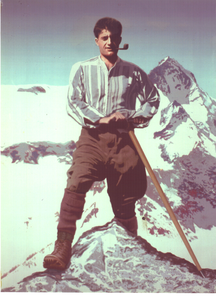
The last full week of Lent, before Holy Week begins, has always been a bit of a struggle for me. Usually by this time, I’ve already slipped up on my voluntary Lenten penances once or several times, I’m ready for the Triduum to just be here already, and I’m completely over the color purple. My husband and I jokingly call this spiritual sluggishness or restlessness “the end-of-Lent slog.” It seems like these particular days before Holy Week ramps up are when we are tempted the most to go back to the things we’re fasting from or to just throw in the towel on Lent because we’re “basically done.” My husband and I pray Evening Prayer from the Liturgy of the Hours together, and one of the readings that has resonated with me this Lent comes from St. Paul. In his first letter to the Corinthians, he encourages his readers to imitate well-trained athletes and to “run so as to win.” He continues: “Every athlete exercises discipline in every way. They do it to win a perishable crown, but we an imperishable one.” When I was a teenager, I viewed Lent as a sprint: choose some really intense or difficult penances, struggle to maintain an unrealistically high level of spiritual rigor, and then after Easter gleefully go right back to doing and eating all the things I had given up while tossing out all the spiritual growth I’d supposedly just undergone. As I matured in my faith, I came to understand that Lent is not meant to be a temporary, intense lifestyle challenge; rather, it is the start of a marathon. It’s a specific time to motivate ourselves to grow deeper in our relationship with God by letting go of the things that keep us from Him and by doing more difficult penances for our sins and vices—preferably by abstaining from them and thus breaking our addictions to or reliance on them. Like St. Paul says, we ought to treat our spiritual lives the way that athletes treat their sport: they dedicate themselves to it, setting higher and higher goals, training their bodies, denying themselves in order to maintain peak physical performance. And all of this to win a crown of leaves! How much more important, then, are the things we take on during Lent? We are training and preparing our souls for an eternity in Heaven with God, not for gold medals or accolades here on earth. Do we approach Lent as something that we need to win right now, this year? Or as something that trains us and jumpstarts us for the rest of the year—and the rest of our lives? Do we find ourselves fasting from the same things every year because we couldn’t maintain virtuous habits once the Easter bells started to ring? Or have our old Lenten penances and prayers become so incorporated into our daily lives that we can build upon them with each new Lenten season? Once I realized these things about Lent, all those times I “failed” in my Lenten practices didn’t seem so terrible anymore. I no longer want to “quit” Lent when I accidentally slip up on my penances or when I find myself giving in to temptation. If Lent is meant to jumpstart us on spiritual practices that we continue for months and years afterward, then we have to acknowledge and move past the stumbles and crashes when they come. Our failures to live up to our promises to God are still regrettable, certainly, but when we are in it for the long haul, our stumbles are also much more forgettable. St. Paul shows us that in “forgetting what lies behind but straining forward to what lies ahead” we must continue in our “pursuit toward the goal, the prize of God’s upward calling, in Christ Jesus.” We must acknowledge and repent of our broken pasts and our sinfulness, but we also must look with hope toward the future that Christ has made possible for us. If we allow ourselves to dwell too much on our failures, our concupiscence, our weakness as mortal men, then we can lose sight of the ultimate goal for which we strive: to be with Christ in Heaven. As Lent moves into Holy Week and Eastertide, let us strive to be like Paul’s well-disciplined athletes, winning the marathon of life by training our souls for the eternal prize of Jesus Christ. For more resources to accompany you throughout the Lenten season, please click here. Question for Reflection: How can you build on your Lenten practices throughout the liturgical year? This upcoming summer, the Church will be celebrating World Youth Day in Kraków. The Church invites all of us, not just those pilgrims in Poland, to celebrate and participate in this great event. The Catholic Apostolate Center announced a few weeks ago that it will be partnering with the USCCB and the Archdiocese of Washington in a number of World Youth Day celebrations both here and abroad, including the event “Kraków in the Capital,” which celebrates World Youth Day stateside in Washington, D.C. As I was helping prepare for the celebration, I came across the fact that the body of Bl. Pier Giorgio Frassati will be present for the World Youth Day celebrations in Kraków. I knew very little about this extraordinary young man and I decided that I needed to learn about him. I feel like my introduction to him was perfect timing. Much like Pier Giorgio, I have a great love for the outdoors and for sports. I will gladly spend hours watching games and discussing Sidney Crosby and my Pittsburgh Penguins, the New York Giants, and why the 1969 Mets were the greatest World Series team. Some of my fondest memories include hiking in the Scottish Highlands, climbing mountains in the Adirondacks, and backpacking in New Mexico. I've always regarded these as great activities, but found it challenging to incorporate them into my spiritual life. I knew that being in nature connected me closer to God, but did not know how that could affect my spiritual journey. This young man showed me how. Pier Giorgio Frassati was born to a prominent family in Torino, Italy on April 6, 1901. His father was the founder of the La Stampa national newspaper (which is still in print today) and was very active in national politics as a member of left wing parties. Growing up, Pier Giorgio took an active role in his life of faith and developed a deep spiritual life. He could often be found praying before the Blessed Sacrament and reflecting on the Beatitudes. During World War I, he served the sick and helped servicemen reintegrate back into society. Like his father, Pier Giorgio got involved with politics but joined the People's Party, which was based on Rerum Novarum and Catholic Social Teaching. He would often be found climbing mountains, going to the theater and to the opera, but never let these pastimes interrupt his service to the poor and the outcast. He would be seen giving bread and sometimes his own clothing to the beggars in the streets. While still a young man, Pier Giorgio was photographed climbing a mountain. He signed the photograph 'Verso L'Alto', which means 'Go to the Heights'. This would serve as his personal motto and means more than simply mountain climbing. It is also a figure speech referring to the climb towards Christ. Pier Giorgio felt that he was drawn to the heights of the Beatitudes and to the Blessed Sacrament. He encouraged all those around him to also climb to these heights of the spiritual life. Pier Giorgio's family disapproved of his activities and of his faith. They could not understand Pier Giorgio's passion for the poor and for the spiritual life. As he grew older, he grew deeper in his devotion and eventually joined the Third Order of Saint Dominic (Lay Dominicans) in 1922. Before graduating from university, Pier Giorgio contracted a very aggressive form of polio and grew extremely ill. It was during this short period that his grandmother passed away, drawing ire from his family because they felt that Pier Giorgio did not show enough grief for her death due to his own illness. On the night before Pier Giorgio himself passed away, he requested that his medication be given to a poor man he had been visiting. Pier Giorgio succumbed to his illness on July 24, 1925. His family expected very few people to come to his funeral, only some family and personal friends. When the family departed for the funeral, they were completely stunned to find the streets completely lined with thousands of people whom he had cared for. Simultaneously, the people lining the streets were shocked to find that he was from such a prominent family. Pier Giorgio's legacy continued not only in Torino, but also throughout the world. While visiting Torino in 1989, Saint John Paul II made a pilgrimage to his tomb. A year later, on May 20th, Pier Giorgio Frassati was beatified in Saint Peter Square. His body was then moved from the family plot and reinterred in the Cathedral of Torino for pilgrims to visit. St. John Paul II said, "He (Frassati) testifies that holiness is possible for everyone". In researching his life, I have found encouragement from this great man. He shows us how to have zeal not only for life, but also for our faith. He gives us courage and inspiration. As I prepare for the World Youth Day celebrations, I look forward to diving deeper into the life and spirituality of Pier Giorgio. Blessed Pier Giorgio Frassati, pray for us! Basketball and world peace… what do the two have in common?
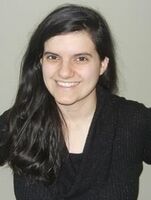
As an athlete, I could tell you a lot about the positive benefits of athletics. There are many physical, emotional, mental, and social benefits and developments that come with participation in sports. As a softball coach for 8 years, I can also tell you about the many success stories that my players have had because of youth athletics. Through my years coaching, there is one story in particular that sticks out in my head, it was about 5 years ago, my Junior year of high school. One young girl, about the age of 9, joined my Little League softball team. She was one of the most difficult kids I had ever coached; between the arguing over every piece of instruction she was given, the fighting with the other girls, and the bad sportsmanship, which resulted in many games spent on the bench, we struggled. I was so frustrated with her, until things changed about 10 weeks into the season, when her grandmother came to me to say thank you. She told me that this girl’s father had left her and her mother wanted little to do with her. Her grandmother signed her up for softball to get her out of the house, and into something to bring her out of herself. She told me that the time, attention, and patience I gave this girl helped her cope with the immense difficulties she was facing at home. I went home and cried that night. To be honest, I would have never experienced any of this if my father hadn’t pushed me to influence other girls the way I had been influenced as a 7 year old girl by my coaches. He taught me to turn what I love into something I could give back to the community. I never fully realized the immense positive effect youth athletics had on children until that day. Thankfully, someone else did. Two men, Brendan and Sean Tuohey started the program Peace Players international. This organization used youth athletics, specifically basketball, to bring together developing communities and bring kids out of their homes to do something to create a better world for themselves. They created PPI – Peace Players international. What I want readers to bring back from this is the power of turning what you love into something greater than yourself. Brendan and Sean Tuohey turned what they were passionate about into a program working towards a bigger goal – international social justice. While God may not call you to something as large-scale as that, maybe he’s calling you to change the life of the little girl on the neighborhood softball team. Each person has a different calling to help change the world… what’s yours? Casey Tisdell is Senior Psychology Major at the Catholic University of America in Washington, D.C. |
Details
Archives
September 2026
Categories
All
|

RSS Feed