
 We may be well-acquainted with Lenten practices and devotions such as giving something up, abstaining from meat, or praying the Stations of the Cross. It can be more difficult, however, to name ways to observe the Easter season. Yet in the Preface of the Eucharistic Prayer at every Mass during the Easter season, we hear: “It is truly right and just, our duty and our salvation, at all times to acclaim you, O Lord, but in this time above all to laud you yet more gloriously, when Christ our Passover has been sacrificed… Therefore, overcome with paschal joy, every land, every people exults in your praise and even the heavenly Powers, with the angelic hosts, sing together the unending hymn of your glory…”[1] What is “paschal joy” and how do we praise the Lord “more gloriously” in the Easter season? It is unreasonable to expect anyone to will themselves to be happy at any given moment, much less for an entire season. But joy is not the same as happiness, nor is it the absence of sadness. Joy is a fruit of charity. It flows out of love; it results from a participation in goodness. We feel joy in the presence of someone or something we love; we rejoice in the well-being of our loved ones. If our Lenten observance is focused on charity—particularly acts of charity such as prayer, fasting, and almsgiving—then joy flows naturally from them. The disciplines that turn our gaze outward to God and neighbor, the sacrifices we make, are all a participation in goodness, an act of love. Paschal (Easter) joy, then, can be seen as the fruit of our Lenten journey. Our Lenten efforts are not meant to be temporary measures. They are intended to effect lasting change in us, to conform us more profoundly to our Lord who died but has been raised. What can we do then, so that we don’t simply drop our Lenten observance now that Easter has arrived? How can we instead allow these observances to take root in such a way that they enable us to celebrate the Easter season more fully and joyfully? Consider one or more of the following suggestions to cultivate paschal joy and fill each of the fifty days of the season with festivities and devotions:
Click here for more resources to accompany you this Easter season. [1] Preface I-V of Easter, Roman Missal, Third Typical Edition. [2] Directory on Popular Piety and the Liturgy, no. 150, no. 152. [3] Directory on Popular Piety and the Liturgy, no. 153. [4] Directory on Popular Piety and the Liturgy, no. 154. [5] Directory on Popular Piety and the Liturgy, no. 155. [6] Cf John Paul II, General Audience, Wednesday, 30 May 1979
0 Comments
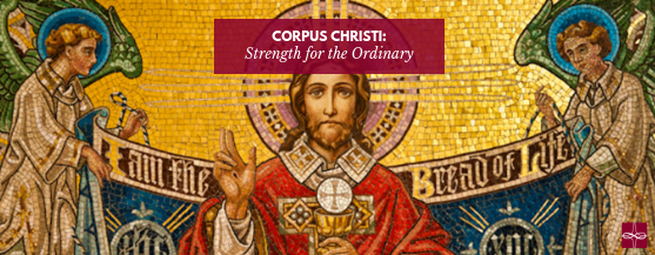 Are you tired of the feasting? We are at the tail end of feasting after the Easter season with the celebration of the Solemnity of Corpus Christi last Sunday. We experienced the 50 days of Easter, the Solemnity of the Ascension of the Lord, Pentecost, the Solemnity of the Holy Trinity, and finally, the Solemnity of Corpus Christi. In my family, we have partaken in a fair share of feasting on treats, and I am almost ready for a period of fasting again. The transition from the Easter season into Ordinary Time can lead to a misunderstanding of what the Church is calling us to during this liturgical season. It is easy to see Ordinary Time as boring or as a time for laziness, but if we look at the liturgical calendar and journey along with the Apostles in the Scriptures, we can see that it is just the opposite. Reflecting back on the Scriptures read during Lent and the Triduum, we see the disciples’ confusion about what Jesus was preparing them for. He warned them often that He had to suffer, die, and rise, and yet they were still in hiding and unsure of their mission after the crucifixion and Resurrection. Scripture states that they were locked in the Upper Room in fear of the Jews after Christ’s death and then that they were left “looking intently at the sky” after Christ’s Ascension. It is not until Pentecost, when the Holy Spirit descends upon the disciples, that the gift of understanding is given to them and they are able to go forth and spread the Gospel message. In celebrating the Solemnities of the Ascension and Pentecost after Easter Sunday, we come to understand our role as Christians on mission. We are reminded that we too are equipped with the Holy Spirit for the call to go out to all the nations and proclaim the Good News, baptizing in the name of the Trinity. We next celebrate the Solemnity of the Holy Trinity, a day to contemplate that the Holy Trinity is relationship itself, and we are invited into that relational exchange of love among Father, Son and Holy Spirit. As the Catechism explains, "By the grace of Baptism ‘in the name of the Father and of the Son and of the Holy Spirit,’ we are called to share in the life of the Blessed Trinity” (CCC 264). This Solemnity invites us to ponder the vastness and majesty of God in three persons and His great love for His creation. Finally, the Church celebrates the Solemnity of Corpus Christi (Latin for “Body of Christ”). Christ, after the Ascension, remains with us in the bread and wine transformed into His Body and Blood during the celebration of the Mass. This Solemnity focuses our attention and hearts on the greatest gift to the Church: the Body, Blood, Soul and Divinity of our Lord in the Holy Eucharist. Together with the celebration of the other feasts after Easter Sunday, the celebration of Corpus Christi is a moment of grace given to us today that propels us into this season of Ordinary Time. If we look at the calendar, the Church has been preparing our hearts to enter into this celebration of Corpus Christi. We needed Jesus to establish the Eucharist (Holy Thursday), to suffer, die and rise (Triduum), to return to the Father (Ascension), and to send the Church an outpouring of understanding for Her mission through the Holy Spirit (Pentecost). As a result, we can ponder and enter into the life of the Holy Trinity (Solemnity of Holy Trinity). All of these feasts prepare the Church for the Solemnity of Corpus Christi and for our journey into Ordinary Time. The Holy Eucharist is the strength for our journey in the ordinary. The Body and Blood of Jesus assists us in following the will of God as we receive God Himself. The Solemnity of Corpus Christi can be celebrated with hope that Jesus is with us in this Holy Sacrament, and the Church is calling us to continued growth in Ordinary Time. Questions for Reflection: How can you use Ordinary Time in order to grow in your faith? What graces from Lent and Easter can help propel you into Ordinary Time?
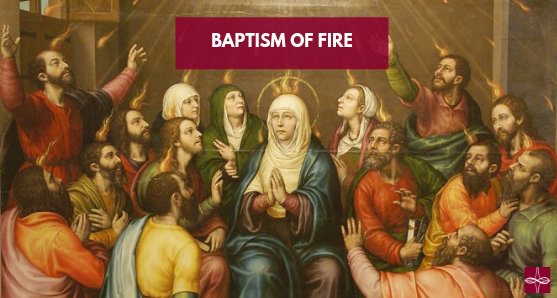 The Feast of Pentecost occurs on the seventh Sunday following Easter Sunday. On this day, we commemorate the occasion of the Holy Spirit descending upon the disciples of Jesus, marking them each with “tongues of flame,” and allowing them to speak and proclaim in different tongues, or languages. To describe this moment in early Church history as a “tipping point” would be an understatement. Pentecost signifies a unique outpouring of God’s love and spirit upon those first men and women to follow Jesus Christ, empowering them to expand and carry His message of salvation to all nations. Today’s first reading from the Acts of the Apostles depicts this anointing of the Holy Spirit, in such a way that has inspired numerous works of music, literature, and art – including some artwork appearing here at the Catholic Apostolate Center! As I reflect on the mystery of Pentecost, and ponder what it could mean for us in this current day, I am drawn to these particular passages from today’s Scriptures: Reading 1: ACTS 2:1-11 “And suddenly there came from the sky a noise like a strong driving wind, and it filled the entire house in which they were. Then there appeared to them tongues as of fire, which parted and came to rest on each one of them.” Have you ever been in a room that was particularly quiet – and then suddenly, for no discernable reason, your senses sharpened dramatically? When I read today about the “strong driving wind” filling the entire house where the disciples were, this sort of heightened awareness is what I imagine the disciples could have felt right before the Spirit arrived and the tongues of flame appeared. Especially in this season following the Paschal mystery, I view this reading as an invitation to seek and contemplate God in the quiet places with an open heart to what may come. Reading 2: 1 COR 12:3B-7, 12-13 “There are different kinds of spiritual gifts but the same Spirit; there are different forms of service but the same Lord; there are different workings but the same God who produces all of them in everyone.” At Pentecost, the flames parted and “came to rest on each one of them [disciples].” I find this so encouraging! This past Lent, we read about Moses and the burning bush, from which God calls out, “Moses! Moses! ...Do not come near! Remove your sandals from your feet, for the place where you stand is holy ground.” Now, at the historical moment of Pentecost, fire is actually sent and bestowed upon each follower. God is still a mystery, as is the Holy Spirit – but a mystery that comes to us and rests upon us. We should not be afraid to be humble like Moses (removing our sandals before God) while at the same time accepting with joy and utilizing with courage the gifts the Spirit may bestow to each of us, according to our unique natures. Gospel: JN 14:15-16, 23B-26 "I have told you this while I am with you. The Advocate, the Holy Spirit whom the Father will send in my name, will teach you everything and remind you of all that I told you." This age of instant communication is hopeful and perplexing all at once. On the one hand, technological advances have made worldwide communication easier than ever – truly a remarkable gift! On the other hand, we have all experienced how shorthand communication styles can misconstrue intended messages and cause confusion or even lasting harm. To me, the promise of Pentecost speaks directly to these challenges. Through the Holy Spirit, we may learn to genuinely and faithfully connect with one another despite all of our perceived differences. There is a definitive continuation of the Easter message contained in today’s Gospel when we are told of “The Advocate… who the Father will send in my name.” We are not alone, even though we live long after the age of Christ. Perhaps this is what is meant when He once said, “I am with you always, until the end of the age” or “Where two or three are gathered together in my name, there am I in the midst of them.” I believe that the Holy Spirit does blow through the rooms of our houses and within our hearts, even today. And while we may not see with human eyes the flames and the dove from this narrative, I believe that we are all surrounded by people who possess the flame within and have allowed The Advocate to work through them – helping them to become little advocates, little flames, and little doves, living among us, bringing peace.
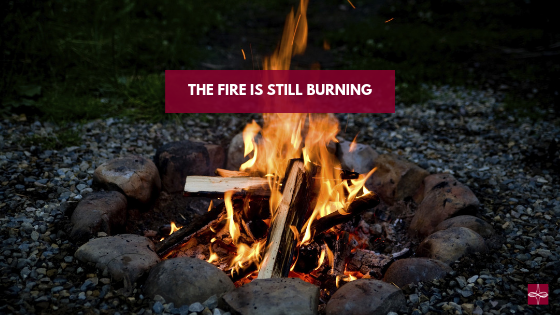 There are few sights like a church on fire. The fire which raged from the roof of the Cathédrale Notre-Dame de Paris on the evening of April 15, 2019 was different: thanks be to God that it (at this time of writing) does not appear to be caused by anything more than renovation negligence and that no one was killed in the blaze. The evening of the fire, the attention of the world focused on the smoke billowing above the Parisian skyline as first responders battled the flames to save the most iconic church in France. In the scenes broadcast from the River Seine, I not only saw the intensity of the fire that toppled the historic spire, but I also observed the more subtle fanning of the embers of a faith long thought to be extinguished in the hearts of the French people. Watching a tragedy stirs up strong emotions within even the most hardened of hearts. Many scenes of prayers being offered or sacred hymns being sung—despite perhaps intense feelings of helplessness—were reported by passers-by, pilgrims, and tourists alike. Furthermore, support was expressed around the world for the Church and her members in France. The sight of the beautiful cathedral of the capital city apparently being irreparably damaged was a very sad one indeed, especially during Holy Week. The many treasures at risk included the Most Holy Eucharist and relics of Christ’s Passion. Different people took different meanings from that incredible sight: many were shaking their heads and crying at the destruction of a landmark cultural icon, others mourned the apparent loss of a grand local spiritual refuge, and some saw a Church which has long suffered against secularism appear in danger of collapse. Here’s what I observed: seeing a church burning on live television is indeed a heart-stopping scene, but I am—and dare I say God is—more interested in seeing hearts burn within a person! Seeing a man fully alive and in touch with his values, faith, or beliefs rather than suppressing them when inconvenient or unpopular is inspiring and a great witness. The voices of the people in Paris were publically lifted in singing ancient hymns and prayers for the salvation of the physical church building and the Catholic Church overall. Secularism has long been taking root in France, so seeing this active and public embrace of faith was incredibly touching. In times of despair or tragedy, people have been historically observed to seek sanctuary and emotional healing in churches and places of worship. Just think of cities in Europe, at risk of invasion or disease, in which people flocked to pray together for deliverance or divine mercy. Even in the United States after 9/11 and other heinous acts of violence, the churches with formerly empty pews were crowded with voices raised together in hopeful prayer to counter bowed heads of sorrow. As Christians we do not mourn like those who have no hope, but even in our sadness we can lift our eyes to God, breathe to calm ourselves, and confidently pray, “Speak, Lord, for your servant is listening.” From these collective acts of faith, the hope of spiritual renewal can be strong. The seeds of faith instilled in youth but unnourished later in life may suddenly be rediscovered and re-cultivated by God’s grace and perhaps the shock of the sudden end of the status quo. Intense personal reflection and the reevaluation of priorities may ensue to further sustain spiritual growth and comfort. Imagine the state of the Church had the apostles not been inflamed with the indwelling of the Holy Spirit at Pentecost. Just as those followers of Christ rediscovered God in the Upper Room thousands of years ago, so too can we encounter the fire of the Holy Spirit to bring light to the confused, healing to the broken, and peace to the conflicted. The fires of faith have not been extinguished, as we have beautifully seen, but rather the embers are still hot and glowing, just needing to be stirred up again to blaze towards Heaven. As Pope Francis tweeted, let us “unite in prayer with the people of France, as we wait for the sorrow inflicted by the serious damage to be transformed into hope with reconstruction. Holy Mary, Our Lady, pray for us.” May Notre-Dame, our Blessed Mother, pray for us!
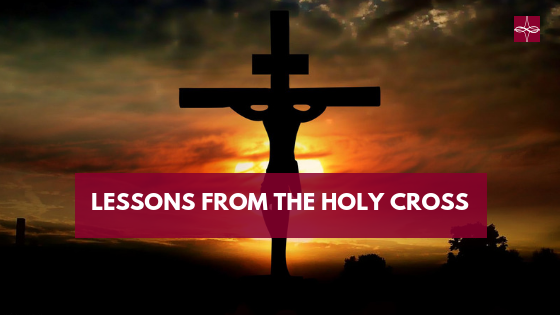 On September 14th, we celebrate the feast day of the Exaltation of the Holy Cross. In the Gospel of John, Jesus tells us: “No one has greater love than this, to lay down one's life from one's friends” (John 15:13). That love is never more evident than our Lord's passion and death on the Cross. By that Holy Cross, we have been redeemed. Jesus Christ foretold his Passion to the Apostles, instituted the Eucharist at the Last Supper, and fulfilled God's plan for human salvation at Calvary upon that Holy Cross. This, my friends, is the greatest love ever known to humankind; by the grace of God, we will come to know the fullness of God's love in eternity. The promise of eternal salvation was made possible upon that Cross and we, as Catholics, are called to pick up our cross and follow Christ daily. This is a very hard thing to accomplish in today's world.
Jesus gave us the Holy Spirit at Pentecost to guide and strengthen us while following his commands. Paul tells us: “I have the strength for everything through him who empowers me” (Philippians 4:13). Jesus Christ empowers us with the Holy Spirit today just as he did with the Apostles. It is exactly that God-given power that we need in today’s often secular world to preach Christ crucified and “fight the good fight,” as St. Paul says. For if we profess Christ without recognizing and living his sacrifice on the Cross, we cannot be disciples of the Lord. Peter found that out when Jesus admonished him after the foretelling of his passion and death. I keep written on my desk calendar in my office and in my daily liturgical calendar, a Latin phrase that I think summarizes this idea: Lex orandi, Lex credendi, Lex vivendi - As we worship, So we believe, So we live. As we worship, so we believe, so we live. We must, through worship and prayer, “Love the Lord, your God, with all your heart, with all your soul, and with all your mind” (Matthew 22:37). We must believe all that Jesus has taught us, that he is our Lord and Savior, and that he suffered and died so that we may live. We must live out our faith in what Jesus has called us to do by spreading the good news and picking up our cross and following our Lord. This is not an easy task. It isn't easy being a Christian. Christ never said it would be easy. Being a Christian is not just being a member of a religion, it is our way of life. We live the faith Christ gave to us. When we struggle with this, when we get lazy or complacent with our prayer time, or if we need a reminder of just how much we are loved and what our calling is, we need only to gaze upon the Holy Cross. We can also reflect on the Prophet Isaiah, when he told us exactly what Christ has done for us and for the salvation of man: "Yet it was our pain that he bore, our sufferings he endured. We thought of him as stricken, struck down by God and afflicted, but he was pierced for our sins, crushed for our iniquity. He bore the punishment that makes us whole, by his wounds we were healed" (Isaiah 53:4-5). Brothers and sisters in Christ, we celebrate the Feast of the Exaltation of the Holy Cross.” Remember, worship, believe, and live in the glory of Christ crucified! *This post was originally published on September 11, 2014. Mark A. Straub Sr. is a member of the Knights of Columbus and president of the parish council of Our Lady of the Woods Parish in Woodhaven, Michigan. 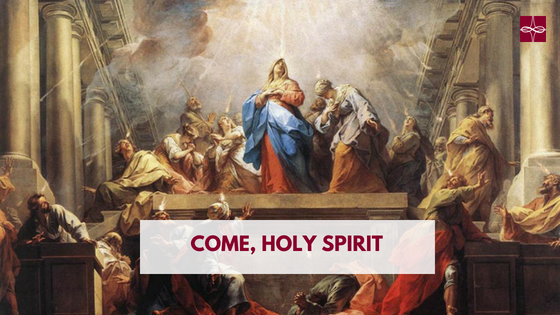 A second wind is often an unexpected gift. Whether it is discovered during a run, study session, or some other activity demanding intense focus and effort, what at first seems daunting and impossible to achieve suddenly becomes possible thanks to newfound strength and endurance. A second wind, while surely appreciated physically or mentally, can also be applied spiritually. As the Church celebrates her birthday on Pentecost Sunday, we can reflect on the incredible gift of the Holy Spirit who was sent by God Himself to provide the fledgling Christian faith a much needed second wind as apostles prepared to bring the Good News of Christ to the entire world. One of the Gospel readings for Pentecost details our Lord’s promise to send the Holy Spirit to His disciples. In an earlier related chapter from John’s gospel, Christ Himself walks with the disciples and predicts His own Passion. He assures the disciples that they will not be abandoned as orphans, but will share in the very life of the Most Holy Trinity (John 14:15-31)! The consolation and comfort Jesus brought to those gathered in the Upper Room after His death and resurrection surely reminded them of this though He ordered them to not leave Jerusalem until “the promise of the Father” had been sent (John 20:19-23). It would not be until after Christ’s ascension, that the Holy Spirit would be sent upon the disciples and so enable them to carry out the Great Commission of our Lord, “Go therefore and make disciples of all nations, baptizing them in the name of the Father and of the Son and of the Holy Spirit, and teaching them to obey everything that I have commanded you.” While Christ had sent out the disciples to evangelize before (see Luke 10:1-20, cf. Matthew 10), these efforts were limited to “the lost sheep of the house of Israel.” Proselytizing the rest of the world would take place after the rejection of our Lord and would require grace to sustain the disciples through this incredible evangelical endeavor. Today, the faithful are not only entrusted with this mission, but have also been baptized and confirmed with the same Holy Spirit as was promised to Christ’s first followers! The Holy Spirit is truly God and is inseparable from the Father and the Son. Though Christ is seen, it is the Spirit who reveals Him. Thus, both are on a “joint mission” to reveal the visible image of the invisible God (see CCC 689). The Holy Spirit invites us to better know the Father and Son. Each person of the Trinity more fully deepens our understanding of God. As the Catechism says: Now God’s Spirit, who reveals God, makes known to us Christ, his Word, his living Utterance, but the Spirit does not speak of himself. The Spirit who “has spoken through the prophets” makes us hear the Father’s Word, but we do not hear the Spirit himself. We know him only in the movement by which he reveals the Word to us and disposes us to welcome him in faith. The Spirit of truth who “unveils” Christ to us “will not speak on his own.” (CCC 687) The Holy Spirit continuously reveals Christ to us when we make an effort to listen. Similarly, when we recognize and cooperate with the Holy Spirit dwelling within us, we are better able to contemplate Christ’s teachings and the great Mysteries of Faith. When we face discouragement or are unsure of a decision we must make, we are in similar circumstances to those waiting in the Upper Room. The gifts of the Holy Spirit strengthen our faith and helps us to judge our situations prudently. The courage to continue Christ’s mission and not be defeated by discouragement or rejection is not only an incredible witness to the Church, but also a recognition that the Holy Spirit continues to work among us wherever we are in our journey of faith! Just as the Holy Spirit descended upon our Lord at His baptism to start His mission on earth, so too did Christ send the Holy Spirit upon the disciples in the Upper Room as they began their ministry. Like the disciples, let us dare to be open to the Holy Spirit’s activity in our daily lives as a much needed second wind as we continue our Lord’s work so that at the end of our days, we may hear spoken to us, “Well done, my good and faithful servant ... Come, share your master’s joy.” Question for Reflection: Can you recall a moment when the Holy Spirit gave you the courage to continue through a difficult trial?
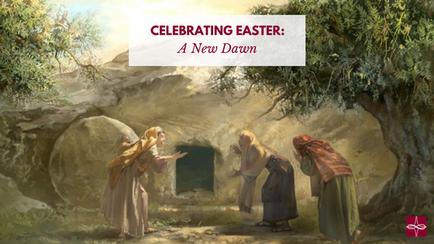 “Rejoice! Hidden within your life is a seed of resurrection, an offer of life ready to be awakened.” -Pope Francis What does Easter look like for you? Does it mean plates filled with sweets, a backyard sprinkled with hidden eggs, a large family gathering, wearing your Sunday best, a long evening at the Easter Vigil? The first Easter Sunday was comprised of an empty tomb, faces that went from fear and despair to bewilderment and excitement, and hands and feet that were pierced but glorified. But for all Christians, Easter Sunday is a day of transformation: darkness to light, despair to hope, death to resurrection. We have journeyed with Christ for 40 days in prayer, fasting, and almsgiving in order to reach this point of transformation. We have been made ready, through God’s grace, to join Him in the celebration of His victory over sin and death. And so Pope Francis reminds us to “Rejoice!,” for the resurrected life of Christ is offered to each and every one of us. Will you allow it to be awakened? The Paschal Mystery is so great that the Church will continue to celebrate this central event for the next 50 days until the Feast of Pentecost, on May 20th. I love the significance of the length of time. Though we have fasted with Jesus in the desert for 40 days, we celebrate as a Church for longer—symbolizing the ultimate victory of our efforts when united with Christ. Though we are called to have periods of intense fasting and prayer in our spiritual life, the end goal is the Resurrection. Let us not fail to celebrate the Easter season and let us celebrate it well! We do this by allowing the life of Christ to live within us long after the Lenten season. Pope Francis said, “The heartbeat of the Risen Lord is granted us as a gift, a present, a new horizon. The beating heart of the Risen Lord is given to us, and we are asked to give it in turn as a transforming force, as the leaven of a new humanity.” Will our hearts beat in time with Christ’s? Will we become the leaven of a new humanity? And if so, what does this even look like? The Gospels give us a few clues. On the night before Christ gave Himself over to be crucified, we read about an intimate encounter between Him and John who has come to be known through tradition as the “Beloved Disciple.” At the Last Supper, after Jesus has washed the disciples’ feet, we read in John 13:23 that “One of his disciples, the one whom Jesus loved, was reclining at Jesus’ side.” During this time of heightened anticipation, it’s an easy detail to miss. John was literally resting on the heart of Christ. He was also present at the crucifixion, the one who did not abandon his Master in this time of fear and confusion. Spending time with Christ in prayer, resting on His heart, allows our hearts to beat in time with His and helps us become “leaven of a new humanity.” The holy women who followed Jesus also understood this. They were present at Christ’s crucifixion and were the first disciples to whom Jesus appeared on the day of His Resurrection. May we look to the example of John and the holy women as we embark on this Easter season. Let us go frequently to meet the Lord and rest with Him by spending time in reflective prayer, reading Scripture, receiving the sacraments, and “washing the feet” of our brothers and sisters. These actions allow our hearts to sync with His. Let us go quickly to the tomb—as the holy women did— only to find it empty, so that we can return with the joyous news of the Resurrection and proclaim it to all who will listen. Pope Francis encourages us, “Let us go, then. Let us allow ourselves to be surprised by this new dawn and by the newness that Christ alone can give. May we allow his tenderness and his love to guide our steps. May we allow the beating of his heart to quicken our faintness of heart.” Questions for Reflection: How has your spiritual life transformed throughout Lent? How can you faithfully celebrate this Easter season? Click here for more resources to guide you through this Easter season.
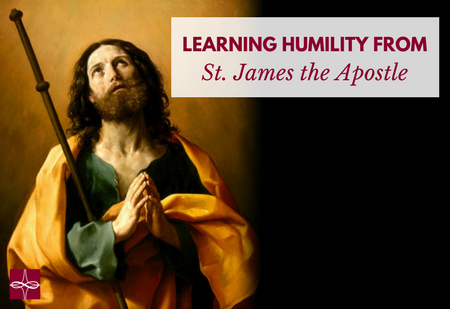 On July 25th, we celebrate the feast day of St. James the Apostle. St. James and his brother John were the sons of Zebedee. Jesus referred to these brothers as the “Sons of Thunder,” most likely due to their penchant for rash, emotional reactions and decisions. St. James teaches us the importance of humility and of promptly responding to God’s call, regardless of the securities we may leave behind in doing so. He was the first apostle to die a martyr’s death. We can look to his zeal for following Christ and his courage in spreading the faith in difficult times as examples for our own spiritual lives. We remember from Scripture that St. James and St. John initially asked Jesus if they could be placed on either side of him in his heavenly kingdom. Jesus uses this as an opportunity to reiterate to the disciples the importance of servant leadership. Jesus responds, “You know that those who are recognized as rulers over the Gentiles lord it over them, and their great ones make their authority over them felt. But it shall not be so among you. Rather, whoever wishes to be great among you will be your servant. Whoever wishes to be first among you will be the slave of all. For the Son of Man did not come to be served but to serve and to give his life as a ransom for many.” (Mark 10:42-45) From this lesson and Jesus’ previous parable of The Workers in the Vineyard (Matthew 20:1-16), we learn that the faithful are invited to receive the ultimate reward of eternal life with our Father in heaven. Jesus reminds us that we shouldn’t get caught up in the earthly understanding of rankings, but can all share in the glory of God in heaven. We also learn from this example with St. James and St. John that serving others is how we are called to love our neighbors. As 1 Corinthians 13:3 says, “If I give away everything I own, and if I hand my body over so that I may boast but do not have love, I gain nothing.” Jesus asks us to rely on him and not on others’ recognition of our sacrifices. In the New Testament, we often hear of St. James mentioned with Sts. John and Peter. These three disciples were privileged to be present at many of the significant moments in Jesus’ ministry on earth, including the Transfiguration and Agony in the Garden. The Holy Spirit’s presence within the apostles at Pentecost was a turning point for St. James and the other disciples because it showed them the true nature of Jesus’ mission and the meaning of his sacrifice on the cross (Benedict XVI, General Audience, June 21, 2006). From there, James and the other apostles went out to all the nations, preaching Jesus and his Gospel message. James’ life after Pentecost symbolizes the pilgrimage of the Christian journey (Benedict XVI, General Audience, June 21, 2006). His journey is one of the reasons he is considered the patron saint of pilgrim travelers and was recognized as a patron saint of World Youth Day 2016. In fact, the path to Santiago de Compostela, where St. James is buried in northwestern Spain, was one of the most traveled pilgrim routes during Medieval times after Rome and Jerusalem. Many people continue to make this pilgrimage today and to seek the guidance of St. James. We can call upon him to protect us during our journeys and to intercede for us for our personal conversions of heart before, during, and after our travels. We are called to follow Jesus as St. James did, knowing that even through life’s difficulties, we are walking along God’s path for us together with Christ. Through the example of St. James the Apostle, we see that following Jesus can have its difficulties through persecution and other hardships, but that our eternal reward is life in heaven with him. St. James’ story encourages us to leave our comparisons to others behind, fully trust in God, and show enthusiasm for Jesus Christ even when it is difficult. Questions for Reflection: Have you ever embarked on a pilgrimage? How did it deepen your spirituality? What are some ways we might be called to grow in our humility as we practice servant leadership in following Christ?
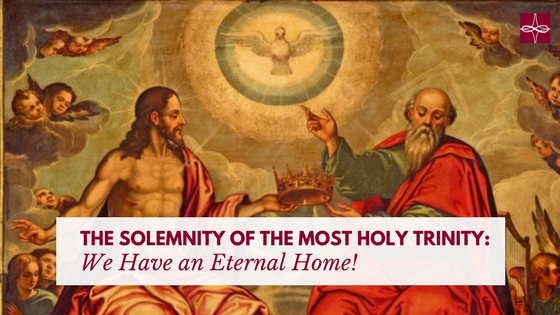 Each year on the first Sunday after Pentecost we celebrate the Solemnity of the Most Holy Trinity, also known as Trinity Sunday. Although it wasn’t until 1334 that Pope John XXII officially established the feast for universal observance in the Western Church, the mystery of the Holy Trinity has been the pulse of the Church’s life since the very beginning. The Trinity is “the central mystery of Christian faith and life…[and is] the source of all the other mysteries of faith” (CCC 234). The whole of the Church’s life flows from the central belief that the one true God exists as three divine Persons—Father, Son, and Holy Spirit. Since the very beginning of time, God has gradually revealed and communicated the truth of who he is as Trinitarian through what he has done in salvation history (see CCC 53-67). Although God gradually revealed himself throughout different stages of the Old Testament period of salvation history, mankind had no way of knowing the full truth of God’s inner life of the Trinity before the time of Christ, since this mystery of our faith is “inaccessible to human reason alone…before the Incarnation of God’s Son and the sending of the Holy Spirit” (CCC 237). In his encyclical Spe Salvi, Pope Benedict XVI poses a challenging question: “So now we must ask explicitly: is the Christian faith also for us today a life-changing and life-sustaining hope…which shapes our life in a new way, or is it just ‘information’” (Spe Salvi 10) that doesn’t change us? Furthermore, what difference does this central mystery of our faith make in our daily lives? Trinity Sunday is an invitation to remember that “[being] Christian is not the result of an ethical choice or a lofty idea, but the encounter with an event, a person, which gives life a new horizon and a decisive direction” (Deus Caritas Est 1). In revealing himself as Trinitarian, God hasn’t merely shared impersonal facts about himself; rather, God has shared himself with us, and has invited us into his own inner life and communion of love, which alone is the origin, goal, and meaning of our life. As we read in the Catechism, “By sending his only Son and the Spirit of Love in the fullness of time, God has revealed his innermost secret: God himself is an eternal exchange of love, Father, Son and Holy Spirit, and he has destined us to share in that exchange” (CCC 221). On Trinity Sunday, the Church proclaims the truth about God—that God is love (1 John 4:8)—and the truth about us: we are made for this love. We eternally belong to God—we have an eternal home! St. Elizabeth of the Trinity leads us more deeply into this reality by saying that “The Trinity—this is our dwelling, our ‘home,’ the Father’s house that we must never leave.” When speaking with his disciples before his Passion, Jesus directed the gaze of their hearts towards this truth: “In my Father’s house there are many rooms…and when I go and prepare a place for you, I will come again and will take you to myself, that where I am you may be also” (John 14:2-3). Jesus continued to reveal more of the Father’s loving plan: “I will not leave you orphans; I will come to you…If a man loves me, he will keep my word, and my Father will love him, and we will come to him and make our home with him” (John 14:18, 23). Jesus reveals to his disciples the Father’s breathtaking desire. He desires not only that we be at home in him when we get to heaven in the future, but he desires us to be at home in him now—and so, he comes to us, he makes his home among us (c.f., John 1:14) in order to make his home in us. Thus, with the Feast of Pentecost and the sending of the Holy Spirit, God fulfills his promise to never leave us orphans. This is why the Church celebrates Trinity Sunday the week after Pentecost: On Pentecost, “the Holy Trinity is fully revealed” (CCC 732). “I will not leave you orphans!” If Jesus has promised to never leave us orphans, then that means we have a permanent home—we eternally belong to the Father as children of his heavenly household! This is the mystery into which the Church invites us more deeply on the Solemnity of the Most Holy Trinity. Yet this truth is also the very gift that that we are invited to share with all whom God entrusts to us in our daily lives: “Love one another as I have loved you” (John 15:12). Every human heart longs for its eternal home. Today, we invite the Trinity to be more at home in our hearts in order to make them a more welcoming home for others—that through our smile, our gentleness, our availability of heart, everyone whom the Father entrusts to us may experience the Love that is their eternal home. Question for Reflection: Today, will we allow our hearts to be touched and changed by the reality into which Trinity Sunday invites us more deeply?
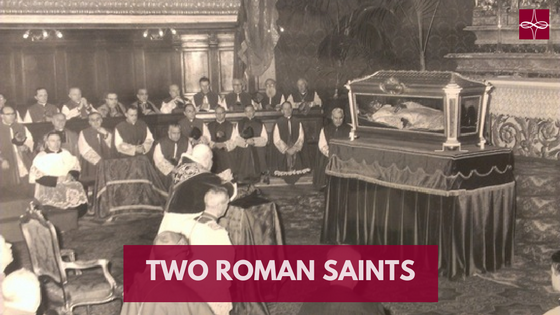 "This encouragement to holiness is renewed and takes on particular resonance – we love to repeat it – in this year of the Council, it highlights the note of holiness and apostolate of the church." – Pope St. John XXIII, Homily during the canonization of St. Vincent Pallotti, Rome 1963 For a city that has seen the rise and fall of emperors, dictators, generals, politicians, popes, saints, and sinners over the millennia, it's hard to imagine that a humble priest from the peasant-filled mountains of Bergamo, Italy could make such a difference in the world. On a moonlit night in October 1962, Pope St. John XXIII stood on his balcony in Rome and addressed the people below: I hear your voices. Mine is only a single voice. But what resounds here is the voice of the whole world; here all the world is represented. One might even say that the moon rushed here this evening. Look at her high up there to behold the spectacle. This is how we close a great day of peace. Glory to God and peace to men of goodwill. (Discorso della Luna) And so began the Discorso della Luna, or “Moonlight Speech” by Pope St. John XXIII. Earlier that day, he opened the Second Vatican Council. Knowing he needed inspiration, this humble Bishop of Rome looked to another simple priest of Rome, St. Vincent Pallotti. A year later, Pope St. John XXIII declared Vincent Pallotti a saint. During the canonization, he called on the intercession of Saint Vincent Pallotti for himself, priests, laity, and the council and actually went to the body of St. Vincent Pallotti to pray before him. Before the election of St. John XXIII, popes rarely left the confines of the Vatican. Pope St. John XXIII himself made few official outside trips and only did so under great consideration. Because of this, one can only imagine the gravity of a visit from the Pope to pray before the body of St. Vincent. At St. Vincent Pallotti’s canonization, Pope St. John XXIII once again implored the crowd to follow this new saint’s example both in life and indeed. One month later, while visiting the Pontifical Major Roman Seminary (the seminary of the diocese of Rome) he also begged the students to follow St. Vincent Pallotti. The pope went as far as to call him his own "choicest guide". He called St. Vincent a wise custodian 'of pastoral spirit' and a source 'of teaching and encouragement for all times!' The spirit of Saint Vincent Pallotti can be seen throughout the Council and the work of the council. Pope St. John XXIII shared St. Vincent's vision that we are all called to holiness – that the universal call to holiness is open to the laity too, not just priests and bishops. He had a vision that Christ’s love needs to be accessible to all believers. Pope St. John XXIII demanded that the Church teach that Christ came for all! The concept of the universal call to holiness was written into multiple documents of the council, such as Lumen Gentium. Though Pope St. John XXIII did not live to see the completion of this important council, his spirit and the spirit of St. Vincent Pallotti helped to guide its direction. One of the key documents of the council was Apostolicam Actuositatem, or, the Decree on the Apostolate of the Laity. It emphasized the role of the laity within the Church: They should not cease to develop earnestly the qualities and talents bestowed on them in accord with these conditions of life, and they should make use of the gifts which they have received from the Holy Spirit ... They should also hold in high esteem professional skill, family and civic spirit, and the virtues relating to social customs, namely, honesty, justice, sincerity, kindness, and courage, without which no true Christian life can exist. The perfect example of this type of spiritual and apostolic life is the most Blessed Virgin Mary, Queen of Apostles. (Apostolicam Actuositatem) The title “Mary, Queen of Apostles” was one that was revived by St. Vincent Pallotti. This was an ancient title that had fallen out of use. During his ministry, St. Vincent Pallotti invoked this title to demonstrate that all were in the Upper Room, not just the twelve apostles. He had a portrait commissioned showing the number of woman and men at the moment of Pentecost. Like the symbolism behind the painting suggests, Apostolicam Actuositatem forever enshrined the notion that all people are called to be apostles of Christ. This document had two main writers: Fr. William Mohler, S.A.C. Rector General of the Pallottine Fathers and Brothers and the youngest bishop in attendance, Karol Wojtyla. Fr. Mohler and the future Pope St. John Paul II wrote into this document the shared vision of two humble priests John XXIII and Vincent Pallotti. We must follow these examples in our lives. Let us strive to bring the gospel to all, just as St. John XXIII and St. Vincent Pallotti did.
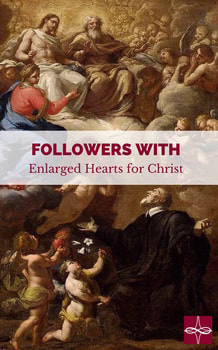 This time of the New Evangelization in the Church is beautiful: all the faithful are called to spread the love of Christ to the hearts of modern men and women. While the term New Evangelization, though beautiful, has become almost overused, common jargon within the Church, we are called to the radical joy and love the New Evangelization promotes. The task seems lofty at first glance. With controversies of all sorts in society today, the charge to love like Christ is even greater. However, the Body of Christ has been in trying times throughout the ages, and it’s the ability of holy men and women to magnanimously love that makes a difference in society. Today, the Church celebrates a saint that is a perfect example for the faithful of living out the call of the New Evangelization: St. Philip Neri, the Apostle of Joy. St. Philip Neri, a radical saint of the 16th Century, was known for his humility, obscure and hilarious means of mortification, pastoral care, humor, and charm. The legend and stories of St. Philip Neri are plentiful and cannot all be spoken of in this short post, but his charity is worth mentioning for those who are attempting to live out the call of the New Evangelization. Philip was known to have a strong devotion to the Holy Spirit. At the age of 29, before the feast of Pentecost, Philip was praying for a special outpouring of the Holy Spirit when he saw a globe of fire enter his mouth, move down his chest, and travel to his heart. At that moment, Philip experienced an immense amount of joy, as if his heart had expanded. The saint had been filled with the love of God! Throughout the rest of his life, when Philip was ministering to people in the confessional, celebrating Mass, or performing acts of charity, his heart would violently palpitate. Oftentimes, Philip would embrace his penitents and hold them close to his chest. The faithful would receive an immense amount of consolation from the embrace and this practice became known as “the most effective way of being delivered from temptation.” St. Philip Neri was known as the Apostle of Joy because his aim was love, and the Holy Spirit, the Flame of Love, was the driver in his mission. Philip died at the age of 80, dedicating his entire life to mercy, love, and joy. The many stories that follow him affirm that claim. He was dedicated to the Sacrament of Confession and would be available for Confession at all hours. Dispensing the mercy of Christ, Philip spent his last day on this side of heaven hearing confessions from the people he served and loved. Those he ministered to claim they could not be sorrowful or depressed around Philip; he exuded a constant flow of Christ’s joy. During an evaluation to determine Philip’s cause of death, the examiner found Philip’s heart to be twice the size of an average heart, causing the ribs around the heart to break and curve out. The love of God had been made manifest physically within him. Today could you imagine a Church with followers whose hearts, like Philip’s, are enlarged with love for neighbor? This is the call of the New Evangelization—to spread Christ’s fragrance of love everywhere, “for we are the aroma of Christ” (2 Cor 2:15). The Church is in a unique time. Our intellectual arguments often mean little, but our actions and witness of love are powerful. The New Evangelization calls us to be little Apostles of Joy. Wherever we are and wherever we go, we are to love. Cardinal Ratzinger explained that evangelization is teaching people the path to happiness. “To evangelize means: to show this path—to teach the art of living,” he said (Address to Catechists and Religion Teachers, 12 December 2000). St. Philip Neri taught those around him the art of living a joyful, humble life, motivated by the love of Christ. To live the New Evangelization, we are to have a heart like his, witnessing and walking with others and teaching the art of living. The Body of Christ must be propelled by the love of God. Today, let us invite the Holy Spirit into our hearts in a deeper way so we might gain a greater capacity to love like our joyful friend, St. Philip Neri. May we be a people of love with enlarged hearts for Christ, spreading joy to all. “The love of God makes us do great things.” –St. Philip Neri For more resources on the New Evangelization, click here.
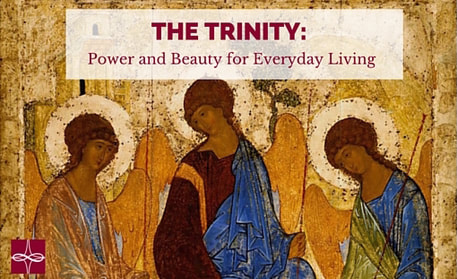 I recently watched a movie that’s been on my Hulu queue for some time--a 1966, mostly black and white film by the Russian filmmaker Andrei Tarkovsky on the 15th century medieval Russian artist named Andrei Rublev. Sound exciting? Maybe not to all… but it was on the Vatican’s recommended Best Films list, so I thought it was one probably worth seeing. Of all the magnificent works of Christian art and architecture, I believe the Russian monk and artist Andrei Rublev’s (c. ~1360–1430) icon of the Holy Trinity still stands out. For how influential the icon has been for generations of artists and theologians, it doesn’t look like much. You may have seen the icon but never heard of the Russian monk and artist, Rublev, of whom little information is known (especially after he took his vow of silence!). Those who have seen the icon may never have recognized the Trinity present in the domestic scene of three people sitting around a table. Rublev’s icon is both simple and complex. Even though the Catechism tells us the, “mystery of the Most Holy Trinity is the central mystery of Christian faith and life” (CCC 234), we may still find it difficult to imagine what difference the Trinity makes in our daily life and actions. The Sunday after Pentecost (this May 22) celebrates the Solemnity of the Most Holy Trinity, or Trinity Sunday for short. I’m not giving a movie review or a systematic take on the Trinity, but Andrei Rublev did serve as a reminder of the great mystery and gift of God revealed in the three persons of the Trinity- Father, Son, and Holy Spirit. Rublev’s work is not simply a masterpiece of medieval Russian iconography, but also represents one of the most profound and concise theological reflections on the Trinity in history. Known by most non-Western Christians as The Hospitality of Abraham, the three persons seated around a table depicts the Old Testament scene of three angels visiting Abraham at the Oaks of Mamre (Genesis 18:1-15) that Christian tradition sees prefiguring the Trinity fully revealed at the coming of Christ and the sending the Holy Spirit. Andrei Tarkovsky produced Andrei Rublev and loosely based it on the life of the artist and his conviction of “Christianity as an axiom of Russia’s historical identity.” Tarkovsky’s hauntingly beautiful film, set in 15th century Russia, is not really a biography, but an exploration of the human longing for transcendence and freedom in God through faith and art in a world often characterized by the chaos and violence of sin. When first released, various scenes were censored or cut out entirely by government officials of the atheistic and authoritarian Soviet Union, whose oppressive ideology the film subtly criticized. Tarkovsky believed his Trinitarian faith led him to take risks for truth, not remain comfortably passive. It was for this reason that he produced such a compelling film. For Rublev and Tarkovsky, the Trinity wasn’t just an abstract idea, but a power and a presence at work in the world and in every human heart. Their work highlights their belief that when we suppress God in our lives, we are cut off from the source of true freedom, beauty, creativity, and peace. Instead, the Trinitarian character of our faith should empower us to bring these qualities into every aspect of our lives- from art to politics, medicine and healthcare, business, and everything else. Maybe the most “practical” truth about our belief in the Trinity is how it changes the way we look at things, especially our relationship with God, others, and ourselves. Tarkovsky’s movie is in black and white… until towards the end when it shows Rublev’s icons. The Trinity icon is the last, and it stands out in vivid color. Artists like Rublev and Tarkovsky don’t show us what God actually looks like, but they do depict the realities of everyday as they look like through the eyes of faith. The community of love between the Father, Son, and Holy Spirit is a model of mutual affection and other-centeredness that we can apply to our relationships with friends, family members, and those we encounter. For example, in our political views, are we seeking power and influence over others, or striving for cooperation in achieving the common good? The Father, Son, and Holy Spirit work together in their respective functions of creating, redeeming, and sanctifying the world. Do our actions and lifestyles imitate this self-giving? By contemplating Trinitarian works of art like those of Rublev and Tarkovsky, the Christian doctrine of the Trinity helps our everyday thoughts and actions beautify and bless the world around us.
 What do we imagine when we think of the Holy Spirit? Perhaps we envision tongues of fire, as the Apostles experienced in the Upper Room during Pentecost. Perhaps we think of a dove, as we read in the Baptism of Jesus at the Jordan River. Maybe we think of wind, a ghostly figure, or even a loud gathering of people speaking in tongues or falling to the ground. Many within the Catholic Church are unfamiliar with, afraid of, or simply unaware of the Holy Spirit and His role within our Church. This is perhaps because the Holy Spirit is the least “safe,” “personal,” or “containable” person of the Trinity. The Holy Spirit was not sent to earth in the form of a person who healed, preached, and died for our sins, as Jesus was. The Holy Spirit is not called “Abba, Father,” and was not the primary face of God in the Old Testament. Though the Holy Spirit has existed since the beginning, cited in Scripture at creation as the spirit of God hovering over the waters, and is referenced throughout the Old and New Testaments through Pentecost and beyond, many find it difficult to define, connect to, or have a relationship with the Holy Spirit. My own relationship with the Holy Spirit did not begin until my third year of college. Recent events in my life had left me profoundly grateful, so I began to spend five to ten minutes each morning simply giving thanks to God and invoking the Holy Spirit. It started with thanksgiving for the more obvious things: a roof over my head, food on the table, family. As I continued, I grew in my perception to see the little moments of grace in each day. I would thank God for a chance conversation with a friend, the insightful part of a particular lecture, or the flower that had blossomed in my neighbor’s yard. I invited the Holy Spirit into my life, and spent the morning in thanksgiving and praise rather than petition. As a result, I started experiencing a profound, unshakeable joy. It was as though I was seeing the world with new eyes—the eyes of gratitude and grace, the eyes of God. I was becoming more Christ-like without really trying, because my heart was filled with the love of God, the presence of the Spirit. The Holy Spirit has been called the manifestation of the love between the Father and the Son. As the third person of the Trinity, the Holy Spirit reveals the Father to humanity and enables us to become like Christ. It was the Holy Spirit who was beginning to transform me into a disciple and instilling joy in my heart. We often miss the work of the Holy Spirit because the Spirit “does not speak of Himself…[but] makes us hear the Father's Word”—which is Christ (CCC 687). As Christ himself said to the Apostles, the Spirit “will not speak on his own, but he will speak what he hears” (John 16:13). The Holy Spirit is also consubstantial with the Father and the Son—meaning that the three persons of the Trinity are inseparable while being distinct in their roles. The role of the Holy Spirit is the building up of the Church and her people. The Spirit of Truth guides us to truth (cf John 16:13). He is the person of the Trinity sent by Christ to be most present in the world today—our Advocate. Because of the work of the Spirit, Christ can say, “I am with you, even to the end of time” (Mt. 28:20). How can we come to know the Holy Spirit? In prayer, the liturgy, the sacraments, Scripture, Church teaching, the witness of holy men and women, and in many other ways (cf CCC 688). As we celebrate Pentecost, I invite you to start spending a few minutes each day with the Holy Spirit. Invite the Spirit into your Scripture reading, asking Him to reveal His wisdom and help you apply it to your own life. Call upon the Spirit in prayer and thanksgiving throughout your day. Learn more about the sacraments, which reveal the inner life of the Trinity, and participate more deeply in them. Read the lives of the saints, men and women who are examples of the holiness made possible by the Spirit. May these practices lead to a Pentecost and renewal of the Spirit in our own lives. Together, let us say, “Veni Sancte Spiritus, Come Holy Spirit!” (CCC 2670-72). May His fire purify our hearts, leaving only the love of God, so that we may in turn set the world on fire.
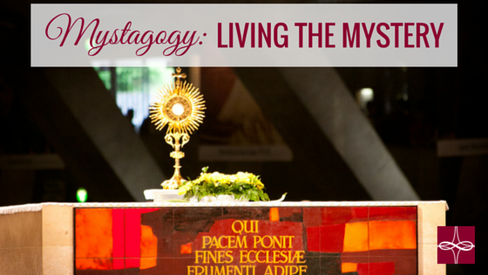 If you attended an Easter Vigil Mass this year, then you participated in what St. Augustine called the “mother of all holy Vigils”(Sermo 219)—the day the Church receives many new Catholics through the sacraments of initiation: Baptism, Eucharist, and Confirmation. The newly baptized, or “neophytes,” (a Greek word meaning “new plant”) begin a fourth and final period of formation called mystagogy, which lasts the Easter Season until Pentecost. If you haven’t personally participated in the formal process of becoming Catholic as an adult (called the Rite of Christian Initiation of Adults, or RCIA, in parishes), chances are you haven’t heard this word recently… or maybe ever. What is Mystagogy? Our faith needs mystagogy first and foremost because of one simple reason: we celebrate and proclaim a mystery. As evangelists and catechists, I think it is important to recognize that for some people, the idea of religious “mystery” prima facie, conjures up images of a Da Vinci Code-esque Church shrouded in secrecy, New Age spiritualism, or even a pre-scientific belief in “magic.” But the sacraments do not initiate us into a special club or secret society. Through them, we are made participants in the life of Jesus Christ. Faith begins and ends in mystery, most especially the mystery of the Most Holy Trinity, “the central mystery of Christian faith and life . . . the source of all other mysteries of faith” (CCC 234). In the scriptures, liturgy, and sacraments, we truly encounter and participate in the Triune life of God. But no matter how intelligent or insightful we are, we will never fully wrap our minds around God’s glory or totally experience it with our five senses. Mystagogy comes from the Greek word meaning, “to lead through the mysteries.” The Catechism describes mystagogy as a “liturgical catechesis that aims to initiate people into the mystery of Christ” (CCC 1075). Mystagogy leads us from the external signs and rituals of the liturgy to the inner, spiritual meaning of the divine life they signify. Mystagogy is the form of catechesis that helps us unpack and explore the spiritual treasures contained in the sacraments by continuously reflecting on their meaning and significance in our personal lives of faith. Mystagogy was the way the early Church Fathers embraced and trained new Christians in the practices and beliefs of the faith. Perhaps the most well known teacher of mystagogy was St. Cyril of Jerusalem (315-386 CE), who delivered a famous series of sermons, known as “mystagogic catecheses,” during the time of Lent through the Easter Octave. After the Second Vatican Council, the Catholic Church revitalized this ancient practice, especially in the Rite of Christian Initiation of Adults. But mystagogy isn’t just for the newly baptized; it is the way every Catholic can continually deepen their relationship with Christ by daily drawing on the grace of the sacraments. Significance for our New Evangelization Just as Catholics are rediscovering the importance of the “kerygma” (Greek for “proclamation”) for evangelization, mystagogy is incredibly important in our approach to catechesis in the New Evangelization. John Paul II wrote, “Through catechesis the Gospel kerygma is gradually deepened . . . . and channeled toward Christian practice in the Church and the world” (Catechesi Tradendae, n. 25), specifically the form of mystagogy. Additionally, mystagogy serves as a trustworthy guide when reflecting on ways to improve our catechetical methods. Living the Mystery Daily Ongoing mystagogy is important because our relationship with the sacraments change as we grow and mature as individuals and meet new life challenges and circumstances. In turn, the sacraments really change us. Pope Benedict XVI said, “The mature fruit of mystagogy is an awareness that one's life is being progressively transformed by the holy mysteries being celebrated” (Sacramentum Caritatis n. 64). By reflecting regularly on the sacraments, we access an incredible strength for our daily tasks. Developing a practice of Eucharistic mystagogy can combat the routinization that often sets in to our receiving communion. For those who are married, or preparing for marriage, there is a mystagogy of marriage. With ongoing mystagogic reflection, you may discover new fruits of that sacrament in every season of life. Studying theology and the Bible is often an undervalued way of developing our spiritual life. Learning about someone or something is a sign of love, and we truly become what we behold (cf 2 Cor. 3:18). Reading the great books and sermons of Catholic authors and theologians greatly expands our hearts and minds to experience the truth and depth of our faith. The great Catholic philosopher Gabriel Marcel is attributed as stating, “Life is not a problem to be solved, but a mystery to be lived.” Mystagogy is the path leading Christians to learn to live the mystery of our faith. I encourage you to follow the path trod by St. Cyril up through popes John Paul II, Benedict XVI, and Francis, in making this incredible tradition and gift called “mystagogy” a part of your life. To learn more about Catechesis, please consider reading the General Directory for Catechesis or the National Directory for Catechesis. For more resources on Prayer and Catechesis, click here.
 Let’s face it, trudging along in our daily lives can be dull sometimes. One must try, even if the thought is just a curious leap of the soul, to remove oneself from the business of the world and to look up at the sky. We must look up in the sky toward a marvelous sight, the light that propels life on this earth, the face of the creation, and the Creator of beauty.
In all areas of darkness, light abounds brighter than ever. In all things, we exist and share in our lives with our Creator. Everything we do is profound in its own small way. Everything that happens, happens with and for a purpose, with and for a cause, ever meaningful and ever present in our lives. Our lives are living, never truly dying. We will always have the light to look toward. The hope that always lets us know we are never truly alone in anything we do. We must rise into the light in this very moment. This is what the fires of Pentecost are about. We must remember to put action into the journey of the disciple in sharing the truth and love of God in the world. It is waiting for the passions of our own lives to pass and form into one focus of love, pure and true. We are waiting for love, preparing for love, being there for love, attending to love, sacrificing for love, yet we must always remember that we ARE Love. We, as beautiful reflections of the heart of God can illuminate the darkness not only in our own lives, but in others as well. We can be beacons of light, shining bright for others to see. Light is what draws us to the Heavens on a day with a clear sky. It is what makes us wonder at the millions of stars bursting in radiance in the night. It is what can illuminate any darkness no matter how small the flame may be. The light we see in the Sacraments passing from Christ into His people is nothing short of a miracle. The light we witness on the Cross, expelling all sin and darkness from our twisted up hearts, brings us closer to the very nature of love, the deepest kind of love, the love of Christ. In Him I see my guiding Light and my strength to carry on each and every day of my life. He is my starlight in the dark of the sky, letting me gaze of his majesty. In everything, there is light. It is truly present infinitely in our universe. There is a place for us in the skies with the Father, for we, in this world, will rise a stronger people, ready to take up the mission of light, the mission of love, and the mission of hope for all who are searching for something, anything that can fulfill a restless heart. William Clemens is an Undergraduate Student of Theology & Religious Studies at The Catholic University of America in Washington, D.C. Be sure to check out Pope Francis' latest encyclical, Laudauto Si, and visit the Catholic Apostolate Center's Laudato Si Resource Page! |
Archives
September 2026
Categories
All
|












 RSS Feed

About |
Media |
© COPYRIGHT 2026 | ALL RIGHTS RESERVED