
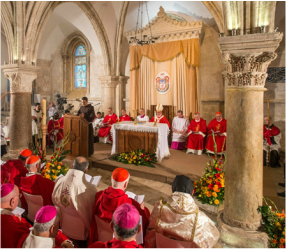
 “Wherever I shall be, I intend to imagine myself to be together with all the creatures in the Cenacle in Jerusalem where the Apostles received the Holy Spirit. I shall remind myself to renew this desire often. As the Apostles were there with Mary, so will I be in spirit with the most beloved Mother and Jesus. As they are my special intercessors, I am confident that they will help me and all other creatures to receive the abundance of the Holy Spirit” – St. Vincent Pallotti (OOCC X, 86).
One of the signature moments of Pope Francis’ pilgrimage to the Holy Land last year was the Mass that he celebrated in the Cenacle or Upper Room in Jerusalem. Tradition holds the Cenacle as the location of the Last Supper and the place where Mary, the Apostles, and the other disciples spent time in prayer and community prior to the descent of the Holy Spirit at Pentecost. We have just celebrated this past weekend the Feast of Mary, Queen of Apostles on Saturday and Pentecost on Sunday. These celebrations invite us to dwell in the Cenacle as a place of encounter with one another and with the Holy Spirit. The Cenacle is not a place where one stays, though. We are sent forth out into the world that needs to encounter Jesus Christ, a world in need of transformation. Pope Francis in his homily in the Cenacle reminds us of this mission of which all of us are called to be a part: “From here the Church goes forth, impelled by the life-giving breath of the Spirit. Gathered in prayer with the Mother of Jesus, the Church lives in constant expectation of a renewed outpouring of the Holy Spirit. Send forth your Spirit, Lord, and renew the face of the earth (cf. Ps 104:30)!” Reflecting on the Cenacle, St. Vincent Pallotti came to believe that all are called to take up the mission of Jesus Christ and live as apostles, sent forth to preach the Good News and bring healing to a broken and suffering world. We are not alone in this task. Mary, Queen of Apostles intercedes for us, witnesses discipleship of Christ for us, and gives us a mother’s care. The Holy Spirit permeates all that we do and calls us back to the Cenacle, to the table of the Lord in the Eucharist, to worship and fellowship with the community of faith, in order to be sent forth once again. Instituted in the Cenacle of Jerusalem, the Eucharist sustains us, nourishes us, and moves us out into the world “glorifying the Lord” by our lives (“Dismissal”, Roman Missal). Fr. Frank Donio, S.A.C., is Director of the Catholic Apostolate Center and teaches for Saint Joseph’s College Online. This blog post was first published on May 27th on the St. Joseph’s College of Maine Theology Faculty Blog. Click here to learn more about our cooperative alliance with St. Joseph’s College Online
0 Comments
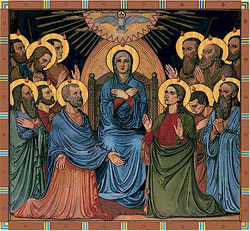 They bought into the lie—that nothing had changed, that their dreams were stifled, that death prevailed. The locked doors reflected their locked hearts. Like anyone, they were afraid, inconsolable, at the point of despair. Save one—a virgin. She continues to model to us today what it means to live faith, what it looks like to be a disciple.
The fear of the disciples in the upper room is understandable. They had abandoned the man whom they had left everything to follow for three years. The same man they had pledged to follow unto death had been tortured and killed as their backs were turned, as they cowered for their own lives. Their hopes of a restored Jewish kingdom, a glorious king from the line of David, freedom from Roman rule and the return of God’s presence to the Temple seemed to be nailed to a cross on Golgotha, laid in a tomb hewn from rock. They had yet to see God’s plan amidst the perceived failure. How could this be God’s plan? It was so unlike their own. Their fear is our own. It is the fear of unmet desires, of unworthiness, of death, of uncertainty, of perceived silence. Like the disciples, we often fail to see God’s plan in our lives. We look around in despair and sense that He is silent. We live the reality of death, confusion and suffering and say, “nothing good can come from this.” But as the disciples quickly realized, our ways are not God’s ways. Our wills are not yet one. Much stands in the way: selfishness, greed, egoism, materialism, pride. All changes with the coming of the Holy Spirit. What makes a law-abiding Jew abandon his persecution of Christians in favor of joining them and proclaiming the Christ to Jerusalem and Rome? What makes uneducated fisherman leaders of the universal Church and martyrs for the faith? What makes the son of a wealthy Italian merchant the begging founder of a religious order and a friend of the poor? What makes a cloistered nun in Lisieux a Doctor of the Church? What makes a German priest in Auschwitz volunteer to die in place of a father? What makes a modern day Italian mother and doctor offer her life for that of her child? The Advocate, the Holy Spirit. It is the Holy Spirit who is the game changer for the Church—what will now set the disciples apart from the whole world and what continues to set Christians apart today. The Holy Spirit is the active agent of conversion in man, the third person of the Trinity who opens up the Scriptures and sets our hearts on fire. It is the Holy Spirit who enables us to live our mission. The Holy Spirit, God’s love, is the difference between the fearful men in the upper room and the on-fire disciples of Christ preaching the Gospel and converting thousands in a single day. In the Gospel today, Jesus prays for his followers in the Garden of Gethsemane while also speaking directly to you and me. He prays for something seemingly impossible: “that they may all be one” as the Trinity is one. Christ speaks these words not to frustrate his followers but to call them to a perfection possible through God alone. He utters these precious words knowing he will be sending the Holy Spirit to enable man to do this. The goal is outward. This communion—the call to unity—must lead to mission: “that the world may know that you sent me and that you loved them.” God’s love is efficacious. It cannot be contained but must be proclaimed to the world. Only God could deign to give man so dignified and impossible a call. And only God could enable man to fulfill it. This high priestly prayer of Jesus (which encompasses John 15-17) is one of my favorite parts of Scripture. It is so imbued with Christ’s love for us. The purpose of the Incarnation is about to be revealed. Christ is living his last moments and wants to remind his followers, you and me, why he came: to reveal the Father, to invite man to eternity with Him and to assure man of his lovable-ness in the eyes of God. This love of God is meant to abide in us and reach out from our hearts to the hearts of others. This is only possible through the Eucharist, which physically is Christ’s love present in us and which is made possible through the Holy Spirit. God himself calls us, but God himself equips us…with Himself. It is astounding to what we are called: to holiness, divine love. This is the Christian destiny, but not our inclination. Like the disciples, so quickly do we turn inward. So quickly do we lock the door in fear. God calls us to sanctity, which can only be achieved after an experience of the fire of God’s love. We call this Pentecost, the same outpouring of the Holy Spirit that we receive in Baptism and Confirmation. The same outpouring of the Holy Spirit that we receive every Sunday in the form of the Eucharist. Are we being transformed by this grace or do we remain in the upper room? I challenge you to go back to your own story, your own moments of conversion. When did you fall in love with God? Have you? Only armed with the certainty of being loved will we be able to love others and live out the communion and mission Jesus calls us to. And so we call upon the Holy Spirit, the love of God Himself, who was breathed out upon the disciples at Pentecost in tongues of fire. We ask the Holy Spirit to breathe new life within us, within the Church. We ask the Holy Spirit to transform us with the fire of God’s love. This results in unlocked doors, an empty room. The disciples emerged, transfigured. Will you? Kate Flannery is pursuing a Master's degree in Leadership for the New Evangelization at the Augustine Institute in Denver and graduates in May.  “The fire of the Holy Spirit was sent down upon the Apostles at Pentecost in answer to their fervent prayer; ardent prayer in the Spirit must always be the soul of new evangelization and the heart of our lives as Christians.”
– Pope Francis (General Audience, May 22, 2013) Prayer. Sometimes we make it so difficult. I am not sure why. Maybe we think it needs to be very formal or formulaic? I know that I thought that for a very long time. There is certainly a place for formal prayer, be it communal, such as during the Mass or the Liturgy of the Hours or even private, such when use a formal written prayer. In fact, we Catholics have a love affair with our prayer cards, books, and other sacramentals, including candles, statutes, and icons. This is an excellent thing because “they prepare us to receive grace and dispose us to cooperate with it” (Catechism of the Catholic Church, n. 1670). They are, though, simply means, not ends in themselves. Means to a conversation with God or maybe more precisely, a dialogue. We might not consider it a dialogue. Fervent prayer, ardent prayer, in the way that Pope Francis is calling for is an on-going dialogue with God throughout our day, an awareness of the action and activity of the Holy Spirit permeating our lives. It is a seeking for God and finding God in all things, in every moment and in every place. St. Teresa of Avila encourages us to be seekers of God and St. Ignatius of Loyola calls us to “find God in all things.” St. Vincent Pallotti puts the two aspects together, as was often his way, and challenges us to: “Seek God and you will find God. Seek God in all things and you will find God in all things. Seek God always and you will always find God.” We certainly need to take time to be in communal prayer like those in the Cenacle or Upper Room at Pentecost. We also need to be in private prayer, setting aside time to go to our “inner room, close the door, and pray to [our] Father in secret” (Matthew 6:6). The Holy Spirit, though, is active and alive everywhere, if we but open our eyes to see and our ears to hear. Fr. Frank Donio, S.A.C., is the Director of the Catholic Apostolate Center This blog post was first published on October 26th on the St. Joseph’s College of Maine Theology Faculty Blog. Click here to learn more about our cooperative alliance with St. Joseph’s College Online 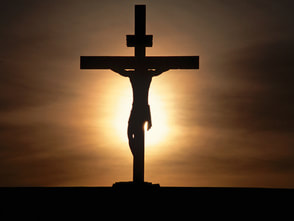 On September 14th, we celebrate the feast day of the Exaltation of the Holy Cross. In the Gospel of John, Jesus tells us: “No one has greater love than this, to lay down one's life from one's friends” (John 15:13). That love is never more evident than our Lord's passion and death on the Cross. By that Holy Cross, we have been redeemed. Jesus Christ foretold his Passion to the Apostles, instituted the Eucharist at the Last Supper, and fulfilled God's plan for human salvation at Calvary upon that Holy Cross. This, my friends, is the greatest love ever known to humankind; by the grace of God, we will come to know the fullness of God's love in eternity. The promise of eternal salvation was made possible upon that Cross and we, as Catholics, are called to pick up our cross and follow Christ daily. This is a very hard thing to accomplish in today's world.
Jesus gave us the Holy Spirit at Pentecost to guide and strengthen us while following his commands. Paul tells us: “I have the strength for everything through him who empowers me” (Philippians 4:13). Jesus Christ empowers us with the Holy Spirit today just as he did with the Apostles. It is exactly that God-given power that we need in today’s often secular world to preach Christ crucified and “fight the good fight,” as St. Paul says. For if we profess Christ without recognizing and living his sacrifice on the Cross, we cannot be disciples of the Lord. Peter found that out when Jesus admonished him after the foretelling of his passion and death. I keep written on my desk calendar in my office and in my daily liturgical calendar, a Latin phrase that I think summarizes this idea: Lex orandi, Lex credendi, Lex vivendi - As we worship, So we believe, So we live. As we worship, so we believe, so we live. We must, through worship and prayer, “Love the Lord, your God, with all your heart, with all your soul, and with all your mind” (Matthew 22:37). We must believe all that Jesus has taught us, that he is our Lord and Savior, and that he suffered and died so that we may live. We must live out our faith in what Jesus has called us to do by spreading the good news and picking up our cross and following our Lord. This is not an easy task. It isn't easy being a Christian. Christ never said it would be easy. Being a Christian is not just being a member of a religion, it is our way of life. We live the faith Christ gave to us. When we struggle with this, when we get lazy or complacent with our prayer time, or if we need a reminder of just how much we are loved and what our calling is, we need only to gaze upon the Holy Cross. We can also reflect on the Prophet Isaiah, when he told us exactly what Christ has done for us and for the salvation of man: "Yet it was our pain that he bore, our sufferings he endured. We thought of him as stricken, struck down by God and afflicted, but he was pierced for our sins, crushed for our iniquity. He bore the punishment that makes us whole, by his wounds we were healed" (Isaiah 53:4-5). Brothers and sisters in Christ, we celebrate the Feast of the Exaltation of the Holy Cross.” Remember, worship, believe, and live in the glory of Christ crucified! Mark A. Straub Sr. is a member of the Knights of Columbus and president of the parish council of Our Lady of the Woods Parish in Woodhaven, Michigan. 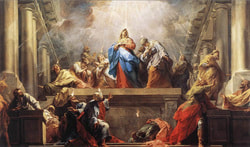 We celebrate Pentecost on June 8th, 50 days after Easter, to commemorate the Holy Spirit’s descent on Christ’s disciples after His Ascension. We are, in many ways, celebrating the birthday [E1] of the Church and our individual commitments to God.
The Holy Spirit empowers us to share our faith, to have the ability to open our hearts in understanding one another and God’s message. Through the gifts of the Holy Spirit (wisdom, understanding, counsel, knowledge, fortitude, piety and fear of the Lord), we become fully alive in our personal relationship with God so we can give better witness to His message. The Catechism of the Catholic Church says, “…the Church is sent to announce, bear witness, make present, and spread the mystery of the communion of the Holy Trinity” (CCC 738). We can use Pentecost as an opportunity to make our faith our own while sharing God’s word. By utilizing our individual talents and volunteering in some aspect of our church, we strengthen our faith and build community. I remember wanting to be an altar server after receiving my first Holy Communion in second grade. I began altar serving and continued to do so until I received Confirmation. Serving during the Mass allowed me, as a young girl, to better understand my Catholic faith. My parents remember me saying how I enjoyed altar serving because I had to pay attention (and stay awake) during 8 a.m. Sunday Mass. Assisting the priest on the altar, I began to fully understand and celebrate the Liturgy of the Word and Liturgy of the Eucharist every Sunday. I attended Catholic school and was able to make connections between Religion class and weekly Mass by serving during church service. Once confirmed, I continued to volunteer in my church as a lector as well as taught religion education to grade school children. Actively participating in my church allowed me to fully engage in my Catholic faith and grow spiritually. No matter our age, the Catholic Church encourages us to be active participants in Mass and in our Church. Through the work of the Holy Spirit, we can come to discover where the Church needs us and how we can best share the time, talent, and treasure God has given us. My parish hosts a ministry fair each year, which gives parishioners an opportunity to see other ministries within the Church and where we can best serve God and our community. Pentecost allows us to renew ourselves to the Holy Spirit. Pope Francis asks us in his daily Mass homily on May 19th this year to question ourselves: “What kind of heart do we have? … Is my heart fixed upon everyday gods or is it a heart fixed on the Holy Spirit?” It is easy for us to get wrapped up in life’s habitual tasks at home, work, with family, colleagues, etc. Pope Francis encourages us that the Holy Spirit “gives us strength, gives us the steadiness to be able to move forward in life in the midst of many events.” Dana Edwards is a recent graduate of the University of Florida. She currently resides in Tallahassee, Florida where she volunteers as a lector and with communication outreach at her local parish, Good Shepherd Catholic Church. 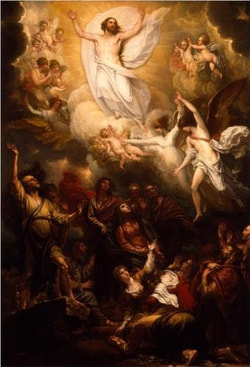 “He said to them: ‘… you will receive power when the Holy Spirit comes on you; and you will be my witnesses in Jerusalem, and in all Judea and Samaria, and to the ends of the earth.’ After he said this, he was taken up before their very eyes, and a cloud hid him from their sight. They were looking intently up into the sky as he was going, when suddenly two men dressed in white stood beside them. ‘Men of Galilee,’ they said, ‘why do you stand here looking into the sky? This same Jesus, who has been taken from you into heaven, will come back in the same way you have seen him go into heaven’” (Acts 1:7-11). Forty days ago, we celebrated the miraculous Resurrection of Jesus from the dead and joyful the start of the Easter season. Finally, after millennia of prophecies and expectation, the promise that humanity would be redeemed and restored in its relationship with God was fulfilled. Now Christ had risen in glory and conquered death by His Passion, allowing humanity to once again be united with its loving Creator (c.f. 2 Peter 1:4). This reunification of the disciples and their beloved Teacher was indeed a cause for celebration! What intense feelings of love and wonder must have resounded in the apostles’ hearts after their Master, Teacher, and Savior had been cruelly put to death only a few days ago. They believed that Jesus’ return meant that He would now “restore the kingdom to Israel” to finish His earthly ministry (Acts 1:6). “Not so, not yet,” Jesus corrects them (c.f. CCC 672). Instead, it was now time for Him to join the Father in Heaven since He had accomplished the Mission of atonement that He had been sent to earth for on the Cross (c.f. John 19:30). With that, Jesus was taken up before His followers into Glory. While they were still watching, whether out of wonder, awe, confusion, or fear as what to do next (perceptibly without Jesus), two heavenly messengers appear and urge the disciples not to stand there, looking up. Jesus would come again, they promised. Meanwhile, there was a mission to undertake; they were to go and wait for the Spirit, Who would help them take the next steps towards completing Jesus’ final instructions, which were, as St. Pope John Paul II put it, “the faithful expression of the Father’s will.” Before He was taken up, Jesus said to the disciples, “All authority in heaven and on earth has been given to me. Therefore go and make disciples of all nations, baptizing them in the name of the Father and of the Son and of the Holy Spirit, and teaching them to obey everything I have commanded you” (Matthew 28:18-20). Christ was planning something bigger than establishing a temporal kingdom on earth, as the Jews commonly thought their awaited Messiah would bring. The Apostles, moreover, were instructed to teach— to proclaim the Good News to the whole world. And they were to baptize in the name of the Father, and of the Son, and of the Holy Spirit. Like Jesus, they were to speak explicitly about the Kingdom of God and about salvation. The Apostles were to give witness to Christ to the ends of the earth. The early Church clearly understood these instructions and the missionary era began. And everybody knew that this missionary era could never end until the same Jesus, who went up to heaven, would come back again. (St. John Paul II, “Homily on the Solemnity of the Ascension of Our Lord,” May 24, 1979) We, too, in a sense, can stand with the apostles, looking heavenward to that place where our Lord ascended. We, too, can experience that intense wonder deep within each of us which transforms fear and tragedy, insecurity and tension into a peaceful certainty that floods the heart with loving warmth from God. From this, the same question posed to the disciples nearly two thousand years ago is asked of each of us even today: why do you stand looking up? The Church’s mission has always been that of the Great Commission, to spread the glorious, joyful, and redemptive news of Christ’s rising from the dead (c.f. John 3:16). As Saint Augustine testified, we are the Church and are commanded to accept this mission and not stand idly by in either amazement or apathy! Certainly, Holy Mother Church’s evangelization has endured obstacles, dogmatic disputes, and other setbacks over the centuries in bringing the Good News to the ends of the earth. No matter the challenge, the Church always pulls through since she has been founded by Christ Himself with the promise that “the gates of the netherworld shall not prevail against it” (Matthew 16:18). As the disciples and the Blessed Mother would experience on Pentecost Sunday, it is the Holy Spirit, the gift of the Father, Who is the source of the Church’s strength. It is He Who guides the Church in the way of Truth in the spreading of the Gospel, doing so through the power of God and not by means of the imperfect wisdom or strength of man. After having undergone the humiliation of His passion and death, Jesus took His place at the right-hand of God; He took His place with His eternal Father. But He also entered heaven as our Head whereupon, in the expression of Leo the Great, the glory of the Head became the hope of the body… our nature is with God in Christ. And as man, the Lord Jesus lives forever to intercede for us with Father. At the same time, from His throne of glory, Jesus sends out to the whole Church a message of hope and a call to holiness. Because of Christ’s merits, because of His intercession with the Father, we are able to attain justice and holiness of life, in him… The power of the glorified Christ, the beloved Son of the eternal Father, is superabundant, to sustain each of us and all of us in the fidelity of our dedication to God’s Kingdom. The efficacy of Christ’s Ascension touches all us in the concrete reality of our daily lives. Because of this mystery it is the vocation of the whole Church to wait in joyful hope for the coming of our Savior, Jesus Christ. (St. John Paul II, “Homily on the Solemnity of the Ascension of Our Lord,” May 24, 1979) As part of the “New Evangelization,” we are reminded of this command to reveal the Truth of our resurrected Lord through our words and actions in accordance with how we are called to live as Christians, that is, with love (c.f. John 13:34-35). Like the evangelizers before us, we can expect face challenges when spreading the Gospel message, namely persecution (c.f. John 15:18, Romans 8:35-39, 2 Timothy 3:12, 1 Peter 4:16-19). Ah, but what a price to pay for the glory of God! Remember, too, that Christ promised that He would always be with us in our ministry (c.f. Matthew 28:20, Galatians 2:19-20)! As Pope Francis noted during his fourth general audience, Jesus is no longer “in a definite place in the world as He was before the Ascension… He is now in the lordship of God, present in all space and time, next to each of us.” We can always turn to Him in prayer; He, in turn, will sustain us with strength, grace, and Love. Given the difficulty of our task (often requiring great sacrifice on our part), this is indeed a great comfort! In addition, it is Christ as both God and man Who brings our humanity before God to intercede for us. Finally, the Ascension of the Lord is also our Feast because we have ascended with the Lord! The Feast presents an opportunity to reflect upon the relationship between our profession of faith and our daily life. It is the start of the evangelization of the world by Christ’s disciples and the call for us to do that same Work, started nearly two millennia ago, in joyful witness to the Redeemer of the world. The Solemnity of the Lord’s Ascension must also fill us with serenity and enthusiasm, just as it did the Apostles who set out again from the Mount of Olives “with great joy” (Luke 24:52). Like them, we too, accepting the invitation of the “two men in dazzling apparel”, must not stay gazing up at the sky, but, under the guidance of the Holy Spirit must go everywhere and proclaim the saving message of Christ’s death and Resurrection. His very words, with which the Gospel according to St Matthew ends, accompany and comfort us: “and lo, I am with you always, to the close of the age” (Matthew 28:20). (Pope Emeritus Benedict XVI, “Homily of His Holiness During the Pastoral Visit to Cassino and Monte Cassino,” May 24, 2009) Thomas Wong is an undergraduate at The Catholic University of America, currently studying abroad in Rome, Italy. 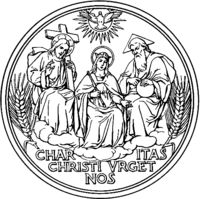 The following is a portion of Blessed John Paul II’s address to the Pallottine Fathers and Brothers on
October 6, 1998, speaking to them about their work in reviving faith, rekindling charity and forming apostles. …To live the faith means to share in Christ's life. In Jesus we can discover our true nature and fully appreciate our personal dignity. Proclaiming Christ so that the image of God may be restored to each person in all its fullness is the ultimate goal of the “new evangelization”. You, called in a particular way by your charism to revive faith and rekindle love in every situation, should be very clearly aware of the preferential option for the “image of God” that is waiting to be revealed in the life of every brother and sister. Recognize Christ’s face in everyone, appreciating every human being regardless of his condition or status. This is what St Vincent Pallotti did, whose sole concern was the interior renewal of human beings for the sake of their sanctification. To imitate his apostolic zeal, you must first strive for personal holiness. Only in this way will you be able to foster it in others, by remembering the universal call to holiness clearly made by the Second Vatican Council. It is this awareness that must motivate your contribution to the work of the new evangelization. In this way you will be effectively prepared to enter the new millennium and will actively co-operate in fulfilling the mission that the Father of our Lord Jesus Christ entrusted to the entire ecclesial community. The commitment to personal holiness must be lived within your communities in the various parts of the world: work in unity and harmony to be authentic witnesses to the Gospel for those you meet in your daily ministry. In the Apostolic Exhortation Vita consecrata I wrote: “The Church entrusts to communities of consecrated life the particular task of spreading the spirituality of communion, first of all in their internal life and then in the ecclesial community, and even beyond its boundaries, by opening or continuing a dialogue in charity, especially where today’s world is torn apart by ethnic hatred or senseless violence” (n. 51). It is by witnessing to the fraternal life, understood as a life shared in love, that you become an eloquent sign of ecclesial communion (cf. ibid., n. 42). This deep understanding among yourselves will help you live your “unity in Christ” and make you ready and willing to respond to each person’s spiritual and material needs. In this regard your founder loved to say over and over that “the gift of cooperating in the salvation of souls is one of the most divine” (Opere complete XI, p. 257). This gift should be shared with lay people, your daily co-workers in the apostolate, as well as within your institute. Involve them and welcome them into your life of communion. “Today”, I wrote in the above-mentioned Apostolic Exhortation Vita consecrata “many institutes have come to the conclusion that their charism can be shared with the laity” (n. 54). “The participation of the laity often brings unexpected and rich insights into certain aspects of the charism, leading to a more spiritual interpretation of it and helping to draw from it directions for new activities in the apostolate” (n. 55). In this way, the Society of the Catholic Apostolate, conceived and founded by St Vincent Pallotti, will allow you not only to co-ordinate the different resources of your communities, but also to be at the very heart of the Church’s apostolic mission in today's world. May you find help in Mary, faithful and obedient handmaid of the Lord and an excellent example of fidelity to the apostolate. United in prayer with the disciples in the Upper Room of Jerusalem while awaiting the gift of the Holy Spirit, she offers you the example of constant prayer, willingness and active commitment to the Church’s mission. May God renew the marvels of Pentecost in you and in your institute through her motherly intercession… 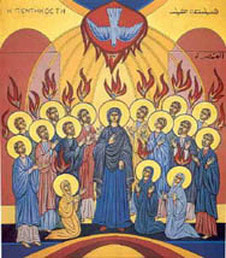 There’s a line from Coldplay’s “The Scientist” that pops in my head from time to time. Nothing seems to prompt it. The line just comes: “Questions of science, science and progress, do not speak as loud as my heart.”
As I sit with the words now, I notice why they speak to me. A lover of math and physics, questions of science have engaged me from the very beginning. At first it was dinosaurs, fossils, rocks, mountains, stars, planets – big, physical, earthy things. As I grew and learned through the complicated processes of science, the whole world became an infinitely complicated, continuously unfolding window into God’s creative mind. From the quantum entanglement of paired photon particles to the unimaginably long process of creation through evolution that could selectively form the creatures of this mysterious and complicated world, I stand in complete, utter fascination. Yet, as captivated as I am by science, its questions are not enough. For me, asking the probing questions of science isn’t about head knowledge, it’s about heart knowledge. The created world and all its mysteries, when uncovered and understood, stir in me deeper mysteries, mysteries of a different category and question. At some point I moved beyond asking what and how to asking why and what does it mean. As we celebrated Pentecost, the receiving of the Holy Spirit, I was reminded that the gifts we have been given are of both head knowledge and heart knowledge. Wisdom, understanding, knowledge, counsel, strength, piety, and fear of the Lord – these challenge and equip us to probe deeper, scientifically and metaphysically, into the mystery of being. Of all the gifts, fear of the Lord might sound the most antiquated, but it may also be the most relevant for today’s ongoing conversation with secularism. Understood as “wonder and awe”, rather than fear, this gift certainly explains my shift in focus from science to faith. And, I’m certain, explains the drive of so much scientific research today. Wonder is the starting point for two difficult conversations – one between science and fundamentalism and the second between faith and active secularism. Both the agnostic physicist and the pious mystic share the gift of a profound wonder and awe at the created world, whether or not they both believe the world had a creator. As we celebrate the gift of Pentecost, and as we give thanks for the Holy Spirit’s continued work, let us take time to wonder with someone about the intricacies of creation – whether it be through the eyes of science or the eyes of faith – and let us hope that this gift of wonder can begin a creative conversation of a different sort. Mark Bartholet is the Pastoral Associate for Faith Formation at St. Peter Catholic Church in Charlotte, NC. |
Archives
October 2026
Categories
All
|
 RSS Feed
About |
Media |
© COPYRIGHT 2026 | ALL RIGHTS RESERVED