
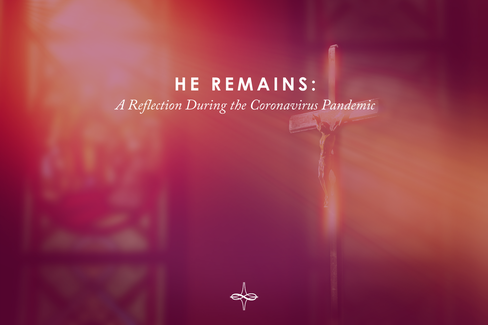
 On March 7, my husband threw a surprise party to celebrate my 30th birthday. That would be the last time I would physically spend with many dear friends for at least a month. It was at the beginning stages of the coronavirus pandemic when the United States seemed to just barely be grasping what was going on across the Atlantic. We were aware but unafraid. The virus was like the flu. It only affected the elderly and those with compromised immune systems. It wasn’t a big deal. We would be fine. But around that time, my family began to take the notions of staying home, social distancing, and self-quarantining seriously. Each day brought more news. So we spent time outside. We tried to stay 6 ft apart. We bought a few more groceries than usual. We began to lay low. Almost three weeks later, I write from home, having gone “out” less times than I can count on my fingers apart from family walks, romps to open fields, or our backyard. No grocery stores. No movie theaters. No social events. No playgrounds. No libraries. No stores. No Masses. I haven’t had to “try” to make Lent this year somber or serious. Every day is a fast from something I deemed important to my life: a fast from physical friendship; a fast from community in the way I’m used to living it; a fast from outings, from the sheer independence of being able to step out of my house and go where I want to go when I want to. This fasting has been humbling. Prayer is the rhythm to my day. It is the breath of my days. The heartbeat. I watch online daily Masses or reflections on the Scriptures. I pray the rosary by myself or with my husband and children. I sing the Divine Mercy chaplet. I continue a novena. I make a spiritual communion with tears in my eyes. I utter supplications for others throughout the day. I offer my fasts—both the voluntary and involuntary—for our world. At the beginning of this Lenten journey, I shared how I thirsted to emerge from spiritual mediocrity. Now I thirst for God himself. I yearn to join the Body of Christ once again in the sacraments and receive him at the Eucharistic table. I live Paul’s exhortation to pray without ceasing in a profound way. And yet God has been so good. And peace prevails in my heart. I have so much to be thankful for: continued jobs and paychecks, long days of sunshine and warm weather, our health, food on our plates, a roof over our heads, snuggles with my children, reading books in our indoor tent, video calls with friends and family all over the country. In spite of everything, we are together. In spite of everything, God is here. In spite of everything, there is always hope. Let us continue to “rend our hearts” this Lent by turning to God and giving him everything we are feeling right now: exhaustion, confusion, anxiety, disillusionment, anger, despair, or fear. We can approach the one who became a vulnerable child for us and give him our own insecurities and vulnerabilities. At the manger, we will be met with his never-ending love. In his homily for the fourth Sunday of Lent, Fr. Mike Schmitz noted that God did not make an unbreakable world. Though he created perfectly, he instilled in mankind the ability to have free will—the ability to break our relationship with God by introducing sin into the human condition. Death, pain, suffering, temptation—all is the result of sin. This pandemic is more evidence of this truth. What matters, however, in the midst of our suffering, is that God does not abandon us to it—nor has he ever. Scripture recounts the story of God’s unfailing love for humanity since the Fall—a story of salvation that continues personally with each of us today. God does not promise fulfillment on earth, perfect joy, blessing, and comfort. He promises the cross, daily. But he also promises us that he will be with us always—even to the end of time—that he came to give life in abundance, that we can be transfigured, and that there is resurrection. He invites us to complete satisfaction and joy with him in Heaven for eternity. And in the meantime, as we continue on our own personal journeys in this “vale of tears,” he remains waiting for us at the well. Inviting us on the shore. Looking for our return on the horizon. Feeding us at the table. He remains pouring out all for us on the Cross. He remains. As we continue to navigate this Lenten season, the coronavirus pandemic, and the approach of Easter, let us go to him with humble hearts. “Let us allow ourselves to be loved, so that we can give love in return. Let us allow ourselves to stand up and walk towards Easter. Then we will experience the joy of discovering how God raises us up from our ashes.” -Pope Francis (Ash Wednesday Homily, 2020)
0 Comments
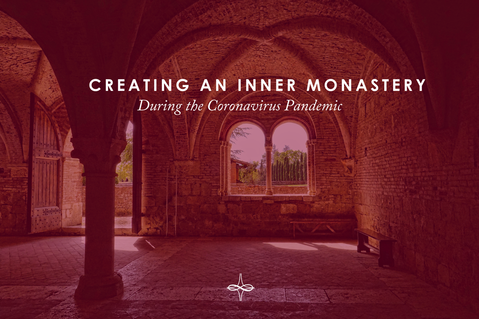 A month ago, I thought I would be balancing returning back from a service immersion trip and student leadership interviews. Today I sit in my makeshift home office preparing for my next Zoom call, trying to keep in check my own anxieties while still ministering to my students. To be honest, the first week was not easy, and I have still not mastered ministry from home and social distancing. As the days continue, I have progressively realized my need to change my mindset of survival to finding peace, stability, and hope. I went to Thomas Merton and St. Teresa of Avila, my two go to’s when needing to be reminded of where to find God. As I read the words of this Trappist monk and Carmelite nun, it dawned on me that in midst of darkness, fear, and chaos, I have been given an opportunity to create an inner monastery. The lives of these monastic friends of mine shed light on three aspects that I trust and can incorporate into my social distanced day-to-day in order to give me peace and calm my anxieties.
I invite you to share in the wisdom of the monastics and find the opportunity during these challenging times to create within our homes and families an inner monastery. Fears, sickness and hardship won’t be removed, but the insights of our brothers and sisters who have lived this life before us can help us to “recognize the possibilities and challenges offered by the present moment, and to embrace them with courage, faith and hope.” If you find it helpful, here is my Inner Monastery Routine. Finding balance will look different for each person, so take what works for you and make adjustments to fit your needs.
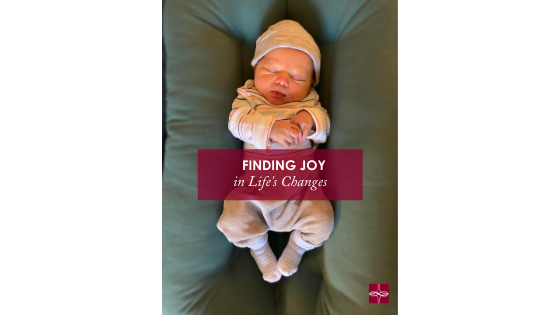 Recently, my life has changed a lot. I had my first child, Vincent Scott Pierno, on January 31st, and he is the greatest joy I’ve ever known. I never knew that becoming a mother could fulfill my life in the ways it has, and I thank God each day for the happiness, tears, and everything in between that he has brought into my life. As a family, we’ve also started house-hunting and looking for a place to settle within this busy and chaotic Washington, DC area. My in-laws will be moving in with us, and although they’ve already been an amazing help with the newborn, it’s another change to our lifestyle. Finding joy in these changes has been challenging at times, but not impossible through the grace of God. I invite you to join me in reflecting on change in our lives and ways to find joy during times of trial and tribulation. One way to work through life’s changes is through Scripture. There are so many examples we can look to that give us strength and remind us of the goodness in change. One is Philippians 4:6-7, which says, “Have no anxiety at all, but in everything, by prayer and petition, with thanksgiving, make your requests known to God. Then the peace of God that surpasses all understanding will guard your hearts and minds in Christ Jesus.” This passage gives me hope. It can be anxiety-provoking to go through so many changes all at once, but Christ gives us strength and we can do all things with his help. Another verse from Joshua 1:9 that speaks of courage during a hectic time is: “I command you: be strong and steadfast! Do not fear nor be dismayed, for the LORD, your God, is with you wherever you go.” In Scripture, we look at examples of people who have also found change difficult and needed support from God. This reliance is the definition of faith: trust and dependence on God through all things, even when the end is not in sight. Another way to work through life’s changes is through prayer. In prayer we can develop a closer relationship with God, and in this dialogue find joy in knowing Christ more deeply. Prayer can be done in many ways: silently, out loud, in reflection, through journaling, and even through participating in the Mass regularly. Since prayer is “both personal and communal,” we can encounter Christ however we feel most comfortable. I’ve found that the most important part of this prayer is not to always ask God for things, but to offer thanksgiving and to listen. The “listening” is the hardest to do. The chaos of a busy and a constantly changing life makes it even more difficult during challenging periods to take time and listen to God. However, it is in those hard times that we can deepen our relationship with Him. The final way I’d really like to impart is by keeping track of and celebrating joy. In this age of social media and 24/7 news updates, it’s easy to see so much negativity all around us. People gossip about others, worry about things that have nothing to do with them, troll people online for their own enjoyment, and trash talk things that people don’t need to even have an opinion about. This negativity can seep into our daily lives and we can get lost in it. I invite you instead to be a whirl of positivity. As Catholics, we are called to action by being missionaries in the world. St. Vincent Pallotti suggests this in his teachings, and brilliantly states this saying, “Remember that the Christian life is one of action; not of speech and daydreams. Let there be few words and many deeds, and let them be done well.” I find his words timeless. The deeds that Pallotti refers to can be simple ones, such as celebrating anything good that comes into our lives by posting it on social media or encouraging joy in the lives of others. We could truly create small havens of joy for people to encounter by simply finding the joy that already exists. Share this joy and gratitude with at least one person, whether in-person or online. Some examples from my life include sharing in my son’s new life and looking for the good in being home with him rather than the stress. Even something as easy as a smile could change someone’s day. I invite you to use these hashtags when you post about your joys as we get through this life together in Christian spirit! #joyinChristianaction #findingjoyineverything #discoverjoyfulmoments
 As we embark on yet another faith-filled adventure of a New Year and with it the thought of all those New Year’s resolutions, I would like to invite you to reflect with me on Jesus’ words offered to the Pharisees in the Gospel of Mark:
Likewise, no one pours new wine into old wineskins. Otherwise, the wine will burst the skins, and both the wine and the skins are ruined. Rather, new wine is poured into fresh wineskins. (Mark 2:22) Jesus, throughout the Gospels, is always inviting us to examine and “re-view” the condition of our hearts above everything else. His words above, albeit confusing at first, shed light on His Heart and His promise to us: “I have come that they might have LIFE and have it more abundantly” (John 10:10). I think we would all agree a more abundant life is what we pray and hope for at the beginning of each New Year. The rising question, however, is “how do we get there?” The answer, I believe Jesus offers us, is contained in His advice given to the Pharisees. He says the pathway to an abundant life lies within the condition of our hearts – the readiness of our “wineskins.” Our hearts like the wineskins, Jesus says, must be constantly renewed and “refreshed” ready to hold that new wine or grace He is always willing to give to us – and thus become for the world a witness of “grace at work.” You see, the Pharisees were so concerned with the do’s and don’ts on their list that their identity, as children of God, was lost in a sea of narrow-minded laws and disciplines. They gave up the opportunity for new wine and new hearts! Even though the prophet Ezekiel proclaimed that God wanted to give them New Hearts all along (c.f. Ezekiel 11:19), they didn’t want to give up their “old wineskins” (old hearts) and place the “new wine” (grace) Jesus was offering them into “fresh wineskins” (converted hearts). In fact, this is what happens to many people and their “New Years resolutions” when their hearts remain unchanged and unaffected by Grace. They sometimes end up rejecting their resolutions because they had nowhere to store the new wine that Jesus offered them. They couldn’t see beyond the “do’s and don’ts” – the “idols” they had created for themselves are powerless towards true change. We must never allow our resolutions to become idols separated from the truth and light of Grace within our hearts. For only those who are pure in heart will see what God is truly offering them (c.f. Matt 5:8). And so, in this sense, I would offer that the goals and resolutions we set every year are re-viewed according to the condition of our hearts. “Re-viewed” so that we’re careful the “new wine” (grace-filled change) Jesus offers us this New Year isn’t going to be poured into the same old “wine-skins” or wasted in a bucket of “empty promises” we often leave ourselves with. But, that our hearts are truly renewed and store within them the new wine, the new life, the new truth of who we are and meant to be. Thus, in keeping our hearts renewed, we prevent the grace-filled resolutions (“new wine”) we accept from Him for this New Year from becoming just another space to fill up on the old “to-do” list (“old wineskins”) that is quickly abandoned and lost altogether. Jesus, this New Year, is offering us an opportunity to really accept something completely new and re-energizing –a new heart ready for His grace to fill it and complete it. I’m talking about experiencing a real encounter with Jesus and a true conversion of the heart! I believe that understanding our New Year’s resolutions from this perspective will inevitably lead us to a deeper relationship with Him and most certainly place us on the road to becoming the person we’re meant to be – physically, mentally, spiritually, the best version of yourself! At last, new wine in fresh wineskins! Bart Zalvetta is a member of the Theology Department of Skutt Catholic High School in Omaha, Nebraska 12/19/2019 Look Up, Set Out, and Give: Learning from Mary, the Magi, and the Shepherds this Advent SeasonRead Now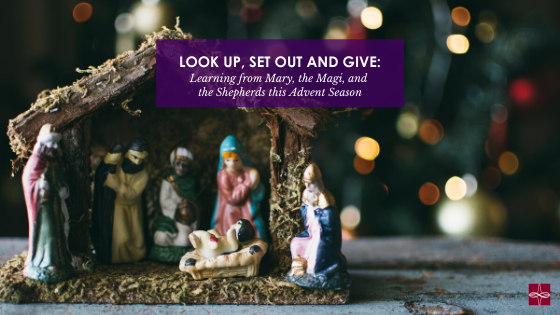 “The Virgin today brings into the world the Eternal / And the earth offers a cave to the Inaccessible. / The angels and shepherds praise him / And the magi advance with the star, / For you are born for us, Little Child, God eternal!” (CCC525) The quote from the Catechism above references three key players I want to reflect upon at the beginning of this Advent season: Our Lady, the magi, and the shepherds. Today, as we think about the meaning of waiting and watching, upon preparing for Christmas and for the return of the Lord, we can look to these three examples to show us how to look up, set out, and give. First: It’s important to start off with an understanding of Advent as a liturgical time of waiting and preparation. I’ve often heard that God has three responses to our prayers: yes, no, or wait—wait being our least favorite of the three. “Wait” seems so indefinite. With a yes or no response, you know, for better or worse, one way or another, what your parameters are. But “wait” requires faith, trust, humility. It requires not knowing exactly when, exactly how, or exactly if. And that’s one lesson this season can impart: waiting well, waiting in hope. During Advent, we recall the waiting of the world for the birth of the Messiah. The greatest gift from God the Father, the gift of his Son, is coming to us. And in this world which has experienced his coming, we also wait for him to come again. Each of us awaits something. Perhaps we await a promotion. The completion of a degree. Maybe we long for a spouse or a child. Physical or emotional healing. The answer to our vocational discernment. In this time of waiting, we are like the Israelites wandering in the desert in pursuit of the Promised Land. It’s there--the Promised Land is there. God is faithful and keeps his promises. But sometimes, we have to wait. Waiting practically forces us to surrender control and hand everything over to God. It’s a daily practice in humility and faith. It acknowledges that we are not in control and challenges us to trust in the goodness of the One who is. Therefore, waiting has a purpose, an end: God Himself. And, as with the Israelites in the desert sustained by the descent of manna from heaven, we are fed daily by God himself IF we allow ourselves to be. This means speaking and listening to God in prayer. It means collecting the manna from above, his grace, DAILY. And this brings us to our first point about the Advent season: we need to look up and see. Mary knew what it meant to look up in prayer. She was so receptive to the word of God that she conceived it through the power of the Holy Spirit. She was looking up in prayer when the Angel Gabriel announced the Good News of the Messiah. Her response? “Let it be done unto me according to your word.” These were the words of trust, surrender, and peace--followed by action—the second of our themes today. She looked up and set out in order to give. Immediately after the Annunciation, we read about her going out to help her cousin Elizabeth. As someone who has experienced the first trimester of pregnancy twice now, I can tell you the last thing I’m thinking about during that time is helping or serving others. I’m usually passed out somewhere trying not to drool. But Mary has looked up, set out, and given. She was so receptive to God’s word that she was able to fully encounter his message through the Angel Gabriel. Her reception of Christ caused her to set out in haste to see Elizabeth. And finally, to give and serve another by bringing Christ into that home and modeling sacrificial love. Mary is the perfect example of waiting and being guided by God. In Scripture, she is described as “pondering things in her heart”—waiting for God to reveal his will and meditating on his work throughout her life. But she is not one who sits on the sideline and fails to engage. She is a contemplative in action—one who treasures the word of God within her (even literally) and yet immediately goes out to Elizabeth in her time of need. Mary brings Jesus to others, from the moment of his conception, wherever she goes and instructs us to “do whatever he tells you,” as at the wedding feast in Cana. We turn to Mary during this season of Advent because she is an expert at faithful waiting that leads to Christ. So I invite you as we continue our Advent journey to start by spending time with the Blessed Virgin Mary. Re-read the account of the Annunciation and Visitation in Scripture. Ask her help in waiting—faithfully, hopefully, humbly. And invite her to accompany, guide, and prepare you to receive Christ. She always leads others to her Son. In addition to the example of Mary, the magi can also teach us what it means to wait in hopeful anticipation: to look up and see the star, To set out, To give freely. The magi, though Gentiles, were not complacent, but so observant that they were able to recognize God’s sign: the star. As Pope Francis said, “The Magi were not content with just getting by, with keeping afloat. They understood that to truly live, we need a lofty goal and we need to keep looking up.” What keeps us this Advent from looking up and seeing the star? Are we busy scrolling through our social media feeds, binging on the latest Netflix series, working late hours at the office, or anxious about the future? Are we paralyzed by grief, bitterness, anger or fear? The magi were vigilant, ready to go when the time came. And their hearts were receptive, disposed to the signs of the times. Like Mary, they too set out on a journey which would lead them to Christ himself. This journey required effort, planning, and sacrifice. They looked up, set out, and finally, they gave: bearing costly gifts of gold, frankincense, and myrrh. They met the generosity of God by reciprocating generosity. As Pope Francis has also noted, “To give freely, for the Lord’s sake, without expecting anything in return: this is the sure sign that we have found Jesus.” Finally, we can also look to the example of the shepherds. Pope Francis says, “They were the first because they were among the last, the outcast. And they were the first because they were awake, keeping watch in the night, guarding their flocks.” The shepherds were looking up. After receiving the good news from the angel of the Lord, they go in haste to encounter Christ. And afterwards, they return glorifying and praising God. In each of these examples, we encounter people who are looking up, setting out, and giving. Mary sets out and gives her time and energy to serve her cousin Elizabeth. The magi set out and give gifts of gold, frankincense, and myrrh. The shepherds set out and give Christ their adoration and praise. Will we keep watch in the night alongside the shepherds or are we asleep with the rest of crowded Bethlehem, too distracted by our daily lives and concerns to notice the light of the star beaming down on the light of the world? As we await God’s response in our lives, do we grumble in the desert like the Israelites? Do we take things into our own hands and craft a golden calf? Or do we say to the Lord, “Let it be done unto me according to your word?” This season, will we set out in haste to give our hearts to the Lord and our hands to serve those in need? Perhaps what’s holding us back from entering into the Advent season is something more than distraction, ignorance, or noise. We may hesitate to meet this Christ-child because we feel as the shepherds most likely did, utterly unworthy. We wear the rags of sin, the stench of humanity. Maybe we feel like the little drummer boy in the popular song who says, “I have no gift to bring that’s fit to give a king.” In his humility, the Lord entered into the most vulnerable of human states: infancy. He chose to become little in order to demonstrate that all are able and invited to approach him. As Pope Francis also reminds us, “Jesus allows himself to be found by those who seek him, but to find him we need to get up and go.” So let’s get up and go. There is still time to look for the star, to set out, to give. I invite you to draw close to Mary, look to the example of the magi, spend time with the shepherds. In looking for Christ, encountering him, and serving others, we find Christ born also in our hearts. Only then, as the Catechism says, “when Christ is formed in us will the mystery of Christmas be fulfilled” (CCC526). Let us pray, “I want to come to Bethlehem, Lord, because there you await me. I want to realize that you, lying in a manger, are the bread of my life. I need the tender fragrance of your love so that I, in turn, can be bread broken for the world. Take me upon your shoulders, Good Shepherd; loved by you, I will be able to love my brothers and sisters and to take them by the hand. Then it will be Christmas, when I can say to you: “Lord you know everything; you know that I love you” (cf. Jn 21:17)." -Pope Francis
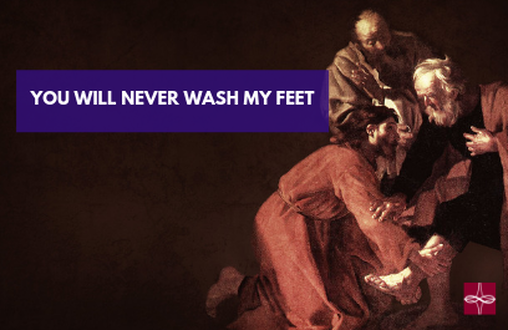 On the evening of our wedding, after the ceremony and reception, my husband and I knelt down and washed each other’s feet. It was an act of love and humility that we wanted to be the foundation of our marriage. We had a beautiful example: A King who washed the feet of peasants; a Savior who washed the feet of sinners; a Friend who washed the feet of betrayers. The washing of the disciples’ feet was the act of a dying man. With the last few moments of his precious life, Jesus knelt down. In the last hours with his closest friends, he served. This was the manifestation of the new commandment he was to give moments later at the Last Supper: “Love one another. As I have loved you, so you also should love one another.” Love. This is what it is all about—the meaning of the Christian life. Jesus models love by washing not only the feet of his beloved friends, but of those who will betray him. He knows not only of Judas’ betrayal, but also of Peter’s—which probably stung him even more. He knows Peter, James, and John will fall asleep with him in the Garden. He knows that almost all of his disciples will flee during his torture and crucifixion. And yet he removes his outer garments and kneels to wash their dusty feet. It would not have been a pleasant affair; their feet would have been caked in dirt and bathed in dust. Perhaps their toenails were long. The feet of these gruff men would have stunk. But I do not imagine that Christ poured just a few drops of water on their feet ceremoniously and then moved on. I believe he spent a few quiet moments with each Apostle, truly washing their feet clean of dirt and grime, and making each feel like the only person in the room. I imagine him drying them tenderly, and looking up with eyes that said, “I do all of this for you.” Were the Apostles embarrassed by such a vulnerable display of affection? Scripture tells us that Peter recoils and says, “You will never wash my feet.” For one man to kneel down and wash the feet of another required vulnerability. For the King of Kings to kneel down and wash the feet of sinners required sacrificial, humble, earth-shattering love. This love culminates for us this week on Good Friday, when we commemorate the crucifixion and death of Christ. While the Church remembers the washing of the disciple’s feet on Holy Thursday, my husband and I have started a tradition of washing each other’s feet on our anniversary. Most recently, we did this on Valentine’s Day. On the day our culture celebrates love, it seemed appropriate to once again remind ourselves of what love actually looks like. Has anyone ever washed your feet? Perhaps it was part of a Holy Week service at your church or school. Perhaps it was part of a retreat you went on. To have your feet washed is an intimate experience. I think it is often more uncomfortable for the one getting their feet washed than it is for the one doing the washing. In my case, I’m usually worried my feet smell or that my nails aren’t groomed. I’m so worried about what my feet will reveal about me and what the other person is thinking that it’s hard for me to enjoy and appreciate the solemnity and beauty of this moment. Perhaps my thoughts echo Peter: “You will never wash my feet.” As we draw nearer and nearer to the pinnacle of our faith celebrated in the Triduum, we are probably coming to the end of Lent with dusty feet. We’ve trampled for about forty days in the desert and have probably stumbled in our Lenten observances a few times. Our feet may be caked in inadequacy, sin, or weakness. Maybe you, like me, are thinking so much about what’s on your feet that you’re unable to look Christ in the eye and allow him to thoroughly wash you. As we enter into Holy Week, I invite you to pray about what keeps you from allowing Christ’s gaze to meet your own. What causes you to join Peter in saying, “You will never wash my feet”? As Pope Francis said during his Apostolic Visit to Cuba, Jesus “came precisely to seek out all those who feel unworthy of God, unworthy of others. Let us allow Jesus to look at us. Let us allow his gaze to run over our streets. Let us allow that look to become our joy, our hope.” Christ’s response to Peter’s hesitancy is: “Unless I wash you, you will have no inheritance with me.” Perhaps he is saying that we will be unable to live a life of discipleship if we have not experienced his gaze—the sacrificial love of God. It is this encounter with Christ, with his gaze, that transforms us. We love because we have first been loved—this is our joy, our hope. This Easter season, may you experience Christ’s life-changing gaze as you allow him to wash your feet. Questions for Reflection: What keeps you from allowing Christ’s gaze to meet your own? What causes you to join Peter in saying, “You will never wash my feet”? For more resources to accompany you during the Lenten and Easter seasons, please click here.
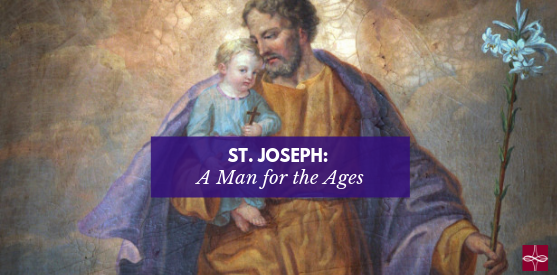 St. Joseph was a man for the ages. I like to think of Joseph as a man that walked the walk and only talked if it was necessary. I imagine that he went about his life quietly and out of the spotlight, worked hard in his carpentry, and spent time with his family in Nazareth. Imagining Joseph living today, I have similar imagery: he works for his father’s woodworking business, devotes time in his day for quality family time, and volunteers on weekends. I can picture the same figure then and now. Can you? St. Joseph’s March 19th Solemnity celebrates faith, fatherhood, and fortitude in a way that brings people together. St. Joseph is the patron saint of the Universal Church, fathers, families, expectant mothers, travelers, immigrants, craftsmen, and many more! People all around the world look to Joseph as a model for their lives because of his deep faith, warm fatherhood, and fortitude. His deep faith evidenced in his “Yes” to marry the Virgin Mother. As we read in the Gospel of Matthew (Mt 1:18-19), Joseph was a kindhearted man who loved Mary so much that he was willing to risk his reputation. He was ready to stick by her through the betrothal and pregnancy and figure it out later, as we might say today. Matthew’s phrase is “divorce her quietly.” Scripture also tells us that God sent his angel in a dream to straighten things out with Joseph: “Joseph son of David, do not be afraid to take Mary home as your wife, because what is conceived in her is from the Holy Spirit. She will give birth to a son, and you are to give him the name Jesus, because he will save his people from their sins.” Certainly, only a man of true faith would hear these words and trust in God’s plan. His protection of the Holy Family and warmth while raising Jesus as his own. Although there is little written about Jesus’ life as a boy before his ministry, we can be sure that Joseph took great care of the Son entrusted to his care. Even when Jesus was a baby, Joseph protected him from death (Mt 2:19-23), presented Jesus at the Temple as was customary (Luke 2:22), and taught him his carpentry trade. This real-life example of fatherhood is one that lends its patronage to all fathers today. In my experience, my dad modeled the fatherhood of St. Joseph when he taught me that working hard in the service of others is one of our greatest duties on Earth. My dad also taught me perseverance. And finally, my dad taught me about optimism—an outlook on life that is forever reaching toward hope and success. Fathers have a model to emulate in St. Joseph’s quiet support and care for his family. His fortitude to face the world in times of adversity. At important times in Joseph’s life, he was challenged by God. In those moments, he rose to the challenge by making a selfless choice. In our lives as Catholics, we are often challenged at times of weakness or when life seems hard. Negativity can seem endless, problems pile on top of other problems, media stories show no hope, and family life is full of brokenness. When we are faced with these challenges, it is important to remember our forefathers in faith. We, like St. Joseph, must put our trust in God and entrust to him our lives and those of our loved-ones as well. The tumultuous world we live in will never have hope if we as Catholics are not the first ones to share God’s love. St Joseph is the perfect model of faith, fatherhood, and fortitude that we need in today’s world. Here is a short prayer to St. Joseph for his intercession. Pray this and feel God lift away your fears and despair. Oh St. Joseph whose protection is so great, so strong, so prompt before the throne of God, I place in you all my interests and desires. Oh St. Joseph do assist me by your powerful intercession and obtain for me from your divine son all spiritual blessings through Jesus Christ, our Lord; so that having engaged here below your heavenly power I may offer my thanksgiving and homage to the most loving of fathers. Oh St. Joseph, I never weary contemplating you and Jesus asleep in your arms. I dare not approach while he reposes near your heart. Press him in my name and kiss his fine head for me, and ask him to return the kiss when I draw my dying breath. St. Joseph, patron of departing souls, pray for us. Amen.
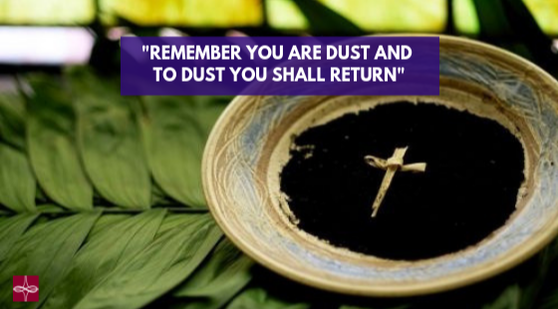 “Remember you are dust and to dust you shall return.” We are now over a week into our Lenten journey; the reality has set in. We are questioning our decisions to give up sweets or the snooze button, and we are tired. Perhaps we have even failed a few times. The forty days seem to drag, and the somberness of the liturgical season has made itself known. Yet during the Ash Wednesday service at my parish, our priest was talking about the joy of the season and how our failures are meant to bring us closer to Our Lord. In a word, he talked about the hope of Lent. As someone who would rather stay in the joy and light of the Christmas season, I was really challenged by Father’s perspective, especially now, after my many failed attempts to give up the snooze button. We often focus so much on the “giving up” aspect of Lent that the words joy and hope do not seem to go hand in hand with this season. This is especially true when I think of the phrase that kickstarts our Lenten journey: “Remember you are dust and to dust you shall return.” On a superficial level, this sign on our forehead doesn’t look so good. Where are the hope and joy in having ashes smeared on your forehead? Throughout his homily, Father also encouraged us to change our perspective on the difficult acts of penance we are attempting and instead to live in the reality that this season could be a time of true conversion of heart. Our Lord desires us to be holy! The acts of penance we choose could be the very means He uses to break us of habitual sin and to bring a deeper level of charity into our hearts. Conversion of heart and holiness? I could get behind that; I can see the joy there! The priest did not say “if you fail your resolutions” but “when you fail.” This is a reminder of our weakness and utter dependence on Jesus, who will be making His way to Calvary soon, in Scripture, to save our souls. This dependence on Him will assist in our conversion of heart, considering “we can do nothing without him” (John 15:5). So: it’s alright to fail, but run back to Him. Beg Him for more grace! Now let’s read this sentence from the Ash Wednesday service one more time: “Remember you are dust and to dust you shall return.” Where is the hope there? Father explained that this is the most hopeful reality yet. Ultimately this reminder of our sinfulness and our death paradoxically represents the life we have in Christ, the Resurrection of Jesus, and the hope we have of entering into the Eternal Reward. Even though the phrase seems bleak, it can propel our hope throughout these 40 days. We have something to strive for, to live for, and to love for. Though I have failed at my Lenten resolutions more times than I have not, I pray with the hope that my humanity might be resurrected, that Our Lord may convert my sinful ways, and that I may remember that this liturgical season is less about what I do and more about what the Lord is doing in my heart to get me home. What are ways you need to be renewed in hope and joy? How can you accept the failures that come with penance and run to Jesus this Lenten season? “Remember you are dust and to dust you shall return.” For more resources to accompany you on your Lenten journey, please click here.
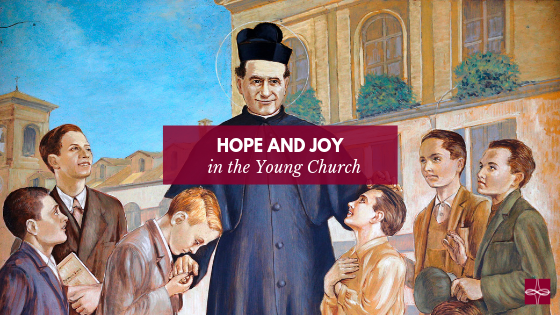 For the past five years, I have had the privilege of working full-time in high school ministry. I often hear people say, “That’s so great that you are working with the future of the Church”. For the longest time, this statement didn’t sit well with me. I recently figured out why: young people are not the future of the Church, they are the Church. I have learned during this privileged time of ministry that there is great HOPE and JOY to be found in the young Church today. St. John Bosco is the patron saint of youth - and for good reason! At the centenary of his death, John Paul II named him “Father and Teacher of Youth”. At one point during his ministry, St. John Bosco ran a home which housed over eight hundred young men and he worked tirelessly to promote their dignity. His love for the Eucharist and steadfast promotion of the mercy of Jesus serve as examples for all of us working in ministry. I’ve received a glimpse over these last several years of what St. John Bosco tells us with his life: there is great hope and joy to be found in following Jesus and in sharing that joy with others. The “Father and Teacher of Youth” is famous for saying, Servite Domino in laetitia!, which is Latin for “Serve the Lord joyfully”. In any of our apostolic endeavors, it is crucial that we lead with joy. With everything going on in our world and Church, it can be all too easy to fall into despair - to question or wonder where God is. In the young people I have the privilege of working with, I have seen God’s hand everywhere. I have seen His hand in the ways that they encounter the heart of God for the first time; I have seen it when they grow in communion with each other; and I have seen it when they choose hope over the lies of this world. It is our great privilege to not only share the hope that is to be found in living for Christ— whether in the young Church or elsewhere—but also our responsibility to proclaim the joy of the Gospel. I am grateful for all that the young people I work with have taught me and count myself as privileged to learn what it means to live a life filled with Christian hope and joy. St. John Bosco, pray for us! **At the closing Mass of World Youth Day in Panama, Pope Francis also discussed the role of the young Church and their mission "now." “Not tomorrow but now”, he said. “Realize that you have a mission and fall in love”, Click here to continue reading. For more resources to learn about World Youth Day, please click here.
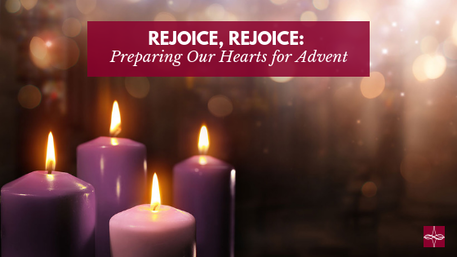 The candy has gone on sale, the post-Thanksgiving “leftover sandwich” has been eaten, but it’s not time to deck the halls just yet. As many prepare for the joyful season of Christmas, complete with mall Santas, holiday movies, and plans to celebrate the Nativity of Jesus Christ, the Church prepares during the season of Advent. This time isn’t just for buying gifts and putting up the tree, but to prepare ourselves spiritually for the coming of Christ. This season of preparation can be traced back to 4th century France, though the Advent we are familiar with can be traced back to Pope Gregory I and Rome in the 6th and 7th centuries. Whereas Lent is a time of penance for Christians, Advent is a time of preparation and hope. Not only do we prepare for the birth of the Lord, but we also look to the Second Coming of Christ. The first coming of Jesus at Christmas opened the doors for our salvation and prefigures his Second Coming. It is because of this hope that Advent focuses on light and not darkness. This light can be symbolized in the Advent wreaths that adorn Churches and the houses of the faithful. The four candles represent the four weeks of Advent, three purple and one rose. The purple candles represent prayer and sacrifices that are undertaken in preparation for the coming of Christ. The rose candle, lit on Gaudete Sunday (the third Sunday of Advent), is a symbol of rejoicing as the faithful have reached the midpoint of the season. When we thank God for the forgiveness of our sins and for the chance to be with him for all eternity in Heaven, we often think of Easter, but Christmas is necessary in the plan for our salvation as well. Before Christ could suffer and die for us, achieving our redemption and the path for our salvation, he had to become man. What a gift this is! If you follow the Franciscan theology of the incarnation as proposed by Bl. Duns Scotus, Christ would’ve become man with or without the original sin of Adam and Eve, but his mission of salvation makes his Incarnation that much more special for us. As Pope Benedict XVI said at a General Audience, “[Bl. Duns Scotus] reaffirmed that the Incarnation is the greatest and most beautiful work of the entire history of salvation.” Jesus, the God of all the universe, became man. But he did not just become a man—he became a vulnerable baby born in a manger. As we encounter him every time we partake in the Eucharist, let us pray and meditate upon the fact that God became vulnerable for us. God loved us so much that he became man. Years after his birth in a manger, he took on our sins so that we may be with him forever. Just as we prepare to receive him into our bodies when we receive the Eucharist, let us prepare to receive the Lord into the world this Advent and make ourselves more worthy of him. Advent is our time to come closer to Christ, to meditate on how he is present in our lives, and to see how he has called us to live with our fellow man as we await his Second Coming. While prayer, fasting, and almsgiving are certainly emphasized during the season of Lent, they can also be integral parts to our preparation for Christmas. May we pray for Christ to be present in our lives and for us to do his will at all times; may we fast from the things that lead us away from him; and may we give alms to those who are less fortunate than us. In these ways we prepare for Christ during Advent as we await both his Nativity and his Second Coming. Question for Reflection: What are some Advent traditions that have helped you prepare for the coming of Christ? For more resources to help you throughout the Advent season, please click here.
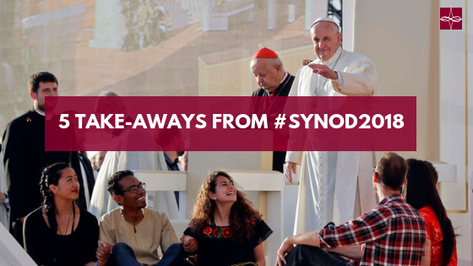 For the past few weeks, bishops from across the globe have met in Rome for the XV Ordinary Assembly of the Synod of Bishops to discuss Young People, the Faith, and Vocational Discernment. This is a momentous time for the Church, one in which she has paused from her work in order to listen and dialogue with a powerful age group in our world today: young people. In imitation of Christ Himself, who sat down during His ministry and said, “let the children come to me,” the successors of the Apostles are engaging the young people of the world in order to learn from them, engage with them, and better accompany them on their faith journey. But what does this mean for the rest of the Church? What does this mean for us personally? The Synod is not just an event occurring in Rome, nor a series of documents and pastoral initiatives. Below I have compiled 5 key take-aways from the Synod that we can apply to our own spiritual lives. 1. Invite the Holy Spirit. In his homily for the opening of the Synod, Pope Francis reminded his brother bishops to call upon the Holy Spirit before embarking on their work. “It is the Spirit,” Pope Francis said, “who ensures that the richness and beauty of the Gospel will be a source of constant joy and freshness.” This is true for each of us. Christ left us with the gift of the Holy Spirit after His Ascension into Heaven; the Holy Spirit is our Advocate and remains with us today, present in our hearts as a result of our Baptism. Before embarking on our work on earth, let us call upon the Holy Spirit in order to guide us and ensure we are faithful to our mission. It was the Holy Spirit who transformed the cowering Apostles into bold missionaries, evangelists, and martyrs. The same Holy Spirit leads us today and helps us fulfill our baptismal call. Invite the Holy Spirit into your life, work, and day to day actions in order to live out the richness and beauty of the Gospel that Pope Francis mentions. 2. Listen. The Synod participants have been encouraged to listen intently to what the young people of the Church have to say. This attitude can only be successful if it stems from a posture of humility, an openness to the other, and a flexibility to adapt our perspective based on what we learn. All of us are called to listen to and accompany those we encounter in our day to day life. This is especially true for those of us working in ministry, but can be applied to whatever circumstance we find ourselves in. We live in a culture that seems afraid of listening. Listening is often associated with vulnerability. It opens our minds and hearts to the perspective, ideas, and dreams of the other—whether or not we agree or resonate with these personally. However, “love for the Gospel and for the people who have been entrusted to us, challenges us to broaden our horizons and not lose sight of the mission to which we are called,” Pope Francis said. Listening to another person challenges us to step outside of our comfort zone and acknowledge the truths of the other. Only by listening can we hope to dialogue respectfully with those who might not share our worldview or beliefs. 3. Discern and be silent. After calling upon the Holy Spirit, we need to create a space of silence where we can listen to God’s promptings. For the first time in a Synod, Pope Francis has instituted 3 minutes of periodic silence for participants to reflect on what’s been shared and on what God is stirring in their hearts. This is a wonderful example of ongoing discernment, which invites God into our life and asks Him to guide us in our everyday actions and decisions. “Discernment is the method and at the same time the goal we set ourselves,” Pope Francis said. “It is based on the conviction that God is at work in world history, in life’s events, in the people I meet and who speak to me.” We can also learn from the spirituality of The Society of Jesus, which emphasizes being “contemplatives in action.” This spirit of discernment is radically different from the world of busyness and noise we often find ourselves in, but it also is capable of existing within that world. When we periodically withdraw into the inner room of our hearts and pray to our heavenly Father in secret, we become better attuned not only to His presence in our hearts, but also to God’s presence in those around us. 4. Be flexible. Sometimes, it is easy to come up with preconceived notions of how things ought to be done or to maintain an attitude of “it’s always been this way.” Throughout his papacy, and once again at the beginning of this Synod, Pope Francis has challenged the Church to be flexible and to shatter our temptation to conform. In his homily for the opening of the Synod, he called the Church to “broaden our horizons, expand our hearts and transform those frames of mind that today paralyze, separate and alienate us from young people.” A healthy flexibility is key to our well-being in whatever vocation we find ourselves. Flexibility also relies on humility and allows us to admit that we don’t always have the right answers. When we as a Church are flexible, we are better able to encounter others and work together to seek the truth of the Gospel. 5. Dare to hope, to dream. A great gift that young people can give the Church is their ability to dream. Young people have passion, enthusiasm, hopes, and dreams that offer freshness and renewal to our Church and to the world. This is even more important in a world laden with suffering and problems, where it is easy to succumb to a defeatism or a pessimistic attitude. Pope Francis reminds us that “The future is not a threat to be feared, but is the time the Lord promises us when we will be able to experience communion with him, with our brothers and sisters, and with the whole of creation.” When our faith is rooted in the goodness and beauty of Christ Himself, we are better able to share His joy and hope with the world. Let us learn from the vigor and hope of young people today. May it be contagious, so that others are drawn to ask us for an account of our hope. As Pope Francis concluded in his Address at the Opening of the Synod of Bishops, “Let us therefore work to “spend time with the future … to plant dreams, draw forth prophecies and visions, allow hope to flourish, inspire trust, bind up wounds, weave together relationships, awaken a dawn of hope, learn from one another, and create a bright resourcefulness that will enlighten minds, warm hearts, give strength to our hands, and inspire in young people – all young people, with no one excluded – a vision of the future filled with the joy of the Gospel.” For more resources on the Synod on Young People, the Faith, and Vocational Discernment, please click here.
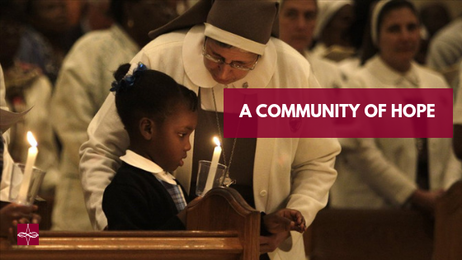 The recent news of scandal within the American Church has understandably been the cause of immense frustration, anger, and disappointment in the public and, most especially, among the faithful. I have also seen many who have become disillusioned by the Catholic Church and decided to separate from the rest of the faith community. The danger in this response is that it risks throwing out the baby with the bathwater, as our faith community is one of the greatest gifts given to us by the Holy Spirit. Through my travels this summer, I had the opportunity to experience two very different cultures very much tied to our Catholic faith. My experiences in these cultures reminded me of the great blessing of our faith community. In early July, I set off with a group of teenagers and adults from my parish on a mission trip to visit our sister parish in Dessalines, Haiti. When we landed and traversed the countryside, I came face to face with poverty unlike any I have ever experienced. My concern over a lack of modern amenities quickly dissipated, however, as I was overwhelmed by the warm hospitality of our Haitian hosts. Most especially, the Haitian children and teens we worked with throughout the weeklong summer camp showed us true joy and hope. The pastor told us that our presence meant so much to the community, solidifying our relationship as brothers and sisters in Christ more than any monetary donation could achieve. In September, I travelled to visit extended family in Ireland. Despite it being only the second time I had met most of them, our conversations continued well into the evening and it felt as though we were picking up right where we left off. Evident among our conversations was a shared concern for the scandals facing the American Church, but there was also a resolute hope that keeping our eyes fixed on Christ would see us through. As we talked about the family history and previous generations, I was reminded of how grateful I am to have had the faith passed down to me and how much I owe to my ancestors. In these distinct experiences of encounter, the hospitality I was shown and the underlying hope I received from my conversations with my hosts reminded me of the great blessing of our faith community, no matter how far flung it might be. This an especially difficult time to be Catholic, but I firmly believe that with God’s grace our faith community, broken and imperfect as it may be, will also be among our greatest sources of hope. In times of adversity, let us cling to our communities of faith and to Christ Himself. Rather than abandon our parishes and local church communities, let us work to ensure that they are rooted in the love of Christ in order to build a holy Church, a community of hope.
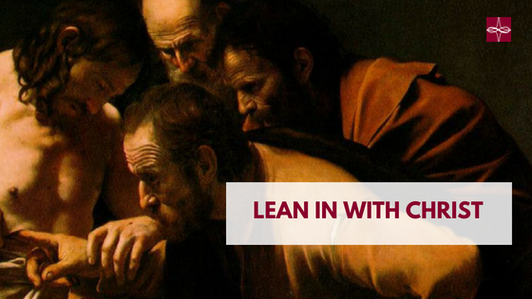 A few weeks ago, my Bible study group was discussing the topics of suffering, healing, and the lies that we tell ourselves when afflicted by painful situations. Lies like "I am unloved, unwanted or alone," that make us feel hopeless, despairing or confused. Lies like "God has abandoned me in this situation," which lead us to distrust in the Father's goodness. We agreed that it is often easier to believe lies like these because we are already in a position of pain and in some sense they allow us run from or numb ourselves from the situation that caused the original pain. The leader of my Bible study, a beautiful mother of eight children, then compared this coping mechanism to giving birth. She explained to us that throughout her eight deliveries with her children she has come to grow in her capacity to lean into the contractions she experiences. She went on to say that the more she is able to relax and breathe through the contraction, the faster and more apt her body is able to do what it is called to do. “I don’t want to waste my contraction,” she said. Women tend to fight their contractions in labor (understandably in pain), but the tensing of the body prevents the contraction from doing what it is meant to do. She explained that leaning into the contraction is a lot like leaning into the suffering that God calls us to. Today, on the Feast of St. Thomas the Apostle, I find myself reflecting on what Thomas is most known for, his “doubting” ways. Thomas’s human response to seeing the Resurrected Lord is one with which I resonates with me deeply. Jesus gently allowing Thomas to put his finger in his side is a part of the Gospel that constantly baffles me – the compassion and understanding of Jesus in that moment! Thomas’ wound of doubt is healed by Jesus’ wounded side. With the Lord’s guidance, he leans into the “contraction” of his own suffering by allowing himself to experience in a limited way the suffering of Christ. With the Lord’s gentle hand leading him, Thomas leaves his doubt and finds faith and joy! Have you been fleeing or numbing yourself from a painful situation of suffering? What are the “contractions” of your life that the Lord wants to lead you into? What parts of your life need the gentle hand of Christ? Today, let us ask St. Thomas to pray for us and let us ask for the grace to lean into our own pain and into the Lord’s side so that we too might respond, “My Lord and my God!” “He will provide the way and the means, such as you could never have imagined. Leave it all to Him, let go of yourself, lose yourself on the Cross, and you will find yourself entirely.” St. Catherine of Sienna “Christians must lean on the Cross of Christ just as travelers on a staff when they begin a long journey.” St. Anthony of Padua
6/9/2018 An Interview with Fr. General Jacob Nampudakam SAC on the 40th Anniversary of his ConsecrationRead Now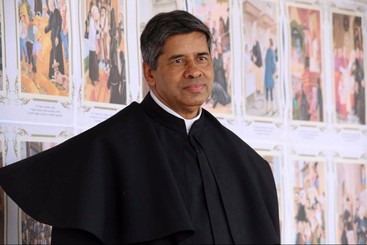 Fr. Jacob Nampudakam SAC is the Rector General of the Society of the Catholic Apostolate. He was elected in October 2010 and is the first non-European Rector General. This interviewed was conducted by Catholic Apostolate Center Program Associate Julianne Calzonetti in Rome, Italy.
1. Matthew 4:1-3a: Jesus spent 40 days in the dessert: What have been some of your greatest trials in 40 years? Two main trials: First, I am always in favour of life. Following Deuteronomy 30, 19-20, I had to make a choice between blessing or curse, life or death. God challenges us to choose life. In life we find hope; the ability to live in wonder, nurture in love, and not despair. Hence when members show a spirit of defeatism and negativity- without making efforts to create life- it is challenging. Nothing is achieved by being chronically negative. “Rather, the one who loves Christ is full of joy and radiates joy,” as Pope Francis reminds us. Second, when members become instruments of disunity rather than unity; allowing themselves to be guided by worldliness instead of the Spirit. This is the antithesis of Jesus Christ, who tells us that His Kingdom is not of this world. Following anything other than the Spirit will lead to confusion and destruction; a problem which then takes root in the afflicted person’s heart. Thus, internal problems become external situations, which are very difficult to handle. 2. Joshua 5:6 The Israelites walked 40 years in the desert: What has been your greatest moment of trusting the Lord? “Abandon yourself to God,” St. Vincent tells us, “with perfect confidence and do not fear.” In breathing these words, we are graced with the bravery God willingly gives to go forth and proclaim the Gospel to all creation. We can also use such words to explain two of our missions, Peru and Vietnam. If we lived in the world, we would say such ambitions were impossible, as they were taken up by entities with very few members. Yet instead they are flourishing; for in our steadfast courage and faith, the Lord blessed us in a hundredfold. The moral of the story is this: trust the Gospel. Take no purse, no haversack. He is with you. Another element of surprise was my election as Rector General. It’s not easy to break the frontiers and boundaries set by International Congregations, but when the fresh air of the Spirit blows through the windows, thy will be done. 3. Jesus remained on earth 40 days after his Resurrection: What is your hope and mission, father, for the remainder of your term as Rector General, as well as the remainder of your time as Jesus' anointed one on his earthly pilgrimage? First goal: Make our holy founder known and loved by as many as possible; to offer his charism of the Union of the Catholic Apostolate in service of the Church’s mission. Second goal: Give the compass to God, listen to the cries of His people, and “be led forth with peace” (Isaiah 55:12) to the peripheries. May we be the soul that God brings to their feet, so that they may have the life in abundance He has promised. In all my journeys, what my eyes have seen cannot leave me unaffected. But in each, the open wound of my heart remains the same: for the innocent children who are deprived of love, laughter, family, medicine, education… human dignities that no person on this earth should be denied. We all have equal rights for the blessings given to us by the Creator. To live in luxury disregarding the poor around us- like the parable of the rich man and Lazarus- would be the greatest sin of a Christian. We are all poor before God. 4. 40 is seen as a generation in the Bible. What has changed in the Society and Missions? What has been made better/worse? Everything changes. We try to discern and respond to the signs of the times. Yes, the Society has grown. We have reached out to as many as 56 countries around the world. There are about 2400 members in the Society, and then, of course, the entire Pallottine Family. The scenario in the Church and all the religious Congregations is changing; and it’s moving south. Though this makes no difference; I believe it matters little where we are growing or diminishing in any part of the world. The Church is one body of Christ. Through the consecration we make, we become members of the Society. As so often said by me on visitations, we may be Italians, Germans, Polish, Brazilians, Indians etc., but we are all Pallottines, and one family. I do not believe in lamenting over the decline in one part of the world or rejoicing too much about the growth elsewhere. Such things happened in the past and continue to happen today. Tomorrow has not yet come. The Spirit moves where it wills! Success or failure – let history judge us. 5. As this generation ends, God makes another anew, just as the papacy of Francis is evermore on target with the teachings of Pallotti in Gaudete. How will you lead us in following his papal mission? The greatness of any Christian must be measured by his or her fidelity to the life of Jesus as we encounter him in the Gospel. For me, Pope Francis is someone who lives the Gospel in its radicality. The will of God is our sanctification. There are 3 similarities between our holy founder and Francis: 1. The life of Jesus as the fundamental rule of life and apostolate; 2. A poor Church for the poor; 3. Go forth to the peripheries of human life. These three steps are only possible when the first is achieved: Encounter the person of Jesus in the Gospel on a daily basis. 6. India: You are the first non-European Rector General. What have been the changes over 40 years you have seen in your country? While India as a country is slowly coming of age, what strikes me is the tremendous contribution that the minority Church- 2% of the Catholic population- is making to the Universal Church. In our Society- and the Pallottine Family as a whole- the growth in India is tremendous. No doubt, we are not talking about a perfect situation in all areas, just as in any other part of the world. The unique contributions of the Indian Pallottines are most fruitful where we are able to be faithful to our rich, spiritual traditions and work zealously to be instruments of peace and communal harmony. The 58 schools run by the Pallottines, with thousands of teachers and students from all religions, could serve as the best instrument to promote unity and peace in a world divided by religious disharmony. The One Almighty and Loving God is the Creator of every human person created in His own image and likeness. The ability to respect and love every human being, regardless of his nationality, culture or creed, and be able to see the face of God on each person, will make us universal human beings. The future of the Society, the Church, and the world itself will depend much on this ability to go to the most profound ontological and existential level and be universal persons. Building walls is a sign of innate fear and insecurity. Having grown up in a multi-religious context in India, where we played and grew up with Hindu, Muslim and Sikh youngsters, it does not frighten me to deal with one of a different faith. Experiences mould us. Let’s open up as a Society and work for the common good. But firstly, let’s open up our hearts. That is exactly the work of the Holy Spirit; who opened up the newly founded Church on the day of Pentecost. 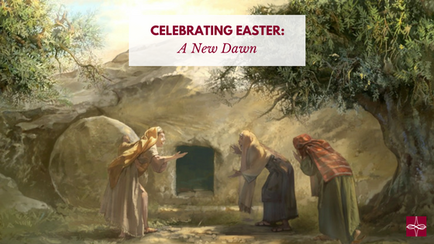 “Rejoice! Hidden within your life is a seed of resurrection, an offer of life ready to be awakened.” -Pope Francis What does Easter look like for you? Does it mean plates filled with sweets, a backyard sprinkled with hidden eggs, a large family gathering, wearing your Sunday best, a long evening at the Easter Vigil? The first Easter Sunday was comprised of an empty tomb, faces that went from fear and despair to bewilderment and excitement, and hands and feet that were pierced but glorified. But for all Christians, Easter Sunday is a day of transformation: darkness to light, despair to hope, death to resurrection. We have journeyed with Christ for 40 days in prayer, fasting, and almsgiving in order to reach this point of transformation. We have been made ready, through God’s grace, to join Him in the celebration of His victory over sin and death. And so Pope Francis reminds us to “Rejoice!,” for the resurrected life of Christ is offered to each and every one of us. Will you allow it to be awakened? The Paschal Mystery is so great that the Church will continue to celebrate this central event for the next 50 days until the Feast of Pentecost, on May 20th. I love the significance of the length of time. Though we have fasted with Jesus in the desert for 40 days, we celebrate as a Church for longer—symbolizing the ultimate victory of our efforts when united with Christ. Though we are called to have periods of intense fasting and prayer in our spiritual life, the end goal is the Resurrection. Let us not fail to celebrate the Easter season and let us celebrate it well! We do this by allowing the life of Christ to live within us long after the Lenten season. Pope Francis said, “The heartbeat of the Risen Lord is granted us as a gift, a present, a new horizon. The beating heart of the Risen Lord is given to us, and we are asked to give it in turn as a transforming force, as the leaven of a new humanity.” Will our hearts beat in time with Christ’s? Will we become the leaven of a new humanity? And if so, what does this even look like? The Gospels give us a few clues. On the night before Christ gave Himself over to be crucified, we read about an intimate encounter between Him and John who has come to be known through tradition as the “Beloved Disciple.” At the Last Supper, after Jesus has washed the disciples’ feet, we read in John 13:23 that “One of his disciples, the one whom Jesus loved, was reclining at Jesus’ side.” During this time of heightened anticipation, it’s an easy detail to miss. John was literally resting on the heart of Christ. He was also present at the crucifixion, the one who did not abandon his Master in this time of fear and confusion. Spending time with Christ in prayer, resting on His heart, allows our hearts to beat in time with His and helps us become “leaven of a new humanity.” The holy women who followed Jesus also understood this. They were present at Christ’s crucifixion and were the first disciples to whom Jesus appeared on the day of His Resurrection. May we look to the example of John and the holy women as we embark on this Easter season. Let us go frequently to meet the Lord and rest with Him by spending time in reflective prayer, reading Scripture, receiving the sacraments, and “washing the feet” of our brothers and sisters. These actions allow our hearts to sync with His. Let us go quickly to the tomb—as the holy women did— only to find it empty, so that we can return with the joyous news of the Resurrection and proclaim it to all who will listen. Pope Francis encourages us, “Let us go, then. Let us allow ourselves to be surprised by this new dawn and by the newness that Christ alone can give. May we allow his tenderness and his love to guide our steps. May we allow the beating of his heart to quicken our faintness of heart.” Questions for Reflection: How has your spiritual life transformed throughout Lent? How can you faithfully celebrate this Easter season? Click here for more resources to guide you through this Easter season.
|
Archives
April 2024
Categories
All
|













 RSS Feed
About |
Media |
© COPYRIGHT 2024 | ALL RIGHTS RESERVED